
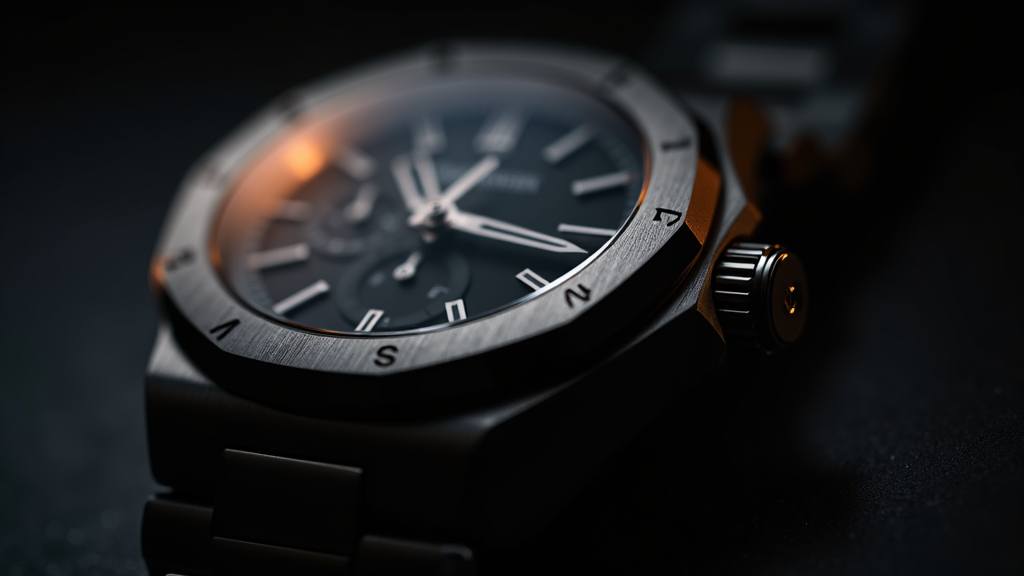

In 1972, a Swiss watchmaker did something close to heresy: it charged more for a watch made of steel than most of its rivals charged for gold. The watch was the Audemars Piguet Royal Oak, and the man who drew it — reportedly overnight, on the eve of a Basel trade fair deadline — was a 41-year-old designer named Gérald Genta. That single sketch didn't just launch a watch. It invented a category. Today the "integrated steel sports watch" is the most coveted, most copied, and most back-ordered idea in all of horology.
What "Integrated" Actually Means
The word gets thrown around loosely, so let's be precise. An integrated sports watch is defined by two ideas working together:
- An integrated bracelet — the metal band doesn't clip onto fixed lugs with spring bars. Instead, the bracelet flows directly out of the case as a single visual gesture, with the first links shaped to continue the case profile seamlessly.
- A unified design language — bezel, case, dial, and bracelet are conceived as one object rather than assembled from off-the-shelf parts. Nothing looks bolted on.
That sounds simple. It is brutally hard to execute. Because the bracelet is fixed to the case geometry, the entire watch has to be designed and finished as a continuous sculpture. There is nowhere to hide a sloppy transition, an uneven brushed surface, or a misaligned chamfer.
The Night That Changed Everything
By the early 1970s, the Swiss industry was staring down the "quartz crisis" — cheap, accurate battery watches from Japan were gutting demand for mechanical pieces. Audemars Piguet needed something bold for the Italian market. Genta's answer drew on an unlikely muse: the porthole of a diving helmet, with its octagonal bezel secured by eight visible hexagonal screws.
He paired that nautical bezel with a "tapisserie" guilloché dial, a slim self-winding movement, and — crucially — a bracelet that tapered and articulated like a piece of jewelry. Then he insisted it be made in stainless steel and priced like a luxury good. The watch industry thought he was mad. Roughly 1,000 were made in the first run, and they were slow to sell. Fifty years later, the design defines an entire collecting universe.
Genta's Other Masterpiece
If the Royal Oak were his only contribution, Genta would still be a legend. But in 1976 he did it again for Patek Philippe, sketching the Nautilus — softer, with a rounded "porthole" case and the now-iconic ears at three and nine o'clock. Two of the most sought-after steel watches on earth, from the same pen, four years apart. Few designers in any field can claim that kind of double.
Why Steel Became the Luxury
For centuries, value in watchmaking was simple arithmetic: gold and platinum cost more, so they were the prestige metals. Genta inverted the logic. By lavishing extraordinary hand-finishing on a humble alloy, he proved that the craft — not the raw material — could be the luxury.
Consider what goes into a great integrated steel case:
- Alternating finishes. Brushed flats meet mirror-polished bevels along razor-sharp edges. Each surface is treated separately, by hand, then masked while its neighbor is finished.
- Polished chamfers (anglage). The angled edges catch light like a blade. On the best examples, these are still finished with hand tools.
- Bracelet articulation. Dozens of individually finished links must flex smoothly and sit flat, with consistent gaps and uniform brushing direction.
Steel is also harder than gold, which makes it more difficult to finish cleanly — there is no forgiveness in the metal. The result is a watch that looks deceptively simple and is anything but.
The Anatomy of the Look
The Bezel
Whether octagonal (Royal Oak), porthole-rounded (Nautilus), or one of the countless variations since, the bezel is the signature. Often it carries visible fasteners or a distinct geometric outline that reads instantly from across a room.
The Dial
Textured dials are a hallmark — the waffle-like tapisserie, horizontal embossing, or grained surfaces that play with light. The texture does double duty: it adds depth and it signals that this dial was made, not merely printed.
The Bracelet
This is where integrated watches live or die. A great bracelet drapes like cloth, tapers elegantly toward the clasp, and disappears into the case so cleanly that you cannot tell where one ends and the other begins.
From Heresy to Holy Grail
The market verdict took decades, but it was decisive. By the 2010s, waitlists for the most famous integrated steel sports watches stretched into years, and secondary-market prices routinely ran multiples of retail. The format spread everywhere — nearly every major house and a wave of independents now offer an integrated steel design of their own.
What changed? Lifestyle, mostly. The integrated steel sports watch is the rare luxury object that works with a wetsuit and a tuxedo. It is sporty without being a tool watch, dressy without being fragile, and versatile in a way that suits how people actually live now. One watch, every occasion.
The Independent Angle
For independent watchmakers, the integrated format is both an irresistible challenge and a proving ground. There is nowhere to hide. Get the case-to-bracelet transition wrong and the whole illusion collapses; get it right and you have announced, in steel, that your atelier can finish metal at the highest level.
That is why so much of the most interesting integrated design today comes from small makers willing to obsess over a single chamfer. The big houses defined the genre; the independents are pushing its edges — experimenting with proportions, textures, and case geometries that the founders never imagined.
How to Read One on the Wrist
Next time you handle an integrated steel watch, ignore the badge and study three things. First, run a fingernail along the edge where polished meets brushed — it should feel like a clean line, not a smear. Second, flex the bracelet and watch the links; they should move like a single living thing. Third, tilt the dial under light and look for genuine texture and depth. Those three details separate a thoughtfully made watch from one merely styled to look the part.
Genta's revolution was never really about steel. It was about the radical idea that design and finishing — not materials — define luxury. Half a century on, that idea still sets the standard every serious watchmaker is measured against.
Featured Watch
TORQ Mechanical Titanium
An integrated case-and-bracelet design taken to its modern extreme — aerospace titanium, hand-finished surfaces, and a sculptural profile in the Genta tradition.
Explore TORQ Mechanical Titanium →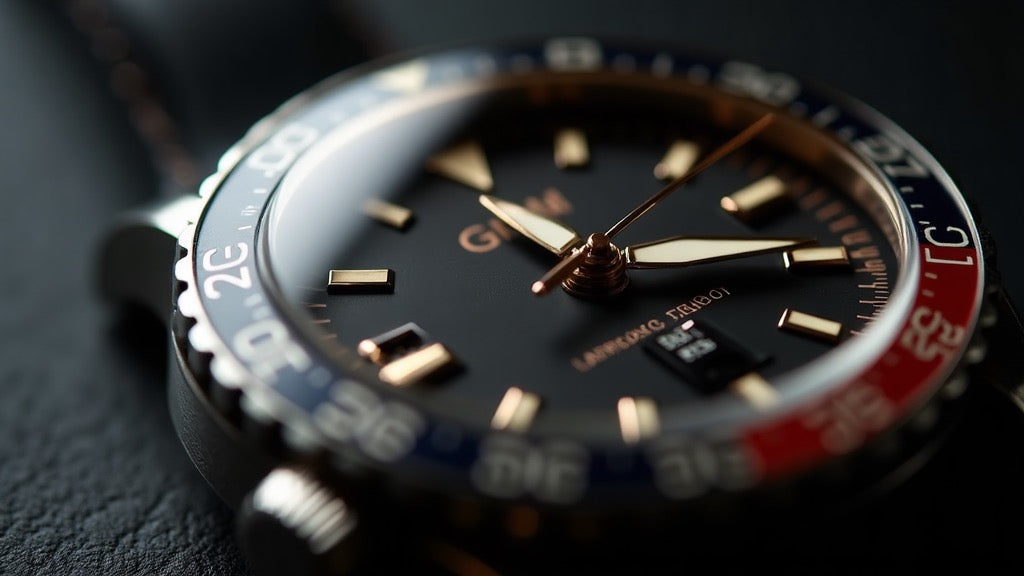








Leave a comment
This site is protected by hCaptcha and the hCaptcha Privacy Policy and Terms of Service apply.