
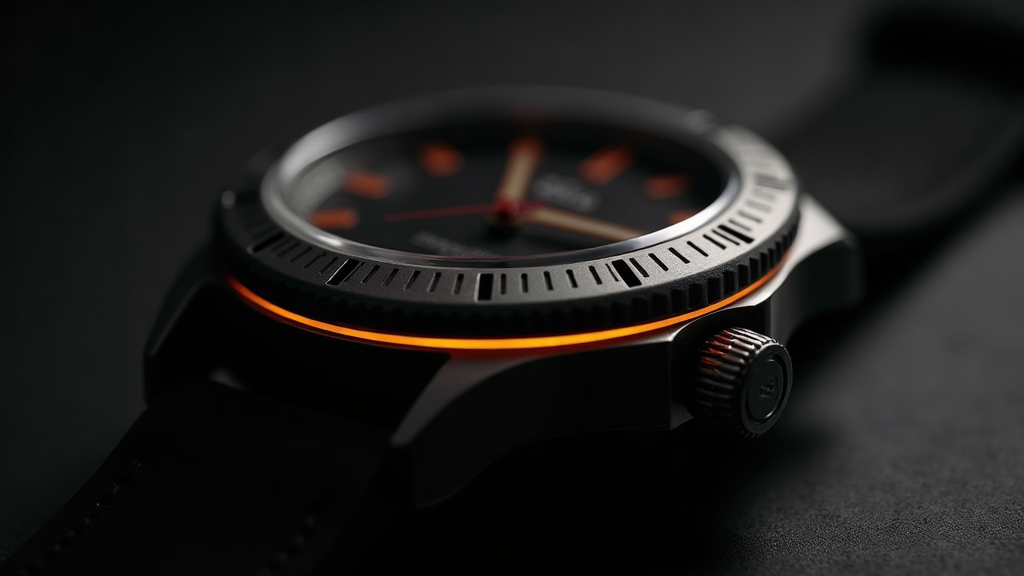
For most of horology's history, the metal on your wrist was destined to scar. Steel scuffs, gold dents, and even hardened alloys eventually wear the story of every desk edge and door frame they meet. Then watchmakers borrowed a material from jet engines and dental labs — and the modern case stopped aging the way it used to. High-tech ceramic is now one of the most desirable materials in watchmaking, prized for a surface that looks identical on day one and decade three.
But "ceramic" in this context has almost nothing to do with the coffee mug in your hand. It is an engineered, sintered powder that ranks just below sapphire and diamond on the hardness scale. Here is how it conquered the wrist.
What "Ceramic" Actually Means in a Watch
The ceramic used in fine watchmaking is typically zirconium dioxide (zirconia) or, less commonly, an aluminum-oxide blend. It begins life as an ultra-fine powder, finer than flour, mixed with a binding agent and a pigment that determines the final color. Unlike paint or coating, that color goes all the way through the material — a scratch never reveals a different shade underneath because there is no "underneath."
That powder is pressed into a rough case shape and then sintered: heated to roughly 1,400–1,500°C until the particles fuse into a single dense solid. During sintering the part shrinks by around 20–25%, which is why every ceramic component must be designed oversized and machined to final dimensions only after firing. Get the shrinkage math wrong and the case is scrap.
Why It Resists Scratches So Well
Hardness is measured on the Vickers scale, and the numbers tell the story. Stainless steel sits around 200 HV. Hardened tool steel might reach 700 HV. Watch-grade ceramic routinely lands between 1,200 and 1,400 HV — closing in on sapphire crystal itself. In practical terms, the everyday materials that gouge metal — keys, coins, concrete, granite countertops — are simply too soft to leave a mark. Only something harder, like sapphire or diamond, can scratch it.
The Trade-Off: Hard but Brittle
Ceramic's greatest strength is also its defining weakness. The same rigid molecular structure that shrugs off scratches has very little ability to flex or absorb a sharp impact. Drop a steel watch on tile and you may get a dent; drop a ceramic watch on the same tile at the wrong angle and the bezel can chip or crack outright.
This is the central engineering challenge of working in ceramic. Manufacturers address it in several ways: thickening vulnerable edges, mounting ceramic bezels onto metal sub-frames, and refining the grain structure of the powder so micro-cracks have fewer places to propagate. The result is a material that survives daily wear beautifully but still demands respect around hard, sharp impacts.
The Finishing Problem Nobody Talks About
Because sintered ceramic is so hard, you cannot finish it the way you finish steel. A watchmaker can hand-polish a steel case with progressively finer abrasives in an afternoon. Ceramic requires diamond tooling — diamond is one of the only things harder than the workpiece — and the process is slow, expensive, and unforgiving.
This is precisely why a high-polish ceramic case commands such a premium. Achieving that deep, liquid gloss means grinding and lapping a material that fights back at every step. The mirror finish you see on a top-tier ceramic bezel represents hours of diamond-abrasive labor that simply has no equivalent in the steel world.
For collectors who appreciate this kind of material mastery — where the metal or composite is as much the story as the movement inside — our TORQ Mechanical Titanium lives in the same philosophy: choosing an uncompromising modern material and engineering the whole watch around its character rather than fighting it.
A Short History of Ceramic on the Wrist
Ceramic's watchmaking debut is usually credited to the early 1960s, when a handful of brands experimented with tungsten-carbide and ceramic-coated cases for scratch resistance. The material truly arrived in the 1980s and 1990s, when high-tech zirconia made it possible to produce a full ceramic case and bracelet rather than just a coating.
The 2000s and 2010s were ceramic's breakout era. Bezels in matte and polished black became a signature of modern sports and dive watches, and brands began chasing exotic colors — deep blue, oxblood, forest green, and the notoriously difficult-to-produce true white and red, where the pigment chemistry must survive 1,500°C without burning away.
The Colored-Ceramic Arms Race
Producing colored ceramic is far harder than it looks. The pigment has to be stable at sintering temperatures, distribute evenly through the powder, and survive the firing without shifting hue. Red ceramic in particular was considered nearly impossible for years because most red pigments degrade in extreme heat. When a brand finally cracks a new color, it becomes a genuine technical headline — a reminder that this is materials science as much as watchmaking.
Ceramic vs. the Alternatives
How does ceramic stack up against the other modern darlings?
- vs. Titanium: Titanium is lighter and far more impact-resistant, but it scratches more easily and develops a worn patina. Ceramic stays pristine but is more fragile.
- vs. Steel: Steel is tougher and easier to refinish, but it scuffs constantly and is heavier. Ceramic resists marks indefinitely.
- vs. Forged Carbon: Both are modern composites, but carbon is lighter and has a marbled, every-piece-is-unique look, while ceramic offers a uniform, jewel-like finish.
There is no universal winner — only the right material for the wearer. Ceramic is for the person who wants a watch that looks showroom-new for life and does not mind treating it with a little care around hard surfaces.
Living With Ceramic
Day to day, a ceramic watch is gloriously low-maintenance. It does not scuff against shirt cuffs, it is hypoallergenic and skin-friendly, it resists fading from UV and saltwater, and it never needs refinishing because it never wears in the first place. The single rule is to avoid hard knocks — keep it off the tile floor and away from granite-edge drops.
For the right wearer, that trade is more than fair: a small dose of caution in exchange for a watch that defies time in the most literal, visible way possible.
The Bottom Line
Ceramic represents one of horology's clearest examples of borrowed technology refined into art. It took a material designed for industrial endurance and gave it a mirror polish and a place on the wrist. It is harder than almost anything it will ever touch, immune to the daily abrasions that age every other watch, and difficult enough to produce that a well-made ceramic case is a quiet flex of manufacturing skill. In a world where most things wear out, ceramic simply refuses to.
Featured Watch
TORQ Mechanical Titanium
Like high-tech ceramic, titanium is a modern material chosen for its character — engineered into a watch built to outlast the trends and survive real life on the wrist.
Explore TORQ Mechanical Titanium →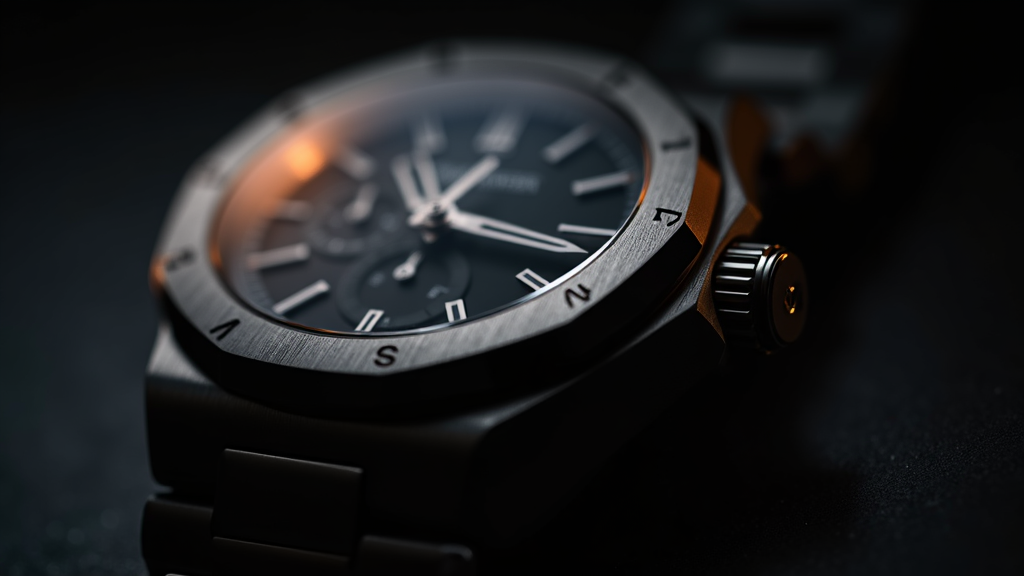

Leave a comment
This site is protected by hCaptcha and the hCaptcha Privacy Policy and Terms of Service apply.