
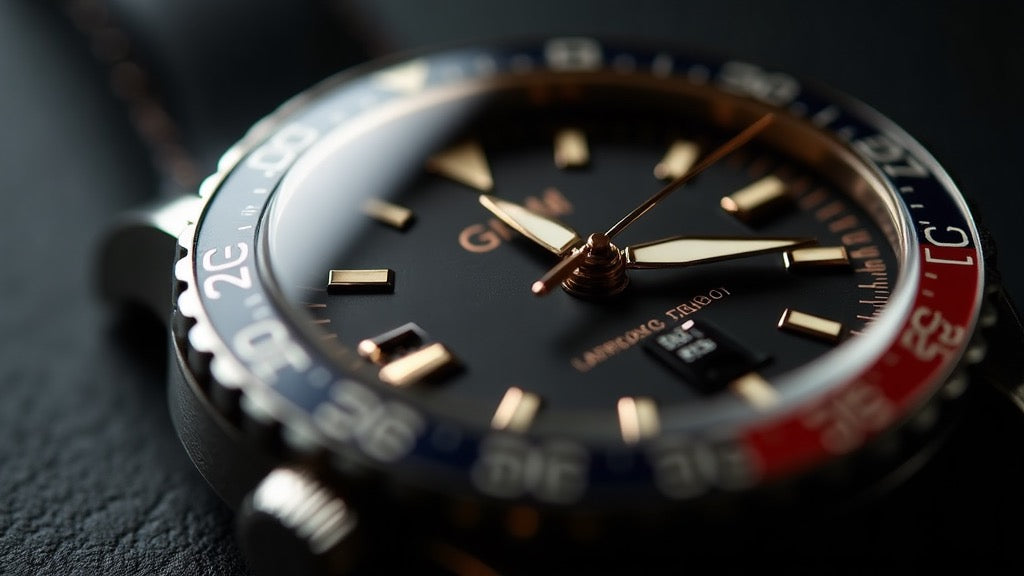
There is a particular kind of clarity in glancing at your wrist and knowing, instantly, what time it is somewhere you are not. A pilot crossing the Atlantic. A trader watching markets open in Tokyo while the sun sets in New York. A traveler who simply wants to know whether it is a reasonable hour to call home. For all of them, the answer lives in one of horology's most elegant and practical inventions: the GMT complication.
Unlike the tourbillon or minute repeater, the GMT was never built to impress. It was built to work. And in doing so, it became one of the most beloved complications in modern watchmaking.
What GMT Actually Means
GMT stands for Greenwich Mean Time, the solar time at the Royal Observatory in Greenwich, London. For centuries, Greenwich served as the world's reference meridian, the zero-point from which every other time zone was measured. When a watch is described as a "GMT," it means the timepiece can display a second time zone simultaneously with the local one.
The genius is in how little it asks of the dial. A standard watch already tells you hours and minutes. A GMT adds a single extra hand and, usually, a 24-hour scale. That is nearly all it takes to fold an entire second time zone onto your wrist.
The 24-Hour Hand
The defining feature of a true GMT watch is its fourth hand, longer and often boldly colored, that completes one full rotation of the dial every 24 hours rather than every 12. This is critical. Because it moves at half the speed of the regular hour hand, the GMT hand can distinguish between, say, 9 in the morning and 9 at night, something a standard hour hand cannot do.
Read against a 24-hour scale, that single hand tells you exactly what hour it is in your reference zone, day or night, without ambiguity.
The Birth of the Modern GMT
The complication as we know it was popularized in the 1950s, during the dawn of commercial jet travel. As airlines began flying long-haul routes across multiple time zones, pilots and crew needed a reliable way to track both their departure time and Greenwich Mean Time, which aviation used as a universal standard.
The answer was a watch with a rotating 24-hour bezel and a dedicated GMT hand. The pilot kept the main hands on local time and used the bezel and fourth hand to read a second zone. The aviation world had its tool, and within a few years it had become an icon of mid-century cool, worn as readily in boardrooms as in cockpits.
Caller GMT vs. Flyer GMT
Not all GMT watches work the same way, and the distinction matters enormously to anyone who actually uses the complication. Watchmakers divide them into two families.
The Caller GMT
In a "caller" or "office" GMT, the local hour hand is fixed to the movement in the usual way, and the GMT hand is independently adjustable. You set your home time on the main hands and spin the GMT hand to whatever zone you want to monitor, perfect for someone sitting at a desk who needs to know what time it is for a colleague overseas before placing a call.
The Flyer GMT
The "flyer" or "true" GMT is the traveler's instrument. Here, the local hour hand jumps independently in one-hour increments, while the GMT hand stays locked to your home reference. Land in a new city, pull the crown, and click the hour hand forward or back to local time, the date often adjusting along with it. Your home time never moves. This is the layout aviators originally demanded, and it remains the more sophisticated, more expensive engineering solution.
For the watch collector who travels, this difference is the whole game. A flyer GMT can be reset on the runway in seconds; a caller GMT requires you to re-derive both zones every time you land.
Reading Three Time Zones
Here is a detail that delights newcomers: a GMT watch with a rotating 24-hour bezel can actually track three time zones at once. The main hands give you local time. The GMT hand against the fixed dial gives you a second zone. And by rotating the bezel, you can offset the GMT hand reading to display a third. It is a quietly brilliant piece of design, turning a simple extra hand into a global instrument.
This versatility is part of why the GMT has aged so gracefully. In an era of smartphones that show every time zone on Earth, the mechanical GMT survives not because it is necessary, but because it is satisfying, a tactile, glanceable, beautifully engineered answer to a real human question.
For collectors drawn to complications that are as wearable as they are clever, a well-executed GMT often becomes the watch they reach for most. If you are exploring pieces that balance mechanical depth with everyday utility, the Grandeur USA collection is built around exactly that philosophy.
GMT vs. World Time: A Common Confusion
People often conflate the GMT with the world-time complication, but they solve different problems. A GMT shows you two (or three) zones of your choosing with maximum simplicity. A world timer displays all 24 zones simultaneously via a rotating ring of city names, sacrificing legibility for breadth.
Think of it this way: the GMT is a scalpel, the world timer is a map. The traveler who lives between two specific cities will almost always prefer the focused clarity of a GMT.
Why the GMT Endures
Few complications strike the balance the GMT does. It is genuinely useful in a way a tourbillon is not. It is more legible than a world timer. It adds visual drama through its colored hand and two-tone bezels without crossing into ostentation. And it carries seven decades of aviation romance, the glamour of an age when crossing an ocean still felt like an adventure.
That combination, function, beauty, and history, explains why the GMT remains a cornerstone of serious watch collecting. It is the complication that asks nothing of you and gives you the whole world in return.
Featured Watch
The Grandeur Collection
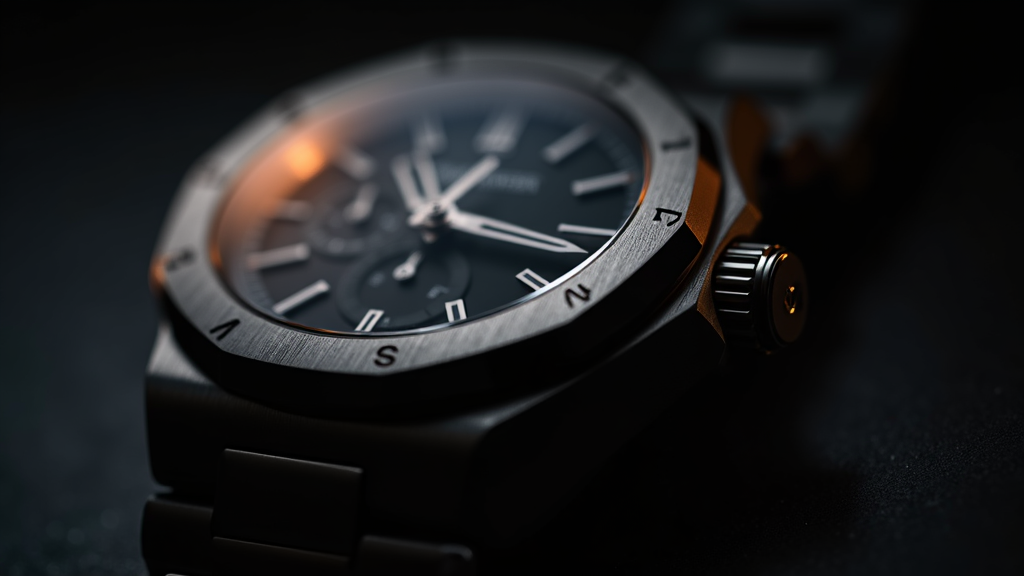
A GMT rewards the traveler and the desk-bound dreamer alike. Explore mechanical pieces engineered with the same obsession for clarity and craft that makes a great dual-time watch worth wearing.
Explore The Grandeur Collection →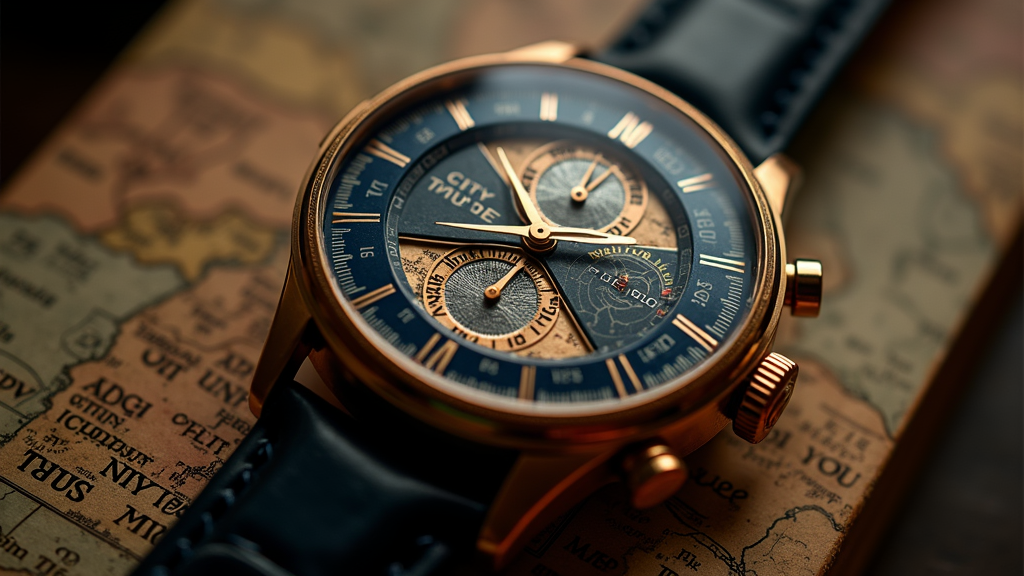

Leave a comment
This site is protected by hCaptcha and the hCaptcha Privacy Policy and Terms of Service apply.