
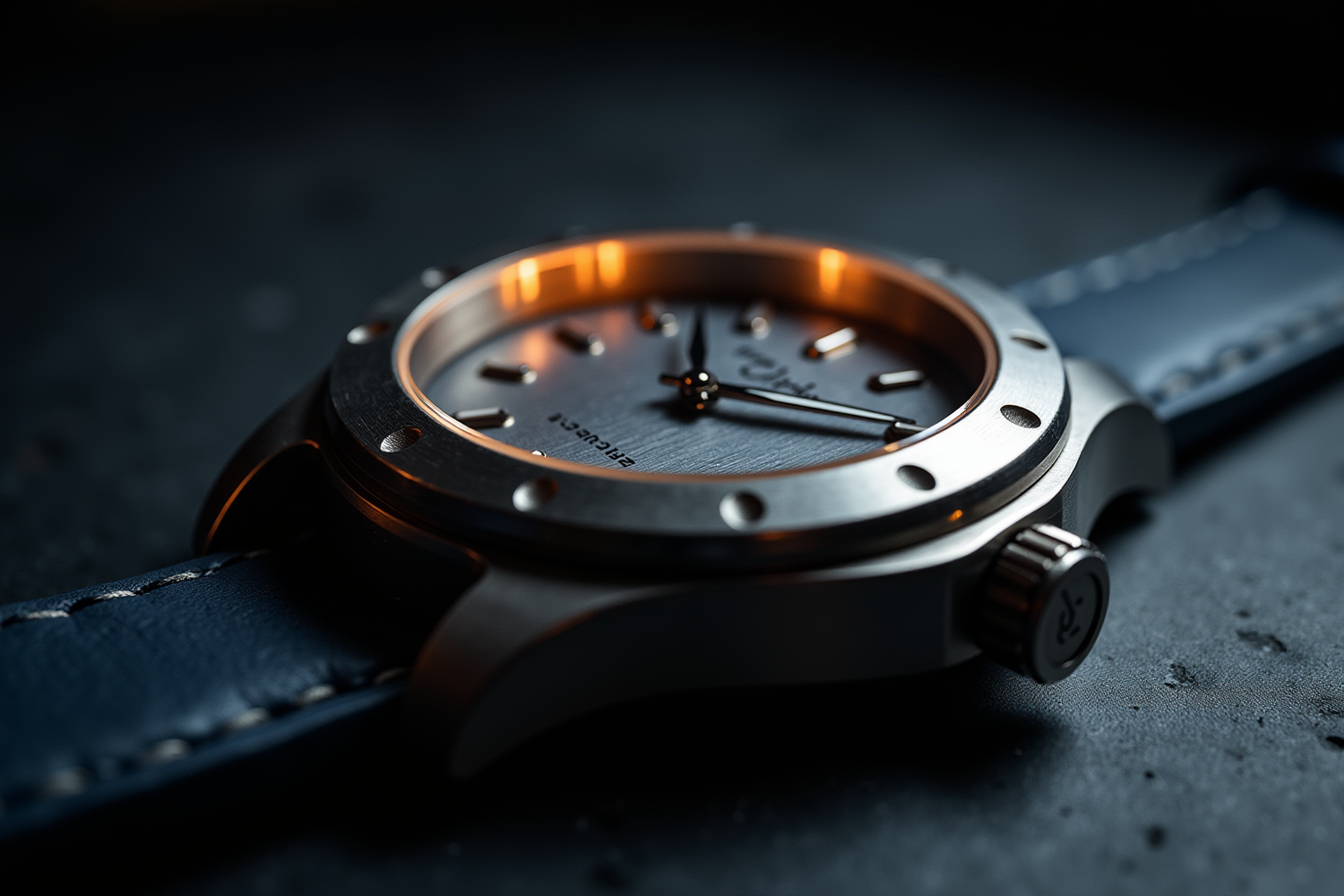
Strong as steel. Lighter than aluminum. Hypoallergenic, corrosion-proof, and stubbornly difficult to machine. Titanium took half a century to escape the cockpit and reach the wrist — and once it did, it rewrote what a high-end watch was allowed to feel like.
Pick up a stainless-steel chronograph. Then pick up its titanium twin. The difference isn't subtle — it's startling. Titanium watches feel almost weightless, as if the case is hollow. They aren't. The metal is simply 45% lighter than steel by volume, with comparable tensile strength and superior corrosion resistance. For decades, this combination of properties was reserved for jet turbines, spacecraft, and surgical implants. Today, it's quietly become one of horology's most consequential materials.
Discovery, Difficulty, and the Long Road to the Wrist
Titanium was first identified in 1791 by the English clergyman William Gregor, who noticed an unusual black sand in a Cornish valley. It took nearly 120 years before anyone produced pure titanium metal, and another 30 before the Kroll process — still the industry standard — made commercial production viable in the 1940s. Even then, the metal's appetite for oxygen at high temperatures and its tendency to gall during machining kept it firmly in aerospace and military applications.
The first titanium wristwatch arrived in 1970, when Citizen produced the X-8 Chronometer for a Japanese audience. It was a technical curiosity more than a commercial success. The watchmaking world simply wasn't ready: tooling was inadequate, surface finishing techniques were primitive, and the matte grey appearance felt clinical compared to the warm gleam of polished steel. IWC's Porsche Design Titan Chronograph in 1980 pushed the conversation forward, and by the 1990s, dive watch specialists — Omega, Seiko, Sinn — had begun treating titanium as a serious alternative rather than a novelty.
What Makes Titanium Different
Not all titanium is created equal. Watchmakers work with several grades, each with distinct trade-offs:
Grade 2: Commercially Pure Titanium
Soft, easy to machine, and inexpensive. Grade 2 is used in entry-level titanium watches where weight reduction is the primary goal. It scratches easily and lacks the structural rigidity demanded by serious sports watches.
Grade 5 (Ti-6Al-4V): The Aerospace Standard
An alloy of titanium with 6% aluminum and 4% vanadium, Grade 5 is roughly twice as strong as Grade 2 and significantly harder. It's the same material used in aircraft frames, rocket engines, and medical implants. The hardness comes at a cost: machining time can be 3 to 5 times longer than steel, and tool wear is brutal. This is the grade that serious watchmakers — and serious wearers — demand.
Grade 23 and Beyond
An ELI (Extra Low Interstitial) variant of Grade 5, used primarily in medical implants for its exceptional fatigue resistance and biocompatibility. A handful of avant-garde watchmakers have begun specifying it for cases worn by clients with sensitive skin.
The Anodization Spectrum
One of titanium's most interesting properties has nothing to do with strength: it's electrically anodizable. Apply voltage to titanium submerged in an electrolyte, and the surface oxide layer grows. Different layer thicknesses refract light differently, producing colors — deep blues, gold, purple, teal — without any dye or coating. The color isn't paint. It's interference. It can't fade in UV light because it isn't a pigment. Independent watchmakers have used this property to create dial textures and case accents that would be impossible in any other metal.
Finishing: Where Titanium Breaks Watchmakers' Hearts
If you've ever wondered why most titanium watches arrive with a brushed or sandblasted finish rather than a mirror polish, the answer is metallurgical. Titanium's microstructure resists the kind of high-gloss polishing that brings out steel's warm glow. The metal can be polished — the techniques exist — but it requires diamond compounds, longer cycle times, and operator skill that few factories possess. Grade 5 in particular is so hard that polishing wheels load up and burn before they smooth the surface.
This is why the matte, satin, and stonewashed aesthetics have come to define titanium watchmaking. It's not a stylistic choice so much as a material consequence. The best titanium pieces lean into this, designing case architecture that celebrates angular geometry and brushed planes rather than fighting the metal.
Why Titanium Matters for Mechanical Watches
The benefits go beyond comfort. Titanium is paramagnetic — it does not interact with magnetic fields the way stainless steel does. For a mechanical movement, where stray magnetism can disrupt the hairspring and cause significant timekeeping errors, a titanium case acts as a subtle shield. It's also hypoallergenic; titanium is one of the few metals the human body fully accepts, which is why it's the standard for surgical implants and dental work. For wearers with nickel sensitivities (a common allergen in stainless steel), titanium isn't a luxury — it's the only viable choice for an all-day watch.
The Independent Embrace
Big brands often treat titanium as a sport-watch material: tool watches, dive watches, racing chronographs. Independent watchmakers have approached it differently. For ateliers without the volume to justify steel tooling at scale, titanium offers a way to differentiate: a material that signals technical seriousness, demands more careful machining, and rewards designers willing to work with rather than against its character.
The result is a category of watches that wouldn't exist twenty years ago — mechanical pieces in cases that vanish on the wrist, with skeletonized architecture and bold geometry that titanium's strength makes possible. A 44mm titanium case can weigh less than a 38mm steel one. That changes what watchmakers can design.
The Quiet Revolution
Titanium hasn't replaced steel — it never will. Steel has its own warmth, its own polished luxury, its own history. But over the last three decades, titanium has earned a permanent place in the watchmaker's material vocabulary, alongside platinum, gold, and ceramic. It is the metal you choose when you want a watch to disappear into the wearer's life rather than announce itself — substantial in engineering, weightless in feel.
The next time you pick up a watch and notice how it sits on your wrist, remember: a century of metallurgy and a decade of patient machining went into making that absence of weight feel inevitable.
Featured Watch
Torq Mechanical Titanium
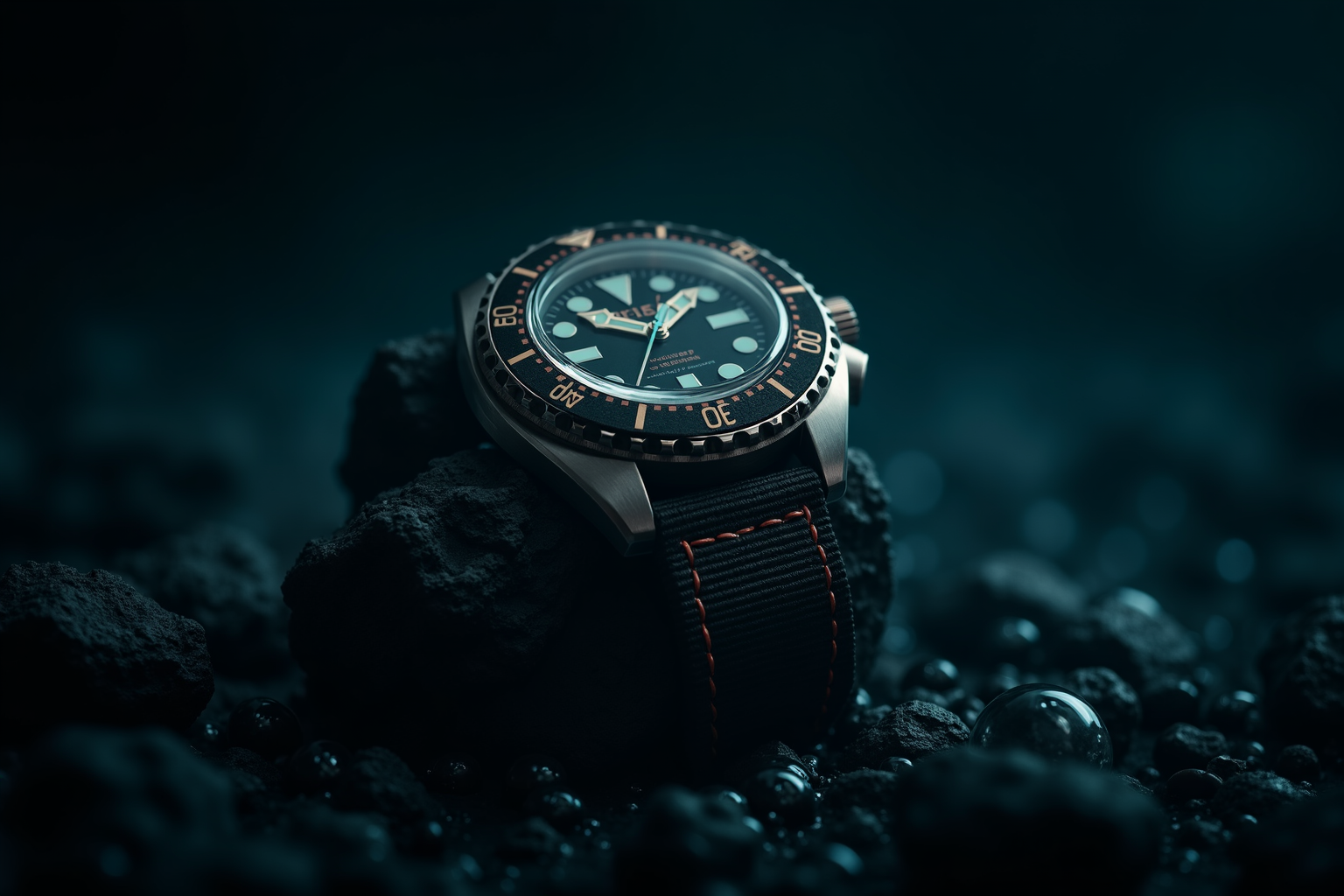
Machined from solid grade 5 titanium billet, the Torq Mechanical Titanium embodies everything this article describes: aerospace metallurgy, hand finishing, and the engineered weightlessness only this material delivers.
Explore Torq Mechanical Titanium →








Leave a comment
This site is protected by hCaptcha and the hCaptcha Privacy Policy and Terms of Service apply.