
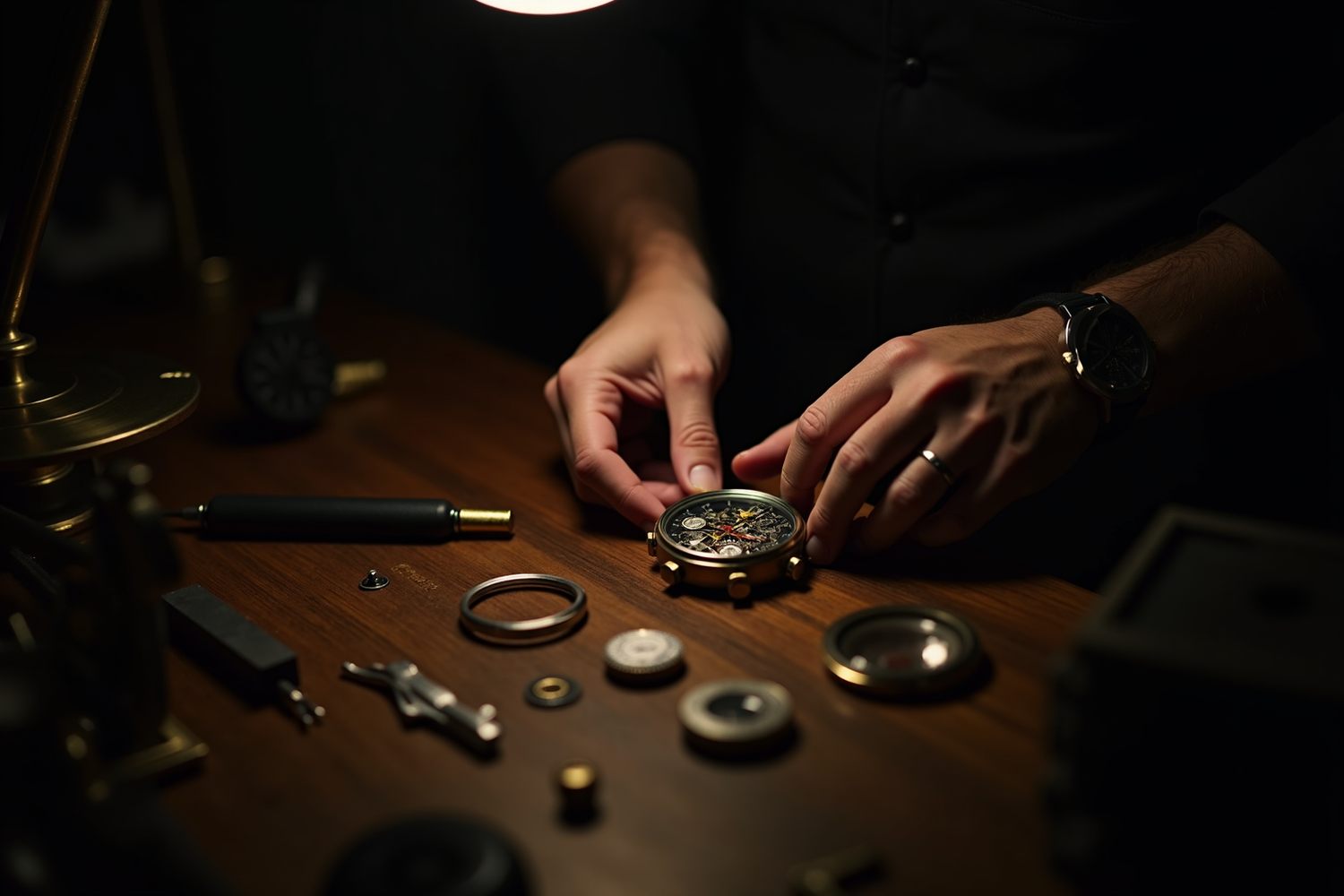
For most of the twentieth century, watchmaking belonged to the conglomerates. Today, the most exciting work in horology is happening in workshops with fewer employees than your local coffee shop — and collectors have started to notice.

Walk into a watch boutique on Madison Avenue or Bond Street in 2026 and you will see a familiar set of names on the walls — the same handful of brands that have dominated luxury for half a century. Walk into the back room of a small atelier in the Vallée de Joux, or a converted apartment in Tokyo, or a workshop above a bakery in Hudson, New York, and you will see something different: one or two people, a bench, and a level of obsession that simply cannot exist inside a quarterly-earnings business.
This is independent watchmaking. And after decades on the margins, it has become the most interesting story in horology.
What "Independent" Actually Means
The word gets thrown around loosely, so it helps to be specific. An independent watchmaker is a brand that is not owned by — or financially controlled by — one of the large luxury groups. The big three are Richemont (Cartier, IWC, Vacheron Constantin, Jaeger-LeCoultre, A. Langes & Söhne, Piaget, Panerai, Roger Dubuis, Baume & Mercier), Swatch Group (Omega, Breguet, Blancpain, Glashütte Original, Longines, Hamilton, Tissot), and LVMH (Hublot, Zenith, TAG Heuer, Bulgari).
Everything else — Rolex, Patek Philippe, Audemars Piguet, F.P. Journe, Greubel Forsey, MB&F, Urwerk, Moser, Czapek, Laurent Ferrier, Voutilainen, Kari Voutilainen, Akrivia, Rexhep Rexhepi, De Bethune, H. Moser & Cie, Grönefeld, and the smaller ateliers below them — is technically independent.
But within that bucket, there is a meaningful distinction. Rolex is independent in the legal sense, yet it produces around a million watches a year and operates at industrial scale. When watch people say "independent," they usually mean something smaller and more specific: a brand whose creative direction sits with a watchmaker, not a CEO; whose annual production is measured in dozens or hundreds, not tens of thousands; and whose work is identifiable by hand, not by logo.
Why the Big Brands Got Conservative
To understand why independents matter now, you have to understand what happened to the big houses.
The luxury watch industry that survived the Quartz Crisis of the 1970s and 1980s was rebuilt as a marketing business. The mechanical watch had no functional reason to exist — quartz kept better time for less money — so the survivors had to sell something else: heritage, status, a story. That worked, spectacularly. But it also locked the brands into a particular logic. The Submariner has to keep looking like a Submariner. The Royal Oak has to keep looking like a Royal Oak. The Nautilus has to keep looking like a Nautilus. Innovation, when it happens, is incremental — a new alloy, a slightly thinner movement, a different bezel insert.
This is rational behavior for a public company or a luxury group portfolio. It is not very interesting if you actually love watches.
The Independent Counter-Move
The independents have no such constraint. F.P. Journe was free to put a tourbillon and a remontoir d'égalité together with a dead-beat seconds in a movement that looks unlike anything in the Patek catalog. Greubel Forsey could spend years developing a 30-degree inclined double tourbillon because there was no marketing committee asking what the customer would think. MB&F could decide that a watch should look like a Star Wars Imperial walker. Urwerk could throw out hands entirely and use orbiting satellites to tell time.
None of these decisions would survive a corporate review. All of them produced collectible, important pieces of horology.
The Economics That Make It Possible
An independent making 50 to 500 watches a year operates on a fundamentally different math than a brand making 50,000. The independent does not need a global retail network. They do not need stadium sponsorships or celebrity ambassadors. They do not need to amortize a giant marketing budget. What they need is a dozen serious collectors who will commit to a piece sight unseen, a couple of trusted retailers, and word of mouth.
The internet — and specifically watch media, Instagram, and a small constellation of obsessive YouTube channels and forums — has made that word of mouth global. A 22-year-old in Singapore can discover a Geneva atelier the same week a piece ships. The conglomerates, with their multi-year planning cycles, cannot react that fast. The independent, with a phone and a lathe, can.
This is why a wait list at Rexhep Rexhepi's Akrivia is now genuinely longer than a wait list at Patek Philippe for a steel Nautilus. The supply is smaller, and the audience is global.
The flagship test: a brand's seriousness as an independent is usually measured by its most ambitious complication. For us, that means the Center Tourbillon — an in-house flying tourbillon staged at the heart of the dial, where you can watch every rotation. The decision to put a tourbillon at twelve o'clock instead of hiding it at six is exactly the kind of editorial choice an independent gets to make.
What Independents Do Better
1. Finishing
The single most undervalued thing in mainstream watchmaking is movement finishing — the chamfered bridges, the polished countersinks, the black-polished steel, the inward angles that machines cannot cut. At industrial scale, finishing is partially automated and partially outsourced; corners get rounded by tumbling rather than by a hand and a piece of pegwood. At independent scale, a watchmaker can spend forty hours finishing a single bridge.
This is invisible to anyone who does not own a loupe. It is unmistakable to anyone who does.
2. Original Architecture
Most of the calibers in mainstream luxury watches share a common ancestry. The same base architectures, often with cosmetic modifications, run through dozens of brands. Independents are forced to design from a blank sheet — partly because they cannot license the good stuff, partly because their entire brand identity depends on doing something different. The result is movements that genuinely look unlike anything else.
3. A Direct Line to the Maker
If you buy a watch from a small atelier, the person who designed it, machined parts of it, and signed the dial may answer your email. That is structurally impossible at scale. For collectors, that connection is part of the object.
The Risks Nobody Talks About
Independent watchmaking is romantic, but it is not without risk. A two-person workshop has no service department. If the founder retires, dies, or burns out, the brand can simply end. Resale markets are thinner; a piece that traded for $200,000 at peak hype can sit unsold at $90,000 if the wave moves on. The smallest independents are sometimes one bad year away from closing.
Collectors who have been around long enough remember the brands that flared and disappeared in the 2000s and 2010s. The current independent boom will produce its own list of casualties. The trick is telling the difference between a workshop that will still be around in twenty years and one that is riding a moment.
Signals That Suggest Longevity
- Real in-house capability. If the watchmaker can demonstrably make their own movements, plates, and bridges — not just assemble bought components — they have a moat.
- A succession plan. Workshops that have brought in younger watchmakers, apprentices, or a co-founder are more likely to survive a generational transition.
- A coherent identity. Brands that have a recognizable design language are harder to dismiss as a fad.
- Disciplined production. Independents who increase output slowly tend to outlast those who chase the moment.
Why This Matters for Anyone Buying a Watch in 2026
You do not have to spend $300,000 to participate in independent watchmaking. The most interesting development of the last decade has been the emergence of small ateliers operating at accessible price points — brands making fewer than a thousand watches a year, doing genuinely original work, and pricing pieces in the low five figures or below. These are the brands collectors will be talking about in fifteen years.
What you are buying, when you buy from an independent, is not a logo or a list price. You are buying an editorial point of view — one watchmaker's answer to the question of what a wristwatch could be in 2026. Sometimes that answer is a tourbillon at twelve o'clock. Sometimes it is a stone dial cut from a single specimen of malachite. Sometimes it is a movement architecture that no large brand would ever sign off on.
The big houses will keep doing what they do, and they will do it well. But the experimental, idiosyncratic, slightly-mad watches — the ones future collectors will hunt for at auction — are being made right now, in workshops most people have never heard of, by people whose names belong on the dial.
That is the part of horology worth paying attention to.
Featured Watch
Center Tourbillon
An in-house flying tourbillon executed at an independent scale — the same philosophy this article is about, made tangible on the wrist.
Explore Center Tourbillon →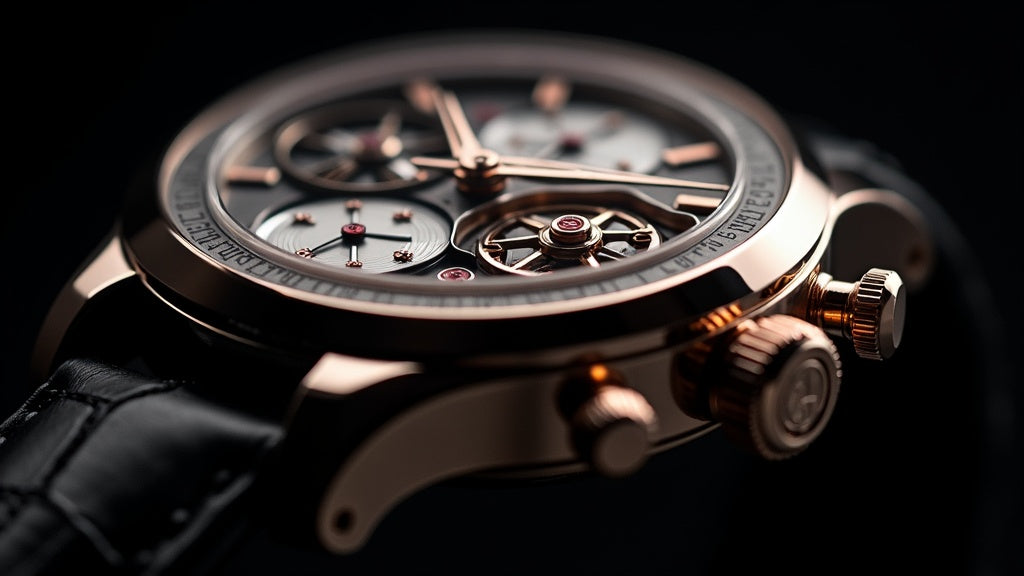

Leave a comment
This site is protected by hCaptcha and the hCaptcha Privacy Policy and Terms of Service apply.