
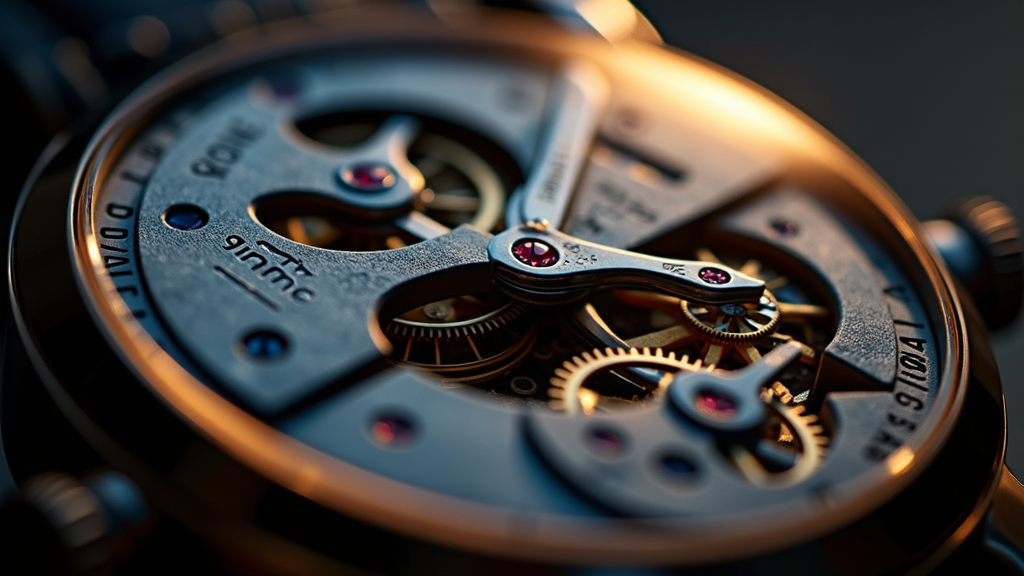
If you've ever flipped over a high-end Swiss watch and noticed a tiny crowned shield engraved into a bridge, you've seen one of horology's most exclusive credentials. It's called the Poinçon de Genève — the Geneva Seal — and it's been quietly judging watchmakers for over 130 years.
Most people know the seal exists. Far fewer know what it actually demands. Spoiler: it's brutal. The Geneva Seal is less of a marketing badge and more of a multi-week ordeal that punishes shortcuts at the molecular level. Here's what's really going on under that little crown.
A 19th-Century Anti-Counterfeiting Law That Stuck
The Geneva Seal was created in 1886, and not for the romantic reasons you might assume. Geneva watchmakers were getting flooded with counterfeits — cheap movements stamped "Genève" by manufacturers who had never set foot in the canton. The local industry needed a way to certify that a movement was both made in Geneva and made well.
So the canton passed a law. A government laboratory — today known as Timelab — would inspect movements against a fixed list of finishing and construction criteria. Pass, and you got the crowned shield engraved into the movement. Fail, and you walked home with an unstamped caliber and a bruised ego.
What's wild is that this is still law. The Geneva Seal isn't a trade association badge or a brand certification. It's a civic hallmark overseen by the Republic and Canton of Geneva. There are only a handful of similar government-backed quality marks in the entire watch industry.
The Twelve Commandments of Finishing
The original 1886 criteria were essentially a list of "do these things, don't do those things." The modernized criteria — overhauled in 2011 to include the entire watch (not just the movement) — read like a finishing manual written by someone who really, really hates seeing tool marks.
A few highlights of what inspectors look for:
- Anglage (beveled edges): Every visible edge of every bridge and lever must be chamfered at roughly 45° and polished to a mirror finish. Inside corners — the parts a machine physically cannot reach — must be hand-finished. This alone can take a master finisher hours per bridge.
- Côtes de Genève or perlage: Decorative striping on bridges, circular graining on the mainplate. Not optional. Not "as desired." Required.
- Polished sinks for jewels and screw heads: The countersinks holding ruby jewels must be polished to a black-mirror finish. Screw heads must be flat-polished, with their slots cleanly chamfered.
- No visible machining marks: Anywhere. Even on surfaces hidden inside the case.
- Specific gear and pinion geometry: Wheels must be circular-grained on their faces, and pinions must have polished leaves.
- Regulator and balance specifications: The balance wheel must be poised, the hairspring must be free-sprung or use a specific class of regulator, and timekeeping must meet a defined accuracy threshold.
- Water resistance, power reserve, and chronometric performance testing on the fully cased watch — not just the bare movement.
Every rule traces back to the same philosophy: a Geneva-Sealed watch should be beautiful in places no customer will ever look.
Why So Few Watches Wear the Crown
Here's the part most articles skip: the Geneva Seal is geographically restricted. To even apply, the movement must be assembled and adjusted within the Canton of Geneva. That instantly disqualifies the vast majority of Swiss brands — including most of the so-called "holy trinity." Patek Philippe famously walked away from the seal in 2009 to launch its own in-house standard, the Patek Philippe Seal, which it argued was stricter (and which conveniently isn't restricted to a single canton).
The brands that still proudly carry the Poinçon today are a small club: Vacheron Constantin, Roger Dubuis, Cartier (on select calibers), Chopard's L.U.C line, and a few others. Even within those brands, only specific calibers qualify. A Vacheron Constantin Overseas with an in-house caliber 5100 doesn't necessarily wear the seal — different reference, different rules.
And the cost? Eye-watering. Industry estimates suggest Geneva-Sealed certification adds 15–30% to the production cost of a movement, mostly in finishing labor. That's why you almost never see a Geneva-Sealed watch under five figures.
The Quiet Influence Beyond Geneva
Here's what's interesting: the Geneva Seal's influence reaches far beyond the watches that actually qualify for it. Independent watchmakers around the world have absorbed its finishing philosophy and applied it to their own work — even when they have zero intention of submitting for certification.
You can see this in the rise of hand-anglage as a marketing point, in the explosion of skeletonized movements showing off polished bevels, and in the way modern collectors casually use phrases like "internal angles" and "black polish" that would have been industry jargon a generation ago. The seal taught the world to look at the back of the watch — and once you start looking, you can't unsee finishing quality.
This is also where independent watchmakers, unbound by Geneva's geography, have had room to play. A studio in the United States, Germany, or Japan can chase the same finishing standards without filing a single piece of paperwork — and many do, simply because the craft demands it.
What the Seal Doesn't Tell You
One honest caveat for collectors: the Geneva Seal is not the same as chronometer certification. A Sealed watch must hit certain accuracy targets, but those targets are looser than COSC chronometer standards in some respects. The seal is primarily about construction and finishing, not pure timekeeping precision. A non-Sealed Grand Seiko Spring Drive will out-tick a Sealed dress watch any day of the week. The seal answers a different question: not "is this accurate?" but "is this beautifully made, by Geneva's definition?"
Why It Still Matters
In an era when "in-house movement" gets tossed around like confetti and brand storytelling has replaced actual standards, the Geneva Seal is one of the last things in watchmaking that's genuinely hard to fake. You can't pay your way through it. You can't market your way around it. A government inspector with a loupe either passes the movement or doesn't.
That's the real value of the crowned shield: it's a 130-year-old refusal to grade on a curve. And whether or not a watch carries it, the standards it represents — uncompromising hand-finishing, thoughtful construction, attention to surfaces nobody will see — are the same standards that separate genuine haute horlogerie from everything else.
That same philosophy is what drives independent makers chasing the craft for its own sake. Our LUMILLION Tourbillon isn't Geneva-Sealed (it can't be — we're not in Geneva), but the obsession with hand-finished bridges, polished bevels, and details you'd only see under a loupe? That part travels.
So next time you're inspecting a watch back, look for the little crowned shield. And if it's not there — look closer at the finishing anyway. The seal taught us all what to look for.
Featured Watch
LUMILLION — Lume Tourbillon
The LUMILLION isn't Geneva-Sealed — Grandeur isn't in Geneva. But the philosophy is identical: hand-finished bridges, polished bevels, and surfaces finished with the same care on the parts you'll never see as on the parts you will.
Explore LUMILLION — Lume Tourbillon →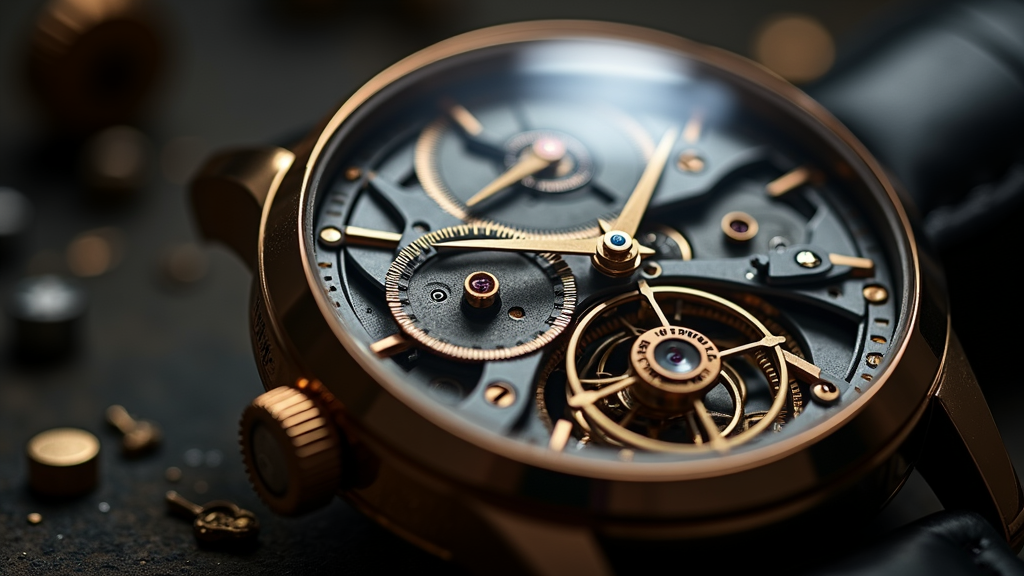

Leave a comment
This site is protected by hCaptcha and the hCaptcha Privacy Policy and Terms of Service apply.