
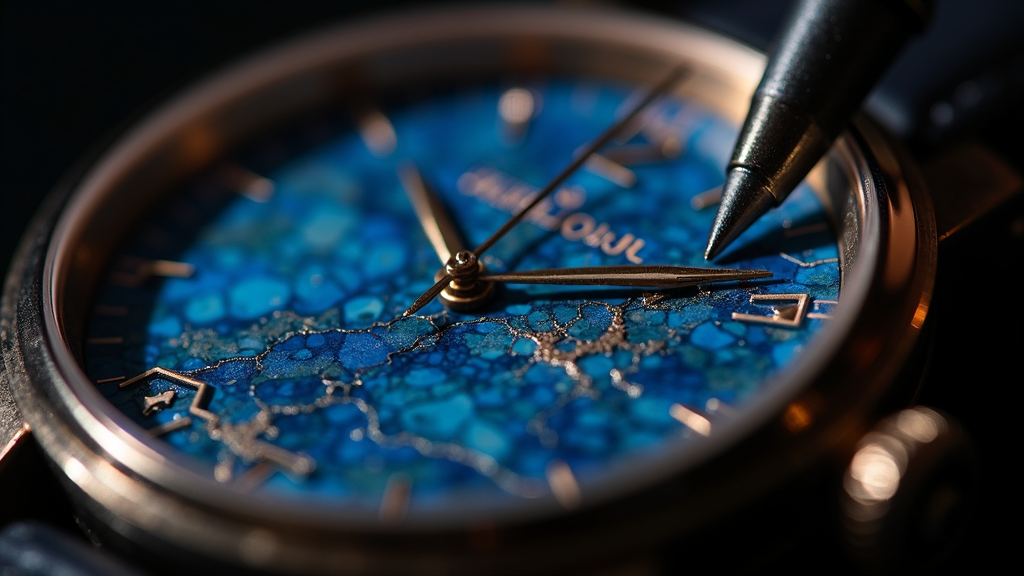
There's a reason stone-dial watches stop people in their tracks. No two are alike. The veins in a piece of malachite, the golden flecks suspended in aventurine, the deep celestial blue of lapis lazuli — these aren't printed patterns or applied textures. They're millions of years of geological history, sliced impossibly thin and fitted to a mechanical movement. But how exactly does a raw chunk of mineral become a watch dial?
The process is more demanding than most collectors realize. Let's walk through it.
It Starts With the Stone
Not every piece of mineral qualifies. Dial makers begin by sourcing raw stone — often from specific mines known for consistency and beauty. Lapis lazuli typically comes from Afghanistan's Badakhshan province, where it's been mined for over 6,000 years. Aventurine is sourced from India, Brazil, and parts of Russia. Malachite, with its hypnotic green banding, primarily comes from the Democratic Republic of Congo and Zambia.
But sourcing is just the beginning. The stone must be evaluated for structural integrity, color saturation, and the absence of fractures that could compromise it during machining. A beautiful stone that can't survive the cutting process is worthless to a dial maker.
Slicing: Where Millimeters Matter
Raw stone arrives in rough blocks or slabs. The first real step is slicing it down to dial thickness — typically between 0.3mm and 0.8mm. This is done using diamond-edged saws, often water-cooled to prevent heat fractures.
This is where things get dicey. Stone is brittle. Unlike metal, it doesn't flex — it shatters. Cutting a slab this thin without cracking it requires extremely slow feed rates, precise blade tension, and constant monitoring. Waste rates can be significant. Depending on the stone type, as much as 30-50% of raw material may be lost to breakage during slicing alone.
Some manufacturers reinforce the thin stone slabs by bonding them to a metal or carbon-fiber backing disc before further machining. This composite approach gives the dial structural support while preserving the stone's natural face.
Shaping and Finishing the Blank
Once you have a thin stone disc, it needs to be shaped to the exact diameter of the watch case — usually with tolerances under 0.05mm. CNC machining with diamond-tipped tools handles the circular cut, but the real artistry comes in the finishing.
The dial face is polished through a progression of increasingly fine abrasives. For stones like aventurine, this polishing is what reveals the characteristic sparkle — the mica inclusions catch light only when the surface reaches the right level of smoothness. Under-polish it, and the dial looks dull. Over-polish, and you risk removing surface material unevenly.
Lapis lazuli presents its own challenge: the golden pyrite inclusions that give it that starry-night character sit at different hardnesses than the surrounding lazurite. Polish too aggressively and you'll create micro-pits around each pyrite speck. The solution is patient, multi-stage polishing with careful pressure control.
Drilling and Cutting: The Most Nerve-Wracking Step
A watch dial isn't just a flat disc. It needs:
- A center hole for the hand shaft
- Holes or recesses for date windows (if applicable)
- Mounting feet on the back side
- Sometimes sub-dial cutouts for complications
Every one of these operations risks shattering the entire dial. Drilling through stone requires specialized carbide or diamond-tipped bits running at high RPMs with minimal pressure. Many makers use ultrasonic drilling for the most delicate operations — the tool vibrates at ultrasonic frequencies, essentially grinding through the stone without the lateral forces that cause fractures.
The mounting feet — small metal posts that attach the dial to the movement — are typically bonded to the stone's back surface with high-strength adhesive rather than press-fitted, since the stone can't withstand the compression forces metal dials handle easily.
Printing and Finishing Touches
Here's where the dial becomes a watch dial rather than just a polished stone disc. Hour markers, logos, and any printed indices need to be applied to the stone surface. This is typically done through pad printing — a process that transfers ink from an etched plate via a silicone pad.
The challenge? Stone surfaces aren't perfectly uniform like metal dials. Micro-variations in the surface texture can cause ink adhesion issues. Many manufacturers apply a thin transparent coating to the stone first, creating a more consistent printing surface while preserving the visual depth of the natural material.
Applied indices — those raised metal hour markers you see on higher-end pieces — are attached with precision adhesive dots, carefully positioned using jigs that account for the specific dial's dimensions.
Why It Matters
All this effort produces something no synthetic material can replicate: genuine uniqueness. The aventurine on your wrist has a sparkle pattern that exists nowhere else in the world. The veining in your malachite dial is a one-time geological event. That's not marketing language — it's mineralogy.
It also means stone dials carry a different kind of value. They connect the mechanical precision of watchmaking to something ancient and fundamentally natural. There's a philosophical resonance there: a movement measuring time in precise increments, housed behind a face that took millions of years to form.
Stone Dials in Practice
If you're drawn to stone-dial watches, you'll find the category ranges from mass-produced pieces using veneered stone (thin stone over metal) to fully artisanal dials cut from solid mineral. The difference is visible — solid stone dials have a depth and luminosity that veneers can't match, especially in how they interact with light at different angles.
Grandeur USA has made natural stone dials a cornerstone of their collections. The Aventurine Edition captures that deep-space sparkle in a way that's immediately arresting, while the Lapis Lazuli Edition channels the stone's ancient association with wisdom and royalty. Their Strange V3 Stone Collection pushes things further — pairing solid mineral dials with an unconventional jumping-hour complication in an architectural case that lets the stone really breathe.
For the 18K Malachite Edition, each dial's swirling green pattern is completely unique — a detail that becomes even more significant when it's set in solid gold.
Caring for Stone Dials
Stone dials are more durable than you might think once they're mounted. The sapphire crystal protects the face from impacts, and the sealed case keeps moisture out. That said, a few considerations:
- Avoid extreme temperature swings — rapid changes can stress the stone-to-backing bond
- UV exposure won't fade them — unlike many organic materials, mineral dials are colorfast
- Ultrasonic cleaning should be avoided — have your watchmaker remove the dial before any ultrasonic case cleaning
The stone that survived millions of years underground can certainly survive life on your wrist. Just give it the same respect you'd give any fine timepiece.
The Bottom Line
Making a stone dial is an exercise in controlled contradiction — taking one of nature's most rigid, unforgiving materials and coaxing it into one of precision engineering's most demanding applications. The skill required is substantial, the waste is significant, and the results are genuinely irreplaceable.
Next time you see a stone-dial watch catching the light, you'll know what it took to get there. And that knowledge makes the view even better.
Featured Watch
Strange V3 Stone Collection
Every dial in the Strange V3 collection is cut from the genuine minerals you read about above — obsidian, jade, lapis lazuli, turquoise, and tiger's eye. No printing, no veneers. Real stone, real jumping hour.
Explore Strange V3 Stone Collection →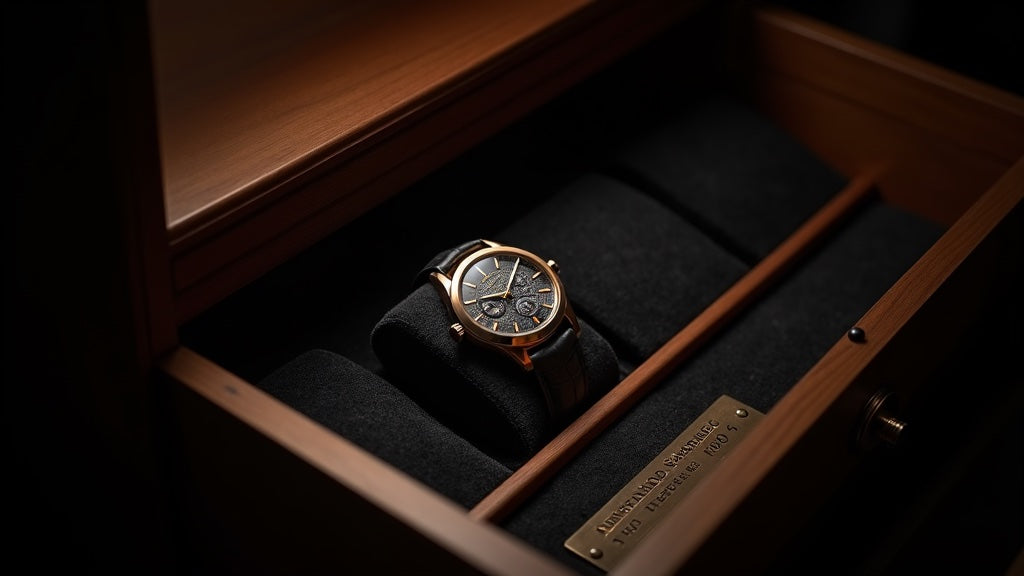

Leave a comment
This site is protected by hCaptcha and the hCaptcha Privacy Policy and Terms of Service apply.