
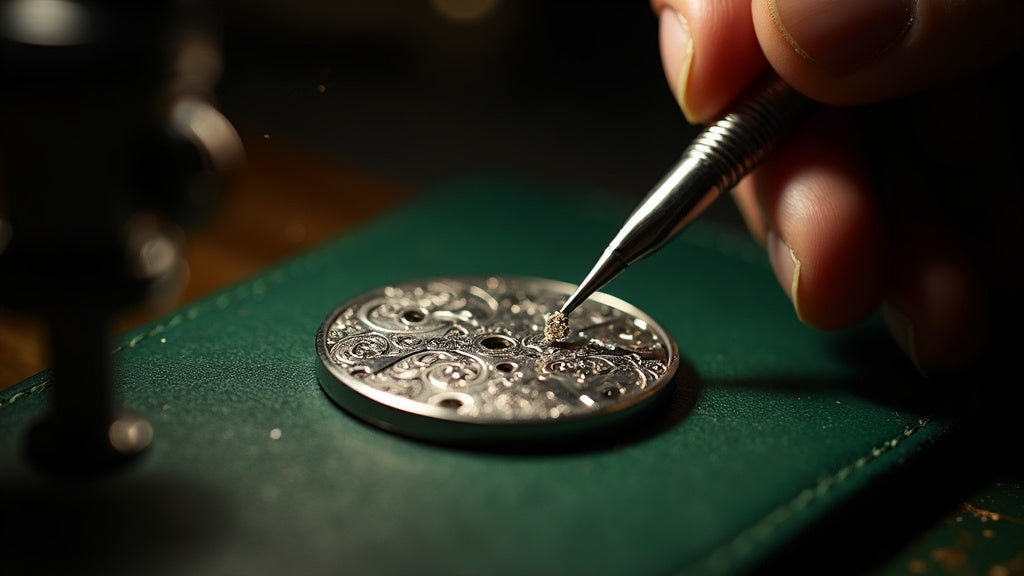
Switch on a 10x loupe and tilt a finely engraved bridge under a desk lamp. The light doesn’t just bounce off the metal—it travels. Tiny troughs cut by a steel burin catch the beam, throw it sideways, and trace patterns that look almost alive. That’s bulino. And it’s one of the last places in modern manufacturing where the eye, the hand, and the metal still negotiate directly with each other.
What “Bulino” Actually Means
The word bulino is Italian for the hand-held graver—a short steel rod with a sharpened tip that an engraver pushes through metal to lift a thin, controlled chip. The technique itself is centuries older than wristwatches. Renaissance armorers used it to ornament breastplates and gun locks; Florentine jewelers used it to chase scrollwork into rings and reliquaries. When pocket watches matured in the 18th and 19th centuries, the same engravers simply moved their benches a few feet over and started decorating watchcocks, balance bridges, and case backs.
Today, when a haute horlogerie brand says a movement is “hand-engraved,” they almost always mean bulino: free-hand graver work, no pantograph, no laser, no rotary tool. Just a sharp piece of steel pushed through softer metal at exactly the right angle.
The Tools Are Almost Insultingly Simple
An engraver’s bench looks suspiciously empty. The core kit hasn’t changed in 200 years:
- Burins—gravers with tips ground to specific profiles. A square burin cuts V-shaped lines for outlines. A flat burin removes background. An onglette cuts the hairline pull-strokes used in shaded scrollwork. A working engraver typically owns 30–60 of them.
- A pitch ball or engraver’s vise—a heavy hemisphere of pitch or a ball-bearing vise that holds the workpiece and lets it rotate freely under the tool. The piece moves; the burin stays nearly still.
- Optics—a stereo microscope or, traditionally, a watchmaker’s loupe clamped into the socket of the eye.
- An oilstone—because the burin is sharpened roughly every 90 seconds of cutting. A dull burin tears metal instead of slicing it.
That’s the entire kit. The complexity lives in the engraver’s hand.
How a Bridge Gets Engraved, Step by Step
1. Surface preparation
Before a single line is cut, the bridge has to be perfectly flat and softly polished. German silver (maillechort) is the traditional substrate because it cuts cleanly, doesn’t need plating, and develops a warm patina over years. Some houses prefer rhodium-plated brass for a colder, brighter finish. Either way, every fingerprint is wiped off—skin oil interferes with how the burin tracks.
2. Layout
The pattern is drawn directly onto the metal in a thin coat of white wax or, more commonly today, transferred as a faint pencil sketch. On a small bridge, the design might be no larger than a fingernail. Top engravers often work without a transferred design at all—the layout lives in their head and grows organically as they cut, the way a calligrapher builds a sentence.
3. The first cut
This is the moment everything depends on. The burin enters the metal at roughly a 30-degree angle, and the engraver pushes—not with the wrist, but with the shoulder, body weight transferred through a relaxed hand. A clean cut produces a single, continuous curl of metal off the burin tip. A bad cut produces a torn edge or a skipped line, and on a movement bridge there is no “undo.” You can polish out a mistake, but only at the cost of thickness, and bridges are toleranced to hundredths of a millimeter.
4. Building the pattern
Most movement engraving uses a vocabulary of scrolls, leaves, and shading. A scroll is a tightly curled spiral; the burin cuts the outside of the curl first, then the engraver rotates the workpiece on the pitch ball to chase the curve. Shading is added with parallel hairlines—dozens of them per square millimeter—that create the illusion of dimension under raking light.
5. Texturing the background
A common finish is to “matte” the recessed background with a fine-pointed punch or a stippling tool, so the polished scrollwork pops against a pebbled field. This is what gives a properly engraved bridge that 3D, jewel-like quality when you tilt it under a loupe.
6. Cleaning and inspection
The finished part is washed in benzine, dried, and inspected at 40x. Any stray burr is dressed away with a hardwood burnisher. Then it goes back to the watchmaker for assembly—where, ironically, much of the work will be hidden by other components. Engravers know this, and they engrave the hidden parts just as carefully. That ethic is the whole point.
How Long Does It Actually Take?
This is the question that separates marketing from reality. A simple engraved signature on a case back—maybe a logo and a serial number—takes a skilled engraver 20 to 40 minutes. A fully engraved balance cock on a tourbillon, with foliate scrollwork and shaded leaves, is 8 to 20 hours. A complete movement, fully engraved across every visible bridge and the rotor, can absorb 80 to 200 hours of bench time.
That’s why hand-engraved watches sit where they sit on price lists. You aren’t paying for the metal removed—the total mass cut away from a movement is measured in milligrams. You’re paying for the years it took the engraver to learn how to remove it.
Why Lasers Haven’t Killed It
Laser engraving is everywhere now, and for serial numbers, calibration marks, and identical logos it’s genuinely better—faster, deeper, perfectly repeatable. So why hasn’t it absorbed bulino too?
Because under magnification, the two look nothing alike. A laser line has a square, ablated bottom and a slightly melted edge. A burin line has a polished V-bottom that mirrors light, and a “shoulder” where the chip lifted that catches a different angle of light entirely. The result is that hand-engraved scrollwork seems to move as you tilt the watch, while laser engraving sits flat. Once you’ve seen the difference, you can’t unsee it.
There’s also the human variable: no two hand-engraved bridges are identical. Symmetry is approximate. Pressure varies. The piece carries the engraver’s handwriting, sometimes literally—many shops let the artisan sign the inside of the case back in their own engraved hand.
Where to Look on a Watch
If you want to spot real bulino work in the wild, head straight for these surfaces:
- Balance cocks and tourbillon bridges — the traditional showcase since pocket-watch days.
- Rotors — automatic winding masses are a perfect canvas because they swing into view every time the watch moves.
- Movement train bridges — usually decorated with a border scroll and a central motif.
- Case-back bezels — often where commissioned, personalized engraving lives.
Tilt the piece slowly. If the pattern shifts, brightens, and dims as the angle changes, you’re looking at hand work. If it stays uniformly grey at every angle, it’s a laser or a stamp.
The Craft Inside Independent Watchmaking
For independent ateliers, hand-engraving is a kind of declaration. It says we are willing to spend a week of bench time on a square centimeter that no one will see again after the rotor is screwed down. That’s the same sensibility behind everything from a five-minute repeater’s hand-tuned gongs to a hand-finished tourbillon cage. At Grandeur, that ethic shows up most visibly in pieces like the LUMILLION Lume Tourbillon, where every angle of the cage and bridge is finished by hand and meant to be looked at hard, under magnification, with the kind of attention engravers themselves use.
You don’t need to own an engraved movement to appreciate it. You just need to put a loupe to one once. After that, the difference between machine-perfect and human-made is no longer subtle—it’s the whole point.
Featured Watch
LUMILLION — Lume Tourbillon
Every LUMILLION cage and bridge is finished by hand — the same ethic the bulino tradition embodies. When you hold one under a loupe, you'll see the same mark of patient human attention that separates real haute horlogerie from everything else.
Explore LUMILLION — Lume Tourbillon →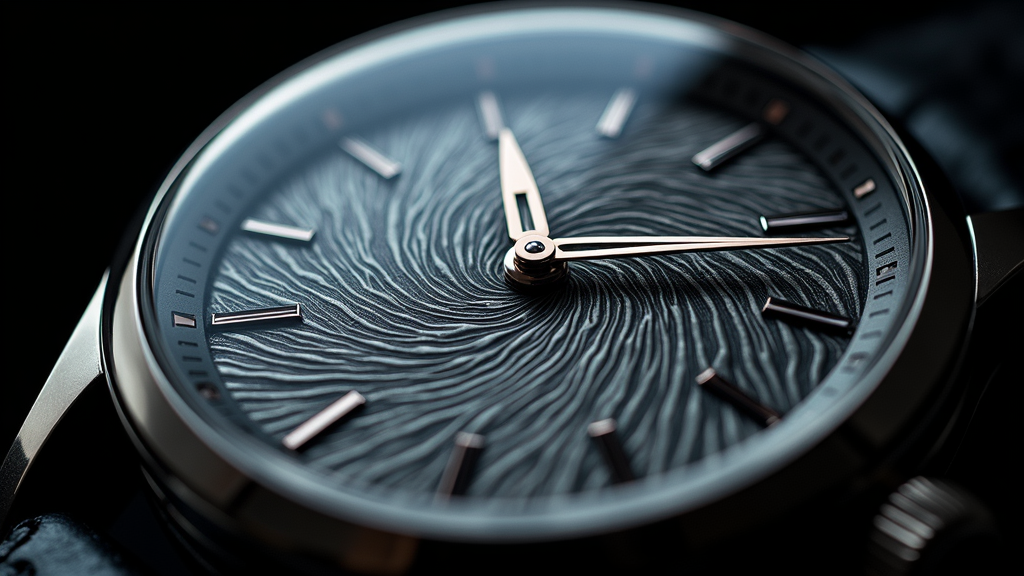

Leave a comment
This site is protected by hCaptcha and the hCaptcha Privacy Policy and Terms of Service apply.