
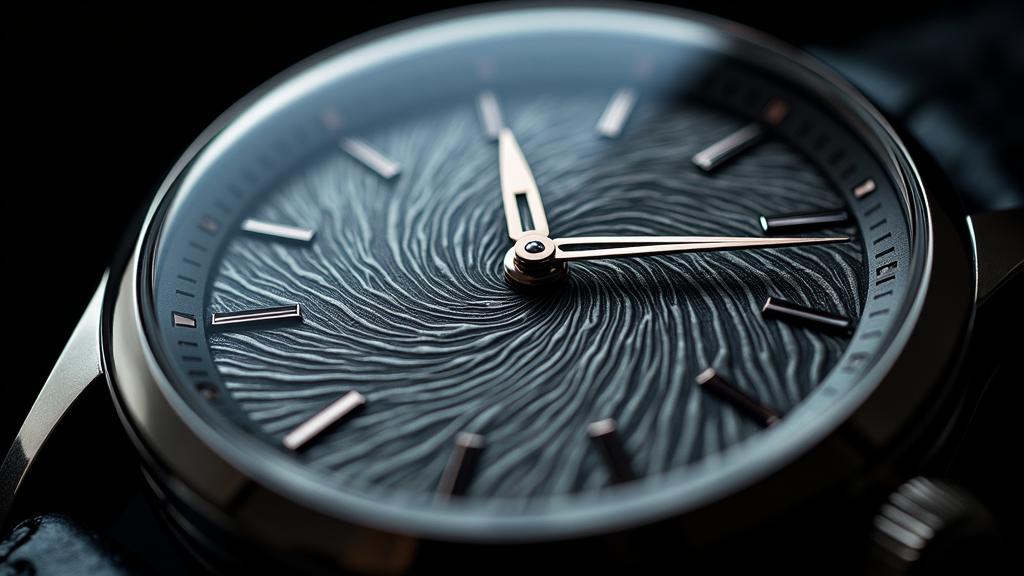
Look closely at a Damascus steel dial and your eye refuses to settle. The pattern flows like a river caught mid-current — dark eddies, bright crests, swirls that seem to move when the light shifts. It's the oldest visual trick in metallurgy, and it's quietly become one of the most striking trends in modern haute horlogerie.
What Damascus Steel Actually Is
Despite the name, "Damascus steel" isn't a single material. It's a family of patterned metals made by forge-welding two or more alloys with different compositions, then folding, twisting, and etching the resulting billet to reveal the contrast between layers. The dark-and-light wood-grain look isn't decoration applied on top — it's the cross-section of the metal itself.
The original Damascus blades, produced in the Near East between roughly 300 BCE and 1700 CE, used a crucible steel called wootz imported from India. The technique was lost for centuries, became the obsession of metallurgists, and was eventually reverse-engineered. What we call Damascus steel today is technically pattern-welded steel — a modern descendant that produces visually similar results through a different process.
How the Pattern Is Made
The basic recipe sounds simple. In practice, it's anything but.
- Stack and weld: Alternating layers of two steels (typically high-carbon and nickel-bearing) are heated to forging temperature and hammered together until they fuse into a single billet.
- Fold and multiply: The billet is cut, stacked on itself, and re-welded — sometimes a dozen times. Each fold doubles the layer count. A 200-layer billet means the smith folded the metal seven times.
- Manipulate: Twisting, drilling, or pressing the billet creates specific patterns — ladder, raindrop, feather, mosaic.
- Etch: A mild acid bath (usually ferric chloride) eats into the alloys at different rates, exposing the layered structure as visible contrast.
The result is a piece of metal where every square millimeter is a unique fingerprint. No two Damascus components are ever identical. That's the whole point.
From Sword to Wrist
Damascus steel arrived in watchmaking late and quietly. For centuries it lived in the world of bladesmiths and collectors. Watchmakers, obsessed with precision and stability, were wary of metals whose properties varied by the millimeter. Modern alloys, vacuum-cast and uniform, were everything Damascus is not.
Two things changed. First, independent watchmakers — always hunting for distinctive materials — started experimenting with patterned billets for cases and dials in the 2000s. Second, contemporary forging techniques produced Damascus stock with predictable mechanical properties, suitable for machining to watchmaking tolerances.
Today you'll find Damascus steel used in three main places on a watch:
- Cases. Forged from steel billets and machined like any other case, but with the etched pattern visible across every polished surface. Each case is, by definition, one of one.
- Dials. Thin slices cut from a billet, lapped flat, and etched to reveal the pattern. A Damascus dial transforms the entire face of the watch into a topographic map of the forging process.
- Bezels and accents. Smaller components where the dramatic pattern can act as a counterpoint to a more traditional case.
Damascus Aluminum: The Lighter Cousin
Steel is the classic, but it's not the only option. Damascus aluminum — also called Mokuti or pattern-forged aluminum — has emerged as a fascinating alternative for dials and lightweight components. It's produced using the same layering principle but with aluminum alloys of different copper or magnesium content, etched to reveal contrast.
The advantages are significant. Aluminum is roughly a third the weight of steel, takes anodized color beautifully, and machines cleanly to dial-flat tolerances. The patterns tend to be softer and more painterly than steel's stark contrast, with a slightly metallic shimmer that catches light differently across the surface.
Grandeur USA's LUMILLION — LUME Tourbillon uses a Damascus aluminum dial as the canvas for its center-mounted tourbillon. The pairing makes sense: a tourbillon is the most visually arresting complication in watchmaking, and Damascus aluminum gives it a dial that refuses to be a passive backdrop. The flowing pattern sits beneath the rotating cage, drawing the eye inward as the tourbillon spins. It's also a deliberate weight choice — every gram matters when you're suspending a tourbillon at twelve o'clock in a TC4 titanium case.
Why It's Hard to Get Right
Damascus looks artisanal because it is. Several things make it brutal to use in watchmaking:
Inconsistency. The pattern that looks stunning on a billet might end up boring on the specific cross-section that becomes your dial. Smiths and watchmakers reject more material than they use.
Machining behavior. Different alloys cut differently. A tool path that works on one part of the billet may chatter or burn on another. CNC programs need to be conservative, and finishing is heavily manual.
Etching control. The acid bath has to bite deep enough to show the pattern, but not so deep that the dial loses its flatness or the case develops weak spots. Timing is measured in seconds.
Finishing. Polishing a Damascus surface is a fight against the smith's work — too much polish and the etched contrast disappears. Most makers settle for a brushed or satin finish that preserves the texture.
Because of all this, a Damascus component is almost always small-batch and almost always more expensive than its plain-steel equivalent. You're paying for failure rate as much as material.
What to Look For
If you're considering a Damascus watch, a few things separate good execution from gimmick:
- Pattern coherence. The flow should feel intentional — radiating from a focal point, mirrored across an axis, or running consistently in one direction. Random-looking patterns often mean the smith just folded and called it done.
- Layer count. More isn't always better, but very low layer counts (under 100) tend to look chunky. Most refined dials sit between 200 and 600 layers.
- Etch depth. Run a fingernail across the surface gently. You should feel texture, but not catch on anything. Too shallow and the pattern fades under light; too deep and it collects grime.
- Edge treatment. Look at where the Damascus meets a polished bezel or crystal seat. Crisp, clean transitions mean the maker took the extra time. Smudged or feathered edges mean they didn't.
The Appeal in One Sentence
A Damascus watch is the rare object where the manufacturing process is the aesthetic. You're not looking at a finish applied to metal; you're looking at the metal's history — every fold, every weld, every thousand-degree moment when two alloys decided to become one. In a category obsessed with perfection, Damascus is unapologetically about controlled chaos. And in a wrist full of identical luxury objects, that chaos is exactly the point.
Featured Watch
LUMILLION — Damascus Aluminum Dial
The LUMILLION is the closest thing to a Damascus thesis in watchmaking: a Damascus aluminum dial paired with a center tourbillon, so the flowing pattern of the forging becomes the backdrop for the most visually arresting complication in horology.
Explore LUMILLION — Damascus Aluminum Dial →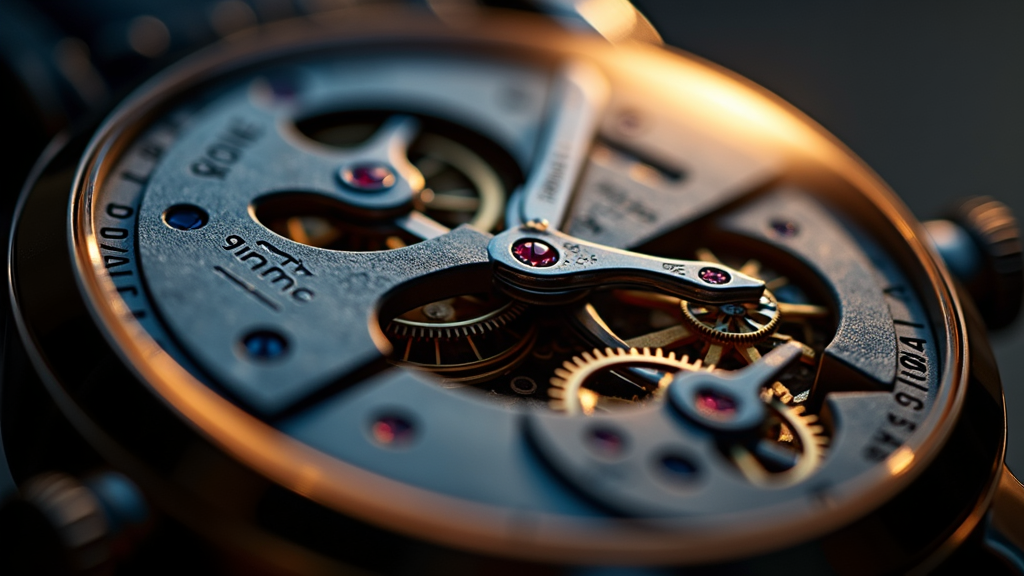

Leave a comment
This site is protected by hCaptcha and the hCaptcha Privacy Policy and Terms of Service apply.