
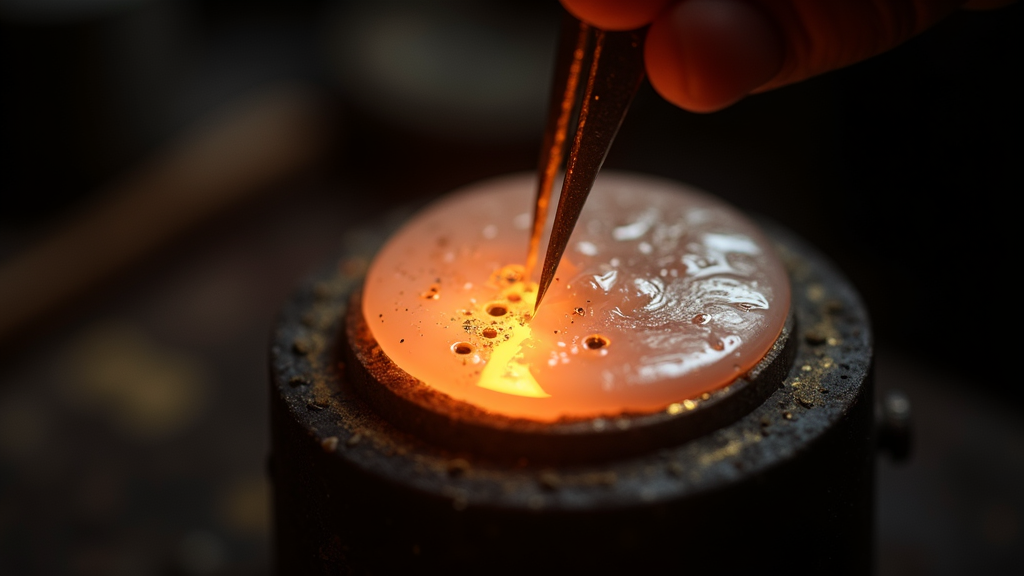

A grand feu enamel dial is one of the few things on a wristwatch that has not changed in 300 years. The kiln is the same. The temperatures are the same. The failure rate is, almost cruelly, also the same.
You can spot one across a room. Grand feu enamel has a wet, glassy depth that printed dials and lacquer simply cannot fake. The white is whiter. The black has shadow inside it. The numerals don't sit on the surface — they sit under it, suspended in glass. That depth is what every collector eventually learns to recognize, and it is why a single enameled dial can be worth more than the entire watch wrapped around it.
Here is what's actually happening on that little disc.
What "Grand Feu" Means
The phrase translates as "great fire," and the name is literal: enamel that is fired at temperatures above roughly 800°C. Below that threshold you get cold enamels, lacquers, and modern resin coatings — all of which can look beautiful, but none of which are vitreous in the chemical sense. Grand feu is glass. Powdered silica fused with metal oxides for color, ground to a fine slurry, painted onto a metal substrate, and then driven, layer by layer, through a kiln until the powder collapses into a continuous glassy skin.
The substrate is almost always a thin disc of fine gold or copper. Gold because it is dimensionally stable and chemically inert under firing; copper because it has been used for centuries by Geneva and Vallée de Joux miniaturists who knew its expansion behavior by feel. Steel and silver are tried, but they fight the enamel — different coefficients of thermal expansion, and the dial cracks somewhere between the bench and the showcase.
The Process, Step by Step
1. Counter-enamel first
Before any decorative work, the back of the dial blank is coated with a structural layer of enamel. This isn't cosmetic. As the front fires and shrinks, an unbalanced disc will warp into a potato chip. The counter-enamel pulls equally on the other side. Skip this step and the dial is firewood.
2. The base coat
The dial-maker grinds enamel frit — small chunks of pre-fused colored glass — under water with an agate mortar until it becomes a fine, uniform sediment. The slurry is brushed onto the front of the disc, allowed to settle, then dried. Into the kiln it goes for the first firing: typically 90 seconds at 820–860°C. The powder collapses into a glossy skin.
3. Layer, fire, repeat
One firing is never enough. A finished grand feu dial will pass through the kiln five to fifteen times. Each layer is thin — a few hundredths of a millimeter — and each firing risks every layer underneath it. Color shifts. Pinholes appear and have to be filled. Tiny dust particles invisible to the eye become visible craters at 820°C. A perfect-looking dial after firing eight can still die at firing nine.
4. Decoration
This is where grand feu splits into specialties:
- Champlevé — recesses are engraved into the metal blank and filled with colored enamel.
- Cloisonné — fine gold wires, often less than 0.2 mm thick, are bent by hand and laid down to draw a pattern. The cells between the wires are flooded with enamel and fired.
- Plique-à-jour — a translucent technique with no metal backing, like a tiny stained-glass window. Brutally fragile.
- Paillonné — gold or silver leaf shapes ("paillons") are sandwiched between enamel layers and shimmer through the glass.
- Miniature painting — applied with brushes that may have only a few hairs, refired between every color so pigments don't bleed.
5. Polishing
After the final firing, the surface is rarely flat enough. The dial is lapped against progressively finer abrasives — diamond, then cerium oxide — until the enamel is mirror-smooth. Lapping too far means cutting into a lower color layer and starting over. Lapping too little leaves orange-peel texture under raking light.
Why Grand Feu Dials Crack
The fundamental problem is that metal and glass don't expand at the same rate. As the kiln heats and cools, the substrate and the enamel are pulling against each other. A skilled enameller chooses an enamel formulated to match the chosen alloy almost exactly. "Almost" is the operative word — it is never perfect. Every grand feu dial is, on a microscopic level, a frozen tug of war.
This is also why grand feu dials age so well. They don't fade. They don't yellow under UV. The pigments are metal oxides locked inside glass — chemically about as stable as anything humans make. A 1955 grand feu dial looks today exactly as it looked when it left the bench, while the printed dial next to it in the same display case has gone tropical brown.
Who Still Does It
The number of working grand feu enamellers in Switzerland is shockingly small — typically a few dozen at any given time, scattered between independent ateliers and the in-house dial workshops of houses like Patek Philippe, Vacheron Constantin, and Jaeger-LeCoultre. Donzé Cadrans (now part of Ulysse Nardin) and Anita Porchet's atelier are among the most respected outside the major manufacturers. Almost everyone learned from someone who learned from someone — the chain of knowledge is short, and every retirement matters.
The reject rate is the part the marketing departments don't love discussing. A working number is 30 to 50 percent for a clean white grand feu dial. For miniature painting on enamel, finishing one or two acceptable dials per month is a normal pace. This is why an enameled dial adds five figures to a watch's price tag and isn't going anywhere south.
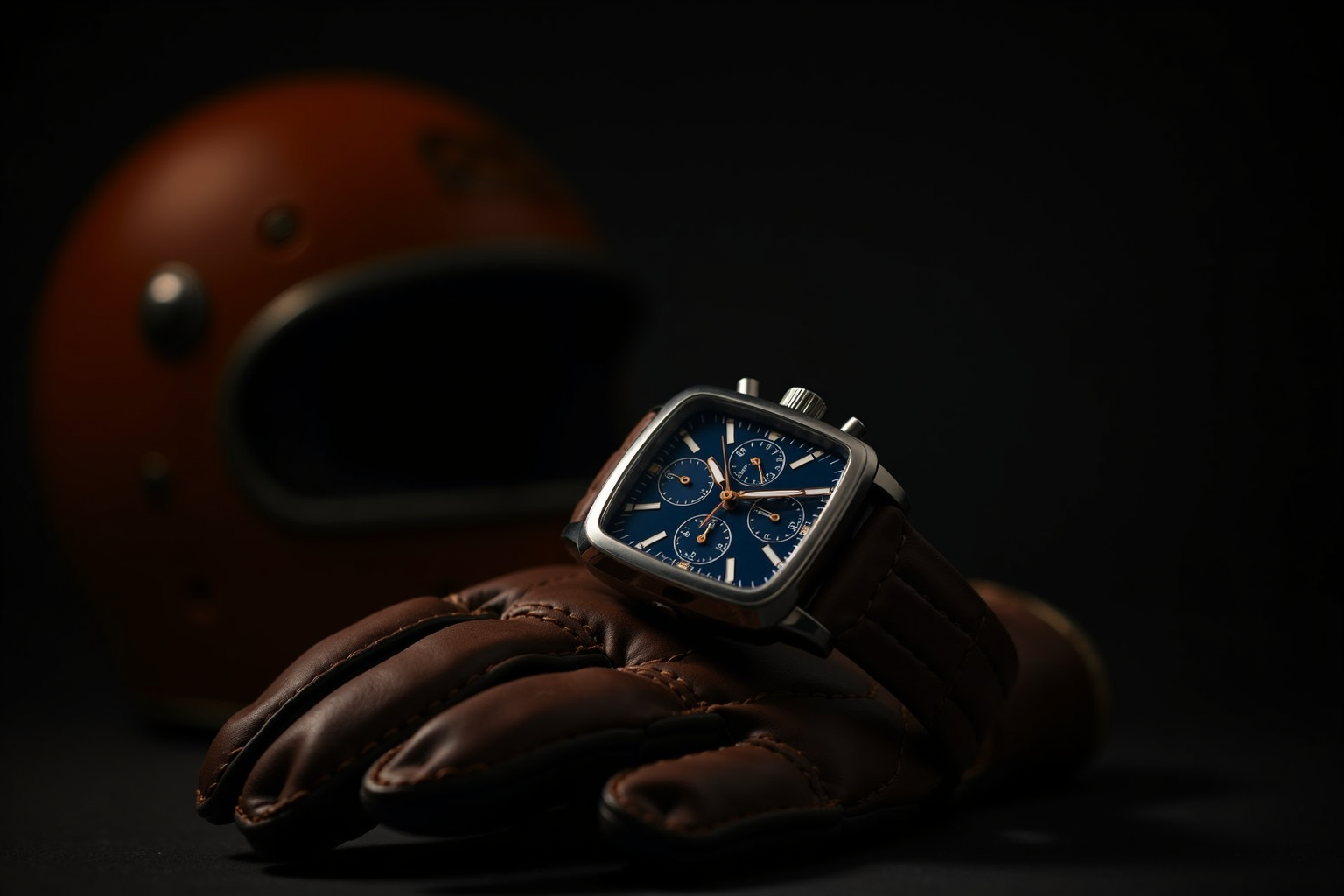
For collectors who want the kind of dial work that rewards a loupe — translucent depth, hand-laid detail, finishing that survives a century unchanged — exploring pieces with stone or specialty dials is a useful adjacent path. Our Grandeur Strange V3 with stone dials is built around that same philosophy: the dial is the watch, and the watch is built to show it off.
How to Read a Grand Feu Dial
A few tells separate real grand feu from the imitations:
- Depth. Tilt the dial under a single light source. Real enamel has a wet, three-dimensional gloss; printed lacquer reads flat.
- Edge transitions. Where the enamel meets the metal at the dial's rim, you should see a clean, slightly raised lip — the meniscus left by molten glass. Painted dials have a printed edge.
- Imperfections. Counter-intuitively, a perfectly uniform white dial is suspect. Hand-fired enamel almost always carries a faint, microscopic texture or one tiny "fire mark" — visible only at 10x. Total perfection usually means a machine made it.
- Numeral floating. On painted-and-fired numerals, the digits sit slightly inside the surface, not on top, because they were laid down before a final clear-coat firing.
The Quiet Argument
You can buy a watch with a perfect, mass-produced PVD-coated dial for a fraction of what an enameled equivalent costs. The PVD dial will look superb. It will also look exactly the same as every other one made that month, and in twenty years it may not look like anything at all.
A grand feu dial is the opposite bet. It is slower, more expensive, more likely to fail in production, and — assuming it survives — almost guaranteed to outlast the watch's owner. That trade is the entire argument for traditional dial work, and it is why the kiln, against every economic incentive, is still being lit at 820°C every morning in a few small ateliers across Switzerland.
Featured Watch
Grandeur Strange V3 — Stone Dials
If grand feu enamel is the art of glass over metal, the Strange V3 is its mineral cousin: hand-cut stone dials where every piece is one of one, and the dial does the talking.
Explore Strange V3 →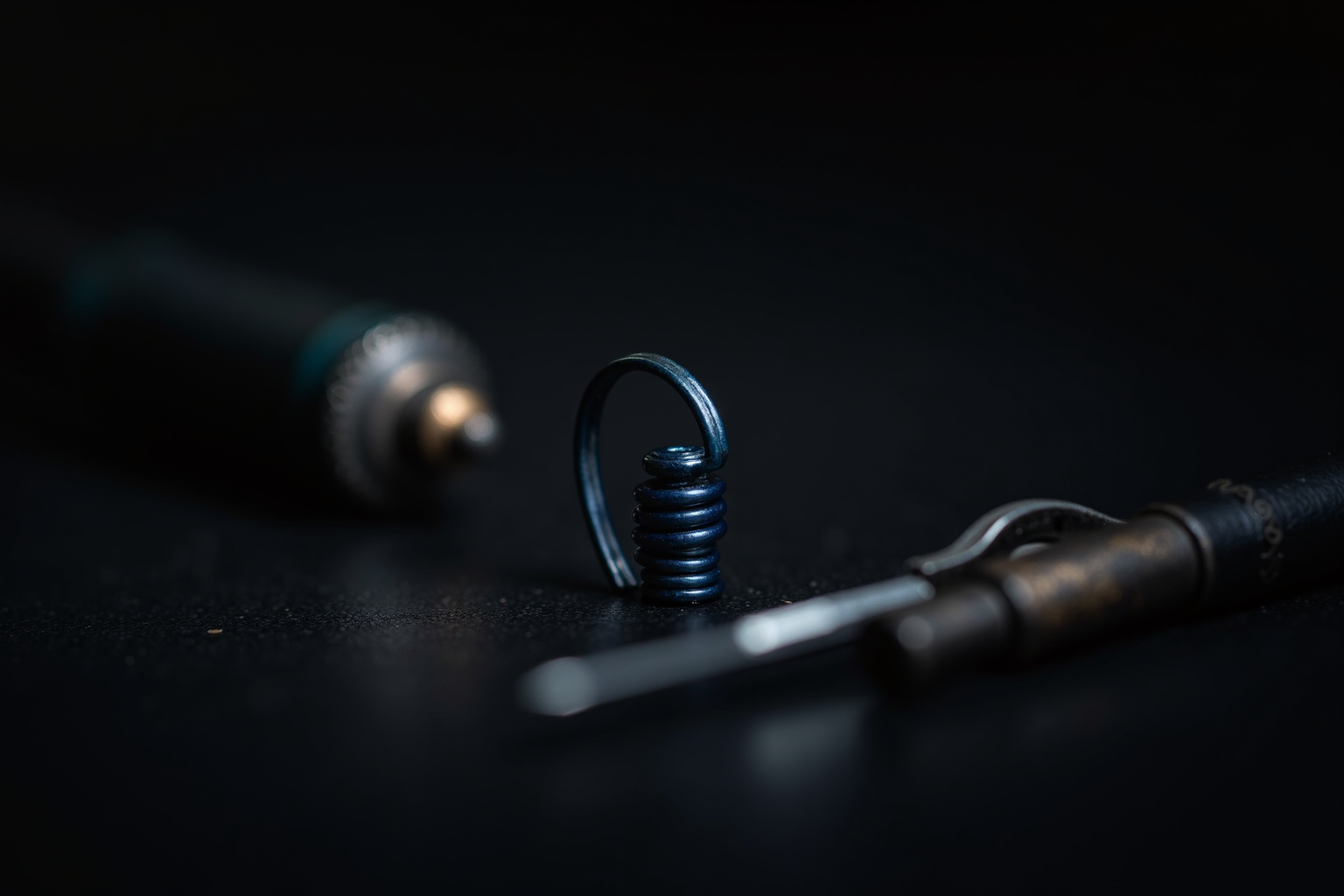

Leave a comment
This site is protected by hCaptcha and the hCaptcha Privacy Policy and Terms of Service apply.