
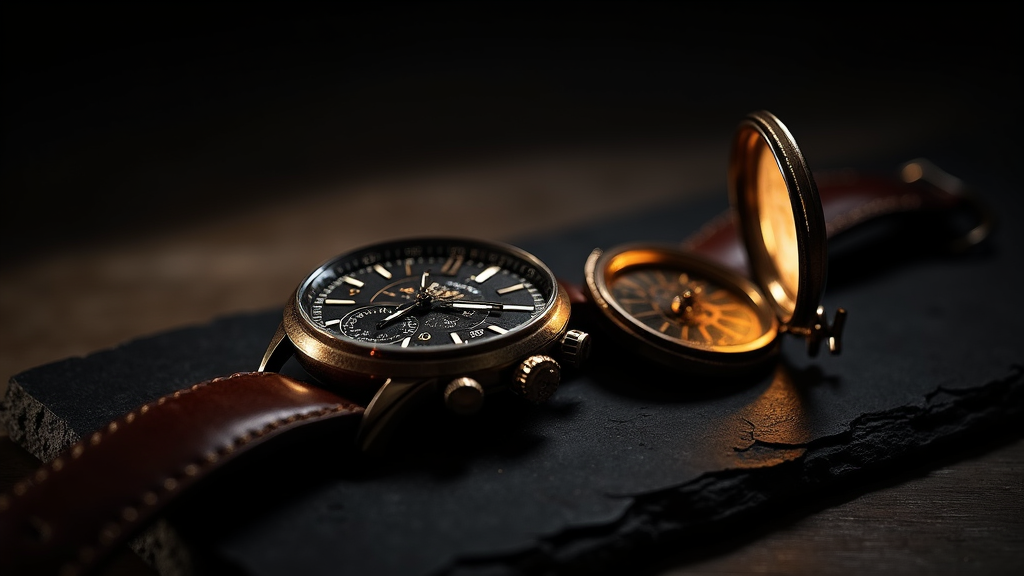
For most of horology's history, a gentleman who pulled a timepiece from his wrist rather than his waistcoat pocket would have been considered eccentric at best. The wristwatch — now the default way humanity tells time — spent its first century fighting for legitimacy. Its rise from feminine ornament to military necessity to status symbol is one of the great quiet revolutions in design history. This is how a small machine migrated ninety centimeters down the arm and changed everything.
The Pocket Watch Era and Its Iron Grip
By the 1800s, the pocket watch was firmly established as the respectable man's timekeeper. Tucked into a waistcoat, tethered by a chain, and retrieved with a deliberate gesture, it was as much social ritual as instrument. The act of consulting one signaled status — a fine pocket watch could cost a year's wages, and pulling it out announced that you owned both the time and the means to measure it.
Anything worn on the wrist, by contrast, was considered jewelry. The earliest wrist-worn timepieces were almost exclusively women's pieces — delicate, gem-set "wristlets" that prioritized decoration over accuracy. To a Victorian gentleman, strapping a watch to your arm was roughly as masculine as wearing a tiara. The cultural resistance was real, and it would take something far more powerful than fashion to break it.
The Battlefield Changes Everything
That force was war. As military tactics grew more coordinated in the late 19th and early 20th centuries, officers needed to synchronize maneuvers to the minute. Fumbling in a pocket while holding a rifle, reins, or a map was impractical and sometimes deadly. Soldiers began improvising — strapping pocket watches to their wrists with leather "cup" holders so they could check the time at a glance.
The Trench Watch Is Born
During the Boer War and then the First World War, these field-modified timepieces evolved into purpose-built "trench watches." They featured luminous radium dials for reading in darkness, protective metal grilles over the crystal, and large numerals for instant legibility. A man in a trench did not have a free hand to dig out a pocket watch, and the wristwatch suddenly looked less like jewelry and more like essential equipment.
By the end of the war, a generation of young men had returned home wearing watches on their wrists — and crucially, no longer viewing it as effeminate. The wristwatch had been forged in mud and gunfire into a symbol of duty and modernity. The pocket watch's century-long monopoly was over.
The Engineering Catch-Up
Function followed acceptance. A watch on the wrist faces challenges a pocket watch never does: it is jostled, bumped, exposed to sweat, rain, and dust, and held at every conceivable angle. Watchmakers spent the 1920s and 1930s solving these problems, and the solutions defined modern horology.
The screw-down crown and gasket-sealed case produced the first genuinely water-resistant wristwatches. Shock-protection systems cushioned the delicate balance staff against impacts. And in 1931, the rotor-driven automatic movement freed wearers from daily winding — a perpetual mechanism that harvested energy from the simple motion of the arm. Each innovation answered a question the pocket watch had never been forced to ask.
This same restless engineering spirit drives independent watchmaking today. A modern atelier like Grandeur USA inherits the trench watch's core mandate: build something legible, robust, and unmistakably purposeful for the wrist — then refuse to stop refining it.
From Tool to Status Symbol
Once the wristwatch was accepted, it began climbing the social ladder the pocket watch had once dominated. The mid-20th century saw the form split into specialized tribes, each solving a real-world problem with mechanical elegance.
The Tool-Watch Golden Age
Pilots needed legible dials and rotating bezels to calculate flight times. Divers needed water resistance to hundreds of meters and a timing bezel that could only move one direction — a safety feature that prevented overestimating remaining air. Racing drivers wanted chronographs to time laps. Each of these "tool watches" was engineered for a job, and ironically, that honest functionality made them objects of desire long after the jobs themselves went digital.
By the 1960s the wristwatch had completed its journey: from women's ornament, to soldier's instrument, to the definitive masculine accessory and engineering showcase. The pocket watch, meanwhile, retreated into formalwear and collector cases — a beautiful relic of a slower century.
The Quartz Crisis and the Mechanical Renaissance
The wristwatch's dominance was nearly its undoing. When quartz movements arrived in the 1970s — accurate, cheap, and battery-powered — they threatened to make the entire mechanical tradition obsolete overnight. Swiss factories closed by the hundreds. For a moment, it seemed the intricate machine that had survived two world wars would be killed by a vibrating crystal.
What saved mechanical watchmaking was precisely what had once held it back: emotion. Stripped of its practical necessity by quartz and later the smartphone, the mechanical wristwatch became something purer — an heirloom, a statement, a small kinetic sculpture worn in defiance of the digital age. Buyers no longer needed a mechanical watch. They wanted one. That distinction is the entire foundation of the modern luxury watch market.
Why the Story Still Matters
Every mechanical wristwatch on the market today carries this lineage in its DNA. The water resistance traces to those sealed cases of the 1920s. The luminous hands echo the trench watch. The automatic winding rotor spins on the same principle patented in 1931. When you strap on a finely made watch, you are wearing the resolved tension between ornament and instrument, between tradition and survival — a century of engineering compressed into something you barely feel on your wrist.
The pocket watch told the time. The wristwatch told a story about who we became.
Featured Watch
Torq Mechanical Titanium
The wristwatch was perfected for action and the arm — the Torq Mechanical Titanium carries that century of tool-watch engineering in a lightweight aerospace-metal case built to be worn, not pocketed.
Explore Torq Mechanical Titanium →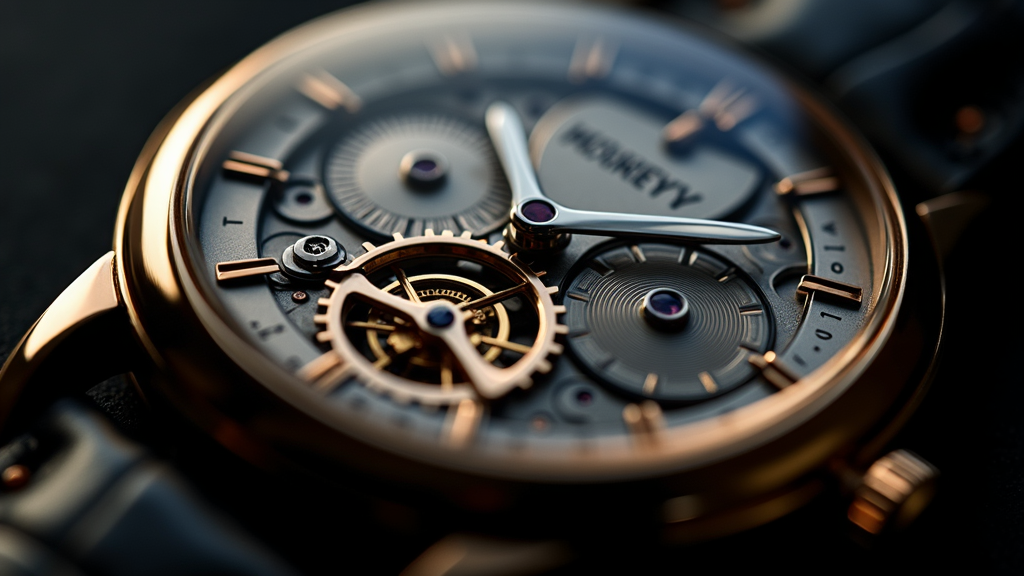

Leave a comment
This site is protected by hCaptcha and the hCaptcha Privacy Policy and Terms of Service apply.