
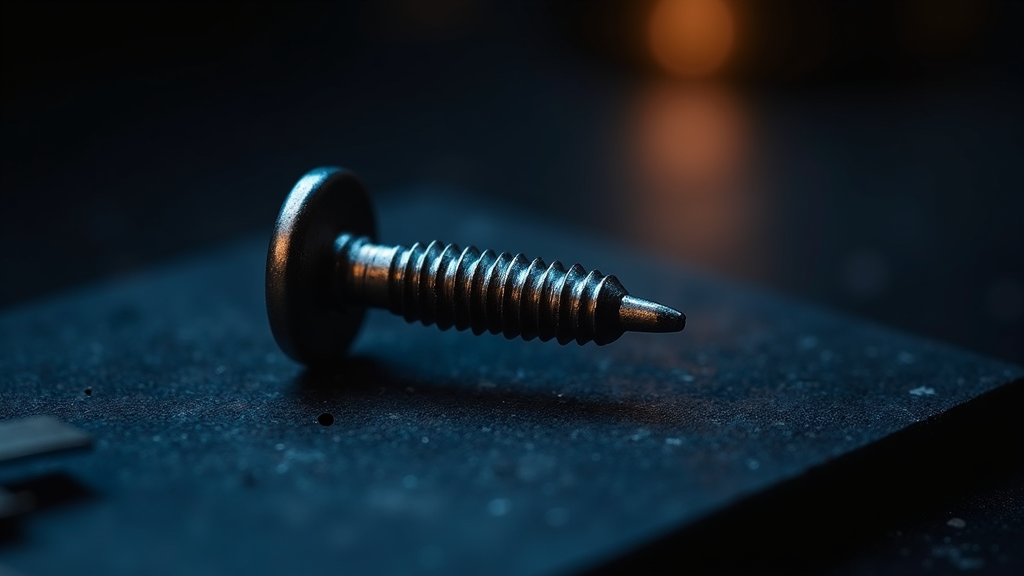
There is a particular shade of blue that no dye, no coating, and no paint can convincingly fake. Watch collectors know it on sight: a deep, luminous peacock-blue that seems to shift and glow as the wrist turns. It appears on the tips of hands, the slots of screws, the sweep of a small-seconds indicator. It is not applied to the steel. It is the steel — or rather, a thin skin of oxide grown on its surface by nothing more than carefully controlled heat. This is heat-blued steel, and it is one of the oldest and most quietly demanding techniques in all of watchmaking.
What Is Heat-Bluing, Really?
Heat-bluing (also called flame-bluing or thermal bluing) is the process of heating polished steel until a microscopically thin layer of iron oxide forms on its surface. As the temperature climbs, this oxide layer grows thicker in predictable stages, and its thickness determines the color your eye perceives through the physics of light interference — the same phenomenon that paints a soap bubble or an oil slick.
Crucially, the color is not a pigment. It is structural. Light waves reflecting off the top of the oxide layer interfere with light waves reflecting off the steel beneath it, and depending on the layer's thickness, certain wavelengths cancel while others reinforce. Get the oxide to roughly 40 nanometers and the eye reads a warm straw yellow. Push it thicker and you march through brown, purple, and finally that coveted cornflower-to-peacock blue at around 300°C surface temperature.
The Temperature Ladder
Watchmakers historically memorized the sequence of "tempering colors" the way a chef learns the stages of caramel:
- ~230°C — pale straw yellow
- ~250°C — deep golden brown
- ~280°C — purple and violet
- ~300°C — the target: brilliant blue
- ~330°C and beyond — gray-blue, then dull gray (the color is "lost")
The window for perfect blue is astonishingly narrow — a matter of perhaps twenty degrees and a few seconds. Overshoot and the vivid blue collapses into a lifeless slate gray that cannot be recovered without starting over. This is why heat-bluing, despite requiring no exotic equipment, remains a genuine test of a craftsperson's nerve and eye.
A Technique Older Than the Wristwatch
The roots of tempering colors stretch back centuries before anyone strapped a watch to a wrist. Swordsmiths and armorers observed these same color transitions while tempering blades, using the hues as a visual thermometer long before thermometers existed. By the 18th century, master watchmakers — Breguet foremost among them — had elevated blued steel into a signature aesthetic. Breguet's slender, hollow-tipped "pomme" hands in glowing blue became so iconic that they are still called Breguet hands today.
There was practicality mixed with the beauty. The oxide layer offers a modest degree of corrosion resistance, sealing the polished steel against the moisture and oils of daily handling. But make no mistake: by the time bluing became a hallmark of fine watchmaking, it was chiefly about visual poetry. A blued hand reads with superb contrast against a white or silvered dial, and it changes character with the light — near-black in shadow, electric in the sun.
How Watchmakers Actually Do It
The romance of the technique lies in its refusal to be rushed or automated at the highest level. There are two classical approaches.
The Blueing Pan and Brass Filings
In the traditional bench method, the polished component — say, a screw or a pair of hands — is placed on a bed of fine brass filings or shavings held in a shallow metal tray. The brass acts as a thermal buffer, distributing heat evenly so the steel warms gradually and uniformly rather than scorching at one edge. The tray is held over a controlled flame or an electric heat source, and the watchmaker watches. And watches. The colors bloom across the surface in real time — straw, brown, purple — and at the precise instant the ideal blue appears, the piece is snatched away and quenched, freezing the color in place.
Timing is everything. A distraction of two seconds is the difference between a masterpiece and a scrap part. Because polished surfaces blue more evenly and brilliantly than rough ones, the steel must first be mirror-finished — meaning every screw destined for bluing represents hours of prior polishing that a single overheated moment can waste.
Modern Ovens and Consistency
Larger workshops may use temperature-controlled ovens or induction systems to achieve repeatable results across production runs. These remove some of the terror but also some of the soul; the very slight unevenness of hand-blued components is, to a trained eye, a mark of authenticity rather than a flaw. Many independent ateliers still blue by hand precisely because the subtle variation announces that a human, not a machine, brought that color into being.
Blued Steel Versus Blue Coatings
It is worth stating plainly, because the market is full of imposters. A great many "blue" watch components are not heat-blued at all — they are chemically blued (dipped in a hot salt or acid bath), electroplated, PVD-coated, or simply lacquered. These methods are faster, cheaper, and far more consistent, and some produce perfectly attractive results. But they lack the optical depth of true thermal bluing. Chemical and coated blues tend to sit flat on the surface, one uniform tone; heat-blued steel has a living quality, shifting between violet and blue as the angle changes because the color is generated by the metal's own oxide skin rather than applied on top of it.
For collectors, the distinction matters. Heat-blued components signal a maker willing to spend time and accept risk in pursuit of a detail most owners will never consciously notice — the very definition of high horology. If you appreciate that kind of obsessive finishing, you will find kindred craftsmanship throughout our collection of independent mechanical watches, where hand-work is treated as the point rather than a cost to be engineered away.
Why It Still Matters
In an age when a factory can spray a screw blue in seconds, why does anyone still hold steel over a flame and hold their breath? Because the result is different, and the difference is felt more than described. Heat-blued steel is a small act of defiance against efficiency — a refusal to let a component be merely functional when it could also be beautiful. It rewards close looking. It changes in the light. And it carries, in that impossibly narrow window between straw and slate, the fingerprint of a person who got the timing exactly right.
The next time you catch a blued second hand flashing electric under a lamp, remember: that color was grown, not painted — conjured out of nothing but polished metal, heat, and the steady nerve of someone who knew precisely when to pull it from the fire.
Featured Watch
Grandeur Center Tourbillon
Like heat-blued steel, a tourbillon is craftsmanship for its own sake — hours of hand-work devoted to a detail that exists to be admired. See obsessive finishing brought to the wrist.
Explore Center Tourbillon →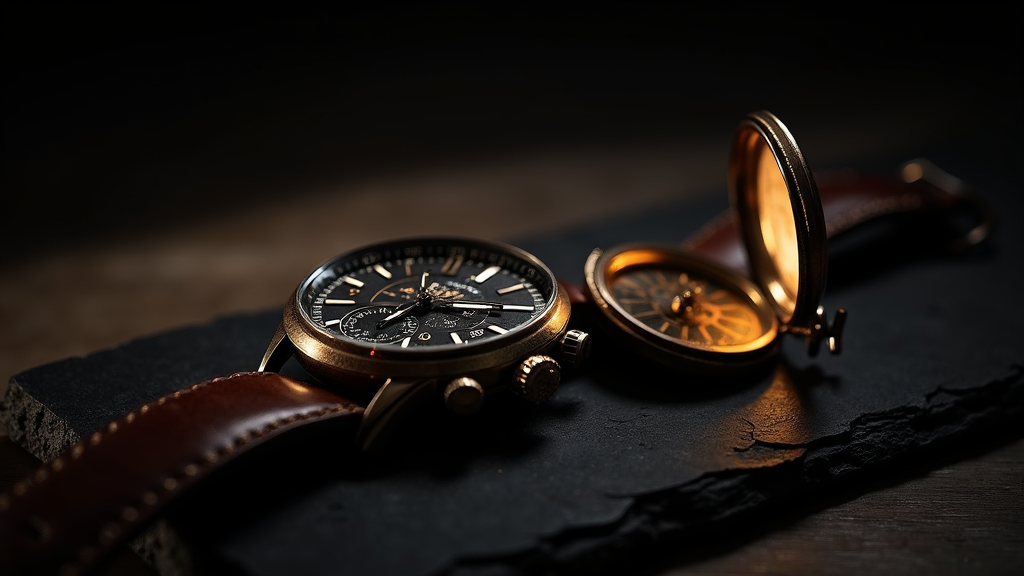

Leave a comment
This site is protected by hCaptcha and the hCaptcha Privacy Policy and Terms of Service apply.