
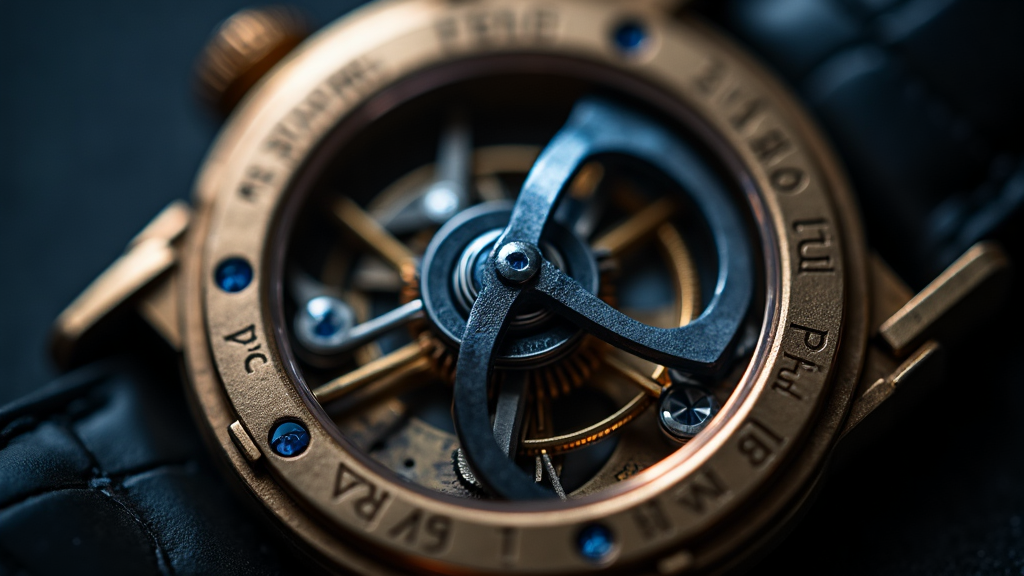
Wind the crown of a mechanical watch and you are doing something quietly remarkable: storing the energy that will animate hundreds of tiny components for the next day or two. No battery. No outlet. Just a thin ribbon of hardened steel coiled inside a brass drum, holding tension like a bow drawn and never quite released. This is the mainspring and its barrel — the power plant of every mechanical watch, and one of the most underappreciated feats of miniature engineering on your wrist.
What the Mainspring Actually Is
The mainspring is a long, flat strip of spring steel (or modern alloys) wound into a spiral inside a cylindrical container called the barrel. When you wind the watch — by hand or via an automatic rotor — you tighten that spiral, loading it with potential energy. As the spring slowly unwinds, it releases that energy in a controlled, metered fashion that ultimately drives the hands around the dial.
A typical mainspring is astonishingly long for something hidden in a case a few millimeters thick. Unwound, many measure between 20 and 40 centimeters — sometimes longer in high-power-reserve movements. Yet it must coil into a barrel often less than 12 millimeters across. That geometry alone is a study in precision metallurgy.
Inside the Barrel: A Small Sealed World
The barrel is more than a container. It is a working component with its own teeth — the barrel's outer rim is a gear that meshes with the rest of the gear train. The mainspring's outer end hooks to the barrel wall; its inner end attaches to the barrel arbor, the central axle around which winding happens.
The Two Ends, Two Jobs
When you wind the watch, the arbor turns and coils the spring tighter from the inside. When the watch runs, the spring pushes against the barrel wall, slowly rotating the entire barrel — and with it the gear train. One end stores, the other delivers. The barrel quietly turns roughly once every few hours in a running watch, a pace so slow you would never notice it without a loupe and patience.
Why Steel Gave Way to Modern Alloys
For centuries, mainsprings were carbon steel. They worked, but they had vices: they could rust, lose elasticity over time (a phenomenon watchmakers call "set"), and — most alarmingly — snap. A broken mainspring was one of the most common watch failures of the 19th and early 20th centuries.
The breakthrough arrived in the mid-20th century with iron-nickel-chromium alloys, the most famous being Nivaflex. These "unbreakable" mainsprings resist corrosion, hold their elasticity far longer, and are largely immune to the set that plagued steel. They also happen to be antimagnetic — a quiet but important property in a world full of magnetic fields. The modern mainspring you wind today is a triumph of materials science disguised as a humble coil.
Power Reserve: How Long the Energy Lasts
The amount of energy a barrel stores — and how long it lasts — is the watch's power reserve. A standard movement might run 38 to 48 hours on a full wind. Push for more and watchmakers face a trade-off: a longer or stronger spring delivers more runtime, but uneven torque as it unwinds can hurt accuracy.
This is why a watch tends to keep better time when it is more than half wound. As the spring nears the end of its reserve, torque drops, the balance swings with less amplitude, and the rate can drift. Some collectors swear by a power reserve indicator precisely so they can keep their watch in its "sweet spot."
Multiple Barrels and Longer Reserves
To chase week-long power reserves, watchmakers sometimes deploy two, three, or even four barrels — connected in series for longer runtime or in parallel for more constant torque. Each added barrel is more components, more friction to manage, and more engineering to coordinate. It is one of the cleaner demonstrations of how mechanical watchmaking trades complexity for capability.
The Quest for Constant Force
Because a mainspring naturally delivers strong torque when fully wound and weaker torque as it runs down, the holy grail is constant force — energy delivered at a perfectly even rate regardless of wind state. Watchmakers attack this problem in several elegant ways.
The fusée and chain, a centuries-old solution, uses a cone-shaped pulley and a tiny bicycle-style chain to compensate for changing spring tension. The remontoir d'égalité inserts a small secondary spring that is rewound at regular intervals, releasing energy in even doses. Both are rare, expensive, and prized — the kind of complications that signal a watchmaker chasing precision for its own sake.
Automatic Winding: Energy From Motion
Not every mainspring is wound by hand. In automatic (self-winding) watches, a weighted rotor spins with the motion of your wrist, winding the mainspring through a reduction gear train. To prevent overwinding, automatic movements use a slipping bridle — a clever clutch at the spring's outer end that lets it slip against the barrel wall once full tension is reached. It is why you can never overwind a modern automatic: the spring simply refuses to take more.
A Day's Energy in a Sliver of Steel
The next time you wind a watch, consider what you are doing. You are tensioning a precision-engineered ribbon to store a measured quantity of energy, which a barrel will dole out — micro-second by micro-second — through a gear train, an escapement, and a balance wheel, finally arriving at the hands you read. The mainspring is the silent contract at the heart of mechanical timekeeping: store carefully, release evenly, repeat tomorrow.
It is not glamorous like a tourbillon or musical like a minute repeater. But without it, none of horology's theater would have a stage. Every complication, every beat of the balance, every sweep of the seconds hand begins with a coil of steel patiently giving back what you put in.
Featured Watch
The Grandeur Center Tourbillon
A mainspring's stored energy finds its most dramatic expression in a tourbillon — watch the power flow from barrel to whirling cage through an open dial.
Explore The Center Tourbillon →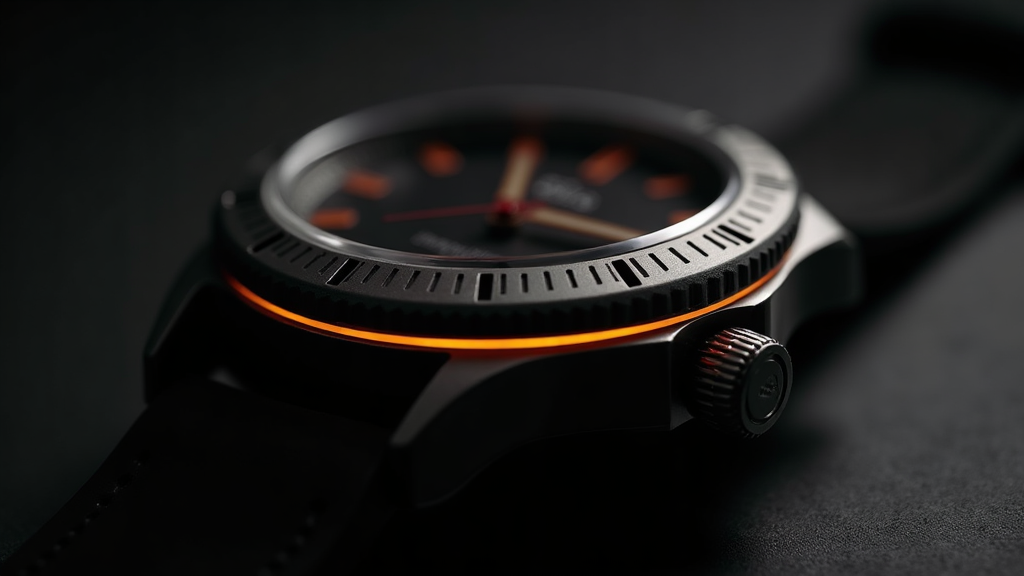









Leave a comment
This site is protected by hCaptcha and the hCaptcha Privacy Policy and Terms of Service apply.