
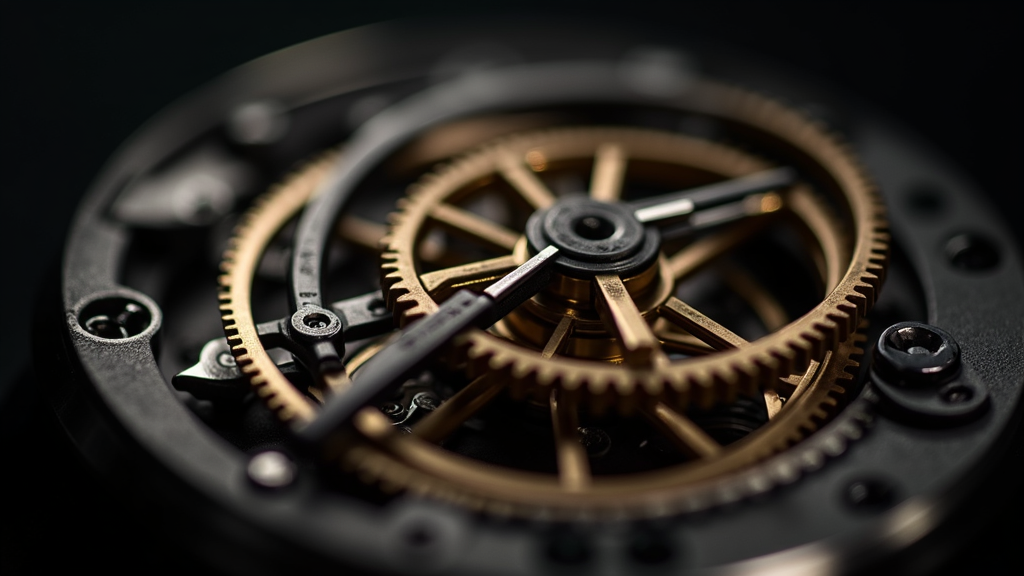
Press the pusher on a fine chronograph and something small happens that you can feel more than see: a crisp, positive click, the second hand leaping to life with zero hesitation. Press it on a lesser movement and you get a spongier, vaguer action. That difference in feel comes down to a single component roughly the size of a grain of rice, hidden beneath the dial and turning in tiny, precise increments. It is called the column wheel, and among watchmakers it is the mark of a chronograph built the hard way.
What a Chronograph Actually Has to Coordinate
A chronograph is a stopwatch integrated into a running watch. Pressing a pusher must do three distinct jobs in a specific order: start the timing mechanism, stop it, and reset it to zero. Under the dial, this means engaging and disengaging a chain of levers, clutches, and hammers without ever letting them fight each other. If two functions try to happen at once, the movement jams or the hands stutter.
Something has to act as the traffic controller, the part that decides which lever moves and which stays put at each press. There are two ways to build that controller. The cheaper, more common way is a flat, stamped part called a cam. The older, more revered way is the column wheel.
The Column Wheel, Column by Column
Imagine a tiny crown gear with a ring of vertical pillars standing on top of it, usually five, six, or nine columns arranged in a circle. Between the columns are gaps. The teeth at the base of the wheel are advanced one step at a time by a small lever called the operating lever, which is driven by the pusher.
Around the column wheel sit the levers that control the chronograph's functions. Each lever has a beak, a small finger that rests either on top of a column or down in a gap between them. When a lever's beak sits on a column, that function is disengaged. When the wheel rotates and the beak drops into a gap, the lever swings in and that function engages.
So a single press of the pusher rotates the column wheel by one step. Every lever around it either climbs onto a column or falls into a gap, and in that instant the entire chronograph reconfigures itself: from stopped to running, from running to stopped, from stopped to reset. One rotation, many coordinated actions, all governed by the geometry of those little pillars.
Why the Feel Is Different
The reason a column-wheel chronograph feels so satisfying is that the levers drop cleanly into precisely machined gaps. The action is binary and decisive, either on a column or in a gap, with nothing in between. A cam-actuated chronograph, by contrast, uses sliding surfaces where levers ride up and down ramps. It works perfectly well and is far easier to manufacture, but the tactile signature is softer and less crisp. Enthusiasts often describe the column-wheel push as clicking a fine camera shutter versus pressing a rubber button.
Why It Is So Hard to Make
The column wheel is one of the most demanding parts in all of horology to produce and adjust. The columns themselves must be cut with vertical walls and clean edges, because a burr or a rounded corner will make a lever hesitate. The wheel has to index by exactly the right angle every single time, driven by a jumper spring that locks it into place. Then every lever beak around it must be finished and positioned so that it lands in its gap at precisely the right moment, not a fraction of a rotation early or late.
This is why column-wheel chronographs historically cost more and why, for decades, they were the domain of high-end manufactures. A cam can be stamped out and assembled with less hand-adjustment. A column wheel demands a watchmaker who understands how all the levers interact, then tunes them by hand until the action is flawless. It is precisely the kind of component that separates industrial watchmaking from the craft tradition, and the kind of detail that independent makers obsess over when they build a movement to be admired as much as used.
A Short History of the Pillar
The column wheel is old. It dates to the earliest pocket-watch chronographs of the 19th century, when Nicolas Rieussec and later Adolphe Nicole developed the reset-to-zero mechanisms that made repeatable timing possible. For well over a century, if you owned a chronograph, it was column-wheel actuated because no simpler alternative had matured.
The cam-actuated chronograph arrived properly in the mid-20th century, designed expressly for volume production. It democratized the chronograph, putting stopwatch functions on far more wrists at far lower prices. The column wheel could easily have faded into obsolescence as a charming relic.
Instead, it became a badge of honor. As mechanical watchmaking rediscovered its identity in recent decades, the column wheel was reframed not as the old way but as the finer way. Manufactures began advertising it openly, and open casebacks turned that little pillared wheel into a visual signature, a thing collectors point to through the sapphire.
How to Spot One
If a watch has a display caseback, look for a small circular component with a ring of upright pillars, often finished with polished bevels or a blued steel cap. Brands rarely leave it undecorated because they know exactly what it signals. On the specification sheet, the phrase to look for is simply "column-wheel chronograph." When a maker chooses to say it, they are telling you they took the harder road.
The Companion: Horizontal vs. Vertical Clutch
The column wheel decides when functions happen. A separate component, the clutch, decides how the timing gear couples to the running movement. The traditional pairing is a horizontal clutch, where a gear swings sideways to mesh with the chronograph train, an arrangement you can watch happen through the caseback. Its one quirk is a tiny stutter of the chronograph hand at start, as the teeth engage.
Modern high-end movements sometimes pair a column wheel with a vertical clutch, which engages from above like a friction disc and eliminates that stutter entirely. The combination of column wheel plus vertical clutch is widely considered the technical summit of chronograph construction: the crisp command of the pillars married to the seamless engagement of the disc.
Why It Still Matters
In an age of quartz precision and smartphone stopwatches, a mechanical chronograph is already a deliberate, romantic choice. The column wheel takes that romance one level deeper. It is invisible in daily use, adds cost and complexity, and offers no advantage in accuracy. Its entire justification is quality, the assurance that the person who built your watch cared about how it feels in the split second you press a button.
That is the quiet argument of the column wheel. It is a component that exists to be done right rather than done cheaply, a small pillared wheel that turns the simple act of timing something into a small mechanical pleasure. Feel the click, and you are feeling more than a century of watchmakers who refused to settle for the easy way.
Featured Watch
Grandeur Center Tourbillon
The same hard-road philosophy behind a column wheel drives our openworked tourbillon, where every finished lever and bevel is meant to be admired through the crystal.
Explore Grandeur Center Tourbillon →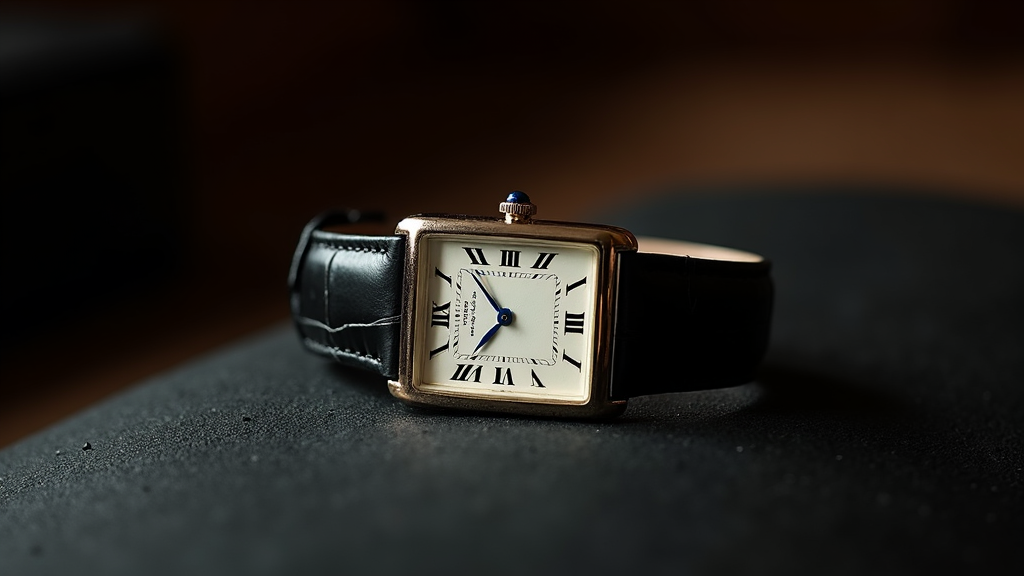

Leave a comment
This site is protected by hCaptcha and the hCaptcha Privacy Policy and Terms of Service apply.