
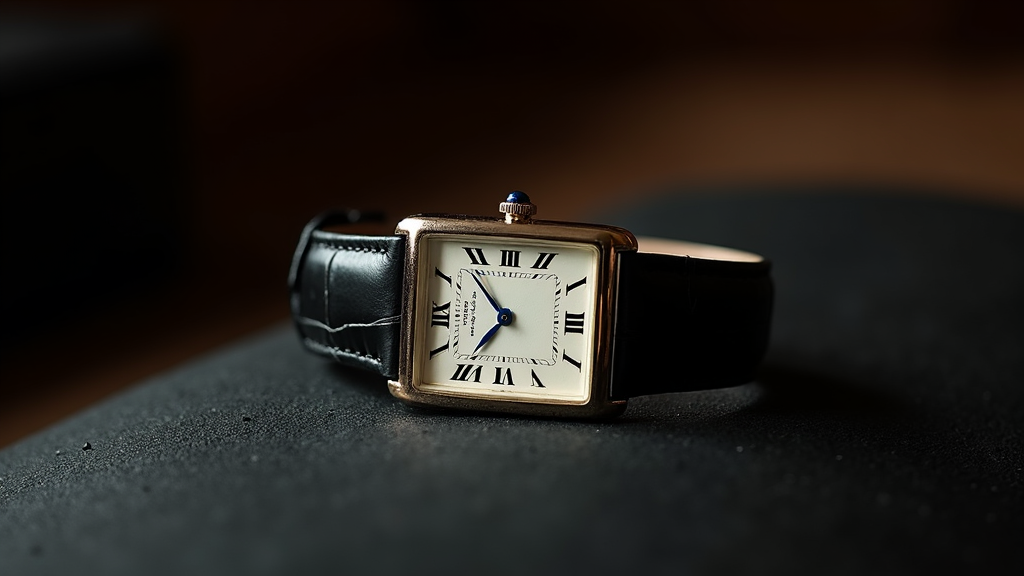
Some watches tell time. A rare few tell a story about design itself. The Cartier Tank is one of those watches — a rectangular sliver of restraint that has outlived the century that created it, and the machine of war that gave it its name. More than a hundred years after its debut, it remains the definitive answer to a deceptively simple question: how little can a watch contain and still be perfect?
Born From the Mud of the Western Front
The year was 1917. The First World War had ground Europe into trenches, and a new weapon was reshaping the battlefield — the tank. Louis Cartier, third-generation head of the Parisian jeweler, was reportedly struck not by the machine's destructive power but by its form. Viewed from above, the Renault FT tank presented a clean geometric silhouette: a central body flanked by two parallel tracks.
Cartier translated that image into horology with astonishing directness. The watch's case became the tank's cockpit; the two vertical bars framing the dial — the brancards — became its treads, flowing seamlessly into the strap. Where nearly every watch of the era was round, echoing the pocket watches it descended from, the Tank was resolutely rectangular. It was architecture for the wrist.
A Radical Idea Hiding in Plain Sight
It is easy, from a century's distance, to underestimate how bold the Tank was. In 1917 the wristwatch itself was barely respectable — a novelty for women or a battlefield necessity for soldiers who could not fumble for a pocket watch under fire. To propose a men's watch that was both a serious object and unapologetically modern in shape was a genuine gamble.
The Design Language
Cartier's genius lay in coherence. Every element spoke the same visual language:
- The brancards — those parallel side bars — integrated the case and strap into one continuous line, decades before "integrated design" became a horological buzzword.
- Roman numerals in a crisp, slightly elongated font gave the dial its unmistakable rhythm.
- Blued-steel sword hands added a jewel of color against the white dial.
- A cabochon crown, typically set with a blue sapphire, became a signature Cartier flourish — jewelry and instrument in a single gesture.
- The railway minute track framed the dial with quiet precision.
Nothing was extraneous. Nothing could be removed without the whole thing collapsing. That is the hallmark of great design, and it is why the Tank has aged so gracefully while flashier contemporaries look hopelessly dated.
The First Owner and the Slow Burn
Cartier produced the first Tank in 1917 and, in a now-legendary gesture, presented an early example to General John Pershing, commander of the American Expeditionary Forces. The watch went on public sale in 1919 — just six pieces that first year. It was never conceived as a mass-market object. It was a statement, released quietly and allowed to accrue meaning over time.
That slow burn became a defining trait. The Tank never chased trends because it never needed to. Instead, the world kept catching up to it.
A Wrist Full of History
Few watches can claim a cast of wearers as varied and iconic as the Tank. Its admirers form an unlikely constellation across culture and power.
Jacqueline Kennedy wore a Tank throughout her years in the public eye, and when her personal example sold at auction decades later, it commanded a price that stunned even seasoned collectors. Andy Warhol famously owned a Tank yet reportedly never wound it — "I don't wear a Tank to tell the time," he said. "I wear a Tank because it is the watch to wear." Princess Diana, Yves Saint Laurent, and countless others made it a fixture of a certain kind of understated confidence.
The Tank became shorthand for taste that did not need to announce itself. In a world of oversized, over-complicated statement pieces, choosing a Tank was — and remains — a quiet flex.
An Evolving Family, One Constant Idea
Over the decades the Tank multiplied into a sprawling family, each variation a study in proportion. The original became known as the Tank Normale. Then came a procession of interpretations, each stretching or refining the core geometry.
The Key Variations
- Tank Louis Cartier — the refined, rounded-lug version that many purists consider the definitive Tank.
- Tank Cintrée — dramatically elongated and curved to hug the wrist, prized by collectors for its rarity.
- Tank Américaine — taller and curved, an athletic take on the theme.
- Tank Française — with an integrated metal bracelet, the popular 1990s reinvention.
- Tank Asymétrique — the avant-garde rebel, its dial tilted on the diagonal.
What binds them is not a shared movement or material but a shared philosophy: the rectangle as canvas, geometry as decoration, restraint as luxury. It is a lesson that resonates far beyond Cartier's own workshops.
Why the Tank Still Matters
The Cartier Tank endures because it solved a design problem so completely that a solution has rarely been needed since. It proved that a watch could be a piece of wearable architecture — that shape, not complication, could carry a timepiece into legend.
For collectors and independents alike, the Tank is a reference point and a provocation. It asks whether the most powerful statement a watch can make is one of discipline: knowing exactly what to leave out. At Grandeur, that philosophy runs deep — the conviction that a distinctive case shape and a considered dial can express as much character as any grand complication, and that the boldest ideas often arrive in the quietest packages.
A century on, the Tank is not a relic. It is a standing challenge to every watchmaker who believes more is always more. Sometimes the machine that changed everything was never on the wrist. It was the one that inspired the shape.
Featured Watch
Grandeur Monocle
Like the Tank, the Monocle proves that a distinctive case shape and a fearless dial layout can carry a watch into a category of its own — no complication required.
Explore Grandeur Monocle →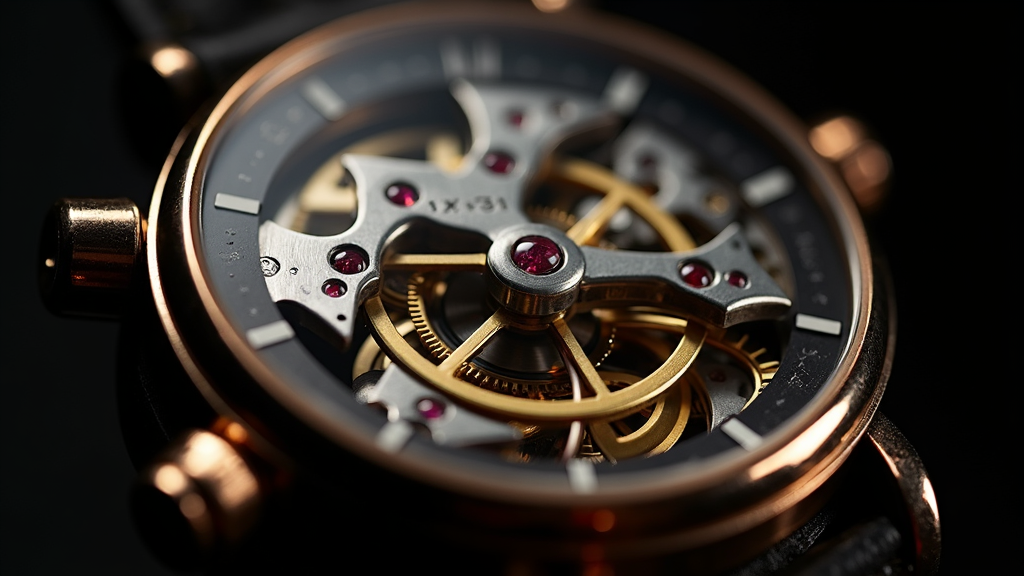

Leave a comment
This site is protected by hCaptcha and the hCaptcha Privacy Policy and Terms of Service apply.