
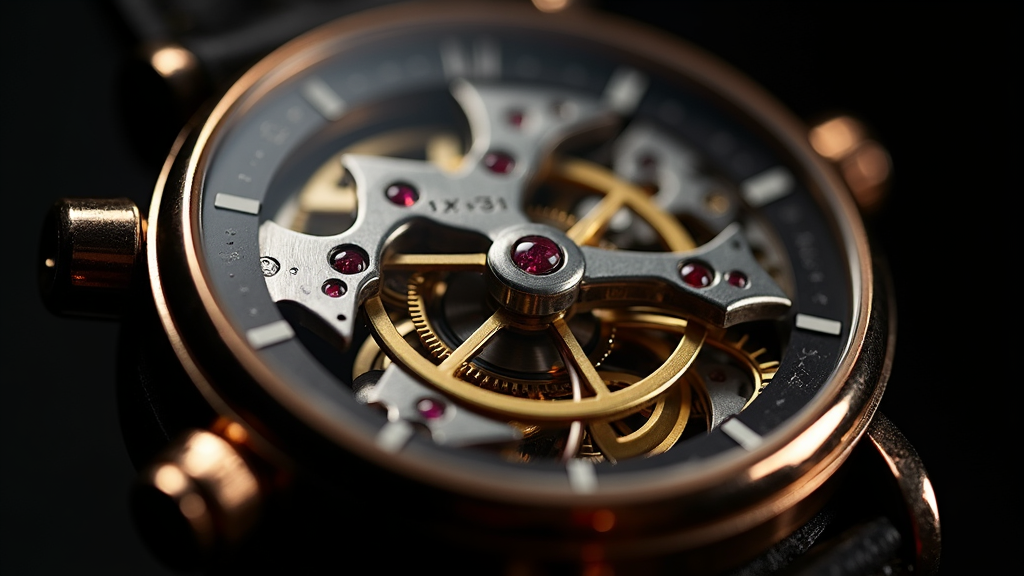
Every mechanical watch on your wrist owes its accuracy to a single spinning disc no wider than a shirt button. It swings back and forth several times a second, day and night, for years on end — and if it falters by even a fraction, your watch loses time. This is the balance wheel: the beating heart of horology, and arguably the most important component a watchmaker will ever regulate.
We've written before about the escapement and the hairspring. But those parts exist to serve one master. Here's how the balance wheel actually keeps time, why it's so hard to perfect, and how the finest ateliers coax it into near-perfect rhythm.
What the Balance Wheel Actually Does
A mechanical watch stores energy in a wound mainspring. Left alone, that spring would unwind in seconds, spinning the gears into a useless blur. The balance wheel — working with its partner the hairspring — is the governor that meters that energy out in tiny, precisely timed doses.
Think of a child on a swing. Given a gentle, perfectly timed push at the same point in each arc, the swing keeps a steady rhythm. The balance wheel is the swing; the escapement delivers the push; the hairspring is the invisible force that always pulls the wheel back toward center. Together they form a mechanical oscillator, and that oscillation is what your watch counts to measure the passage of time.
Counting Beats
A typical modern movement runs at 28,800 vibrations per hour — that's 4 Hz, or eight ticks per second. Every one of those beats is one half-swing of the balance wheel. The seconds hand's smooth sweep is really a rapid stutter of these beats blurred together. A watch that gains or loses time is simply one whose balance is swinging a hair too fast or too slow.

The Physics of a Perfect Swing
The rate of a balance wheel depends on two things: its moment of inertia (how its mass is distributed) and the stiffness of the hairspring pulling it back. Add mass to the rim, and it swings slower. Stiffen the spring, and it swings faster. Watchmaking is, at its core, the art of balancing these two forces so the wheel completes exactly the right number of beats per hour — and keeps doing so regardless of temperature, position, or age.
That last part is the hard one. A balance wheel behaves differently lying flat than standing on edge. It reacts to heat, to magnetism, to the slow drying of lubricants over years. Chasing consistency across all these conditions is what separates a $50 movement from a chronometer-grade masterpiece.
The Screwed Balance
Look at a fine vintage movement and you'll often see tiny screws studding the rim of the balance wheel. These aren't decoration. By loosening or tightening them, a watchmaker shifts mass inward or outward, fine-tuning the wheel's inertia — and therefore its rate — with astonishing precision. It's called poising, and a well-poised balance is the difference between a watch that keeps time and one that merely tells it.
How the Rate Gets Regulated
There are two classic ways to adjust a running watch. The older method uses a regulator — a small lever with two pins that pinch the hairspring, effectively shortening or lengthening its active portion. Slide it toward "F" (fast) and the spring stiffens; slide toward "S" and it softens. It's simple and repairable, but it introduces tiny errors because the spring no longer breathes perfectly around its center.
The refined alternative is the free-sprung balance. Here there's no regulator touching the hairspring at all. Instead, the rate is set entirely by adjusting weights on the balance rim itself — timing screws, or the little poising weights you'll find on high-end movements. It's harder to build, harder to service, and prized by connoisseurs precisely because it lets the hairspring expand and contract in a perfect, unmolested circle.
A free-sprung balance is a statement: the maker trusts the geometry so completely that they refuse to interfere with it.
Materials That Fight the Elements
Early balance wheels were brass, and brass expands with heat — which meant watches ran slow in summer and fast in winter. The solution was the bimetallic balance, a cut rim of brass fused to steel that flexed with temperature to self-correct. Ingenious, but fiddly.
The real breakthrough came from physicist Charles-Édouard Guillaume, who won a Nobel Prize for developing nickel-steel alloys — Invar and Elinvar — that barely change with temperature at all. Suddenly the compensating tricks became unnecessary. A solid balance of the right alloy simply held its rate. Modern wheels lean on descendants of these alloys, and increasingly on Glucydur, a beryllium-copper that's hard, stable, and resistant to the shocks of daily wear.
The best independent makers treat the balance as a showcase of this obsession — a component to be perfected and displayed, not hidden. It's the kind of detail that defines a serious timepiece like the Grandeur Center Tourbillon, where the oscillating heart of the watch is elevated to the star of the show.
Why Watchmakers Obsess Over It
You can machine a case in an afternoon and stamp a dial in seconds. But regulating a balance to run within a few seconds a day, in every position, across a full temperature range — that takes a trained hand, a timing machine, and patience. It's the final, human step in bringing a movement to life.
This is why the balance wheel sits at the emotional center of horology. It's the part that moves. Hold a running movement to your ear and the ticking you hear is the balance snapping back and forth, thousands of times an hour, quietly refusing to lose its place. Everything else in the watch — the gears, the hands, the calendar — is downstream of that one honest, tireless swing.
The Takeaway
The next time you glance at a mechanical watch, remember that its accuracy isn't magic. It's a tiny wheel, tuned by hand, swinging in defiance of heat and gravity and time itself. Master the balance wheel and you've mastered mechanical timekeeping. Everything else is just craftsmanship built around it.
Featured Watch
Grandeur Center Tourbillon
The balance wheel is the heart of every watch — and in the Center Tourbillon, it takes center stage, spinning in a rotating cage that puts horology's oscillating soul on full display.
Explore Grandeur Center Tourbillon →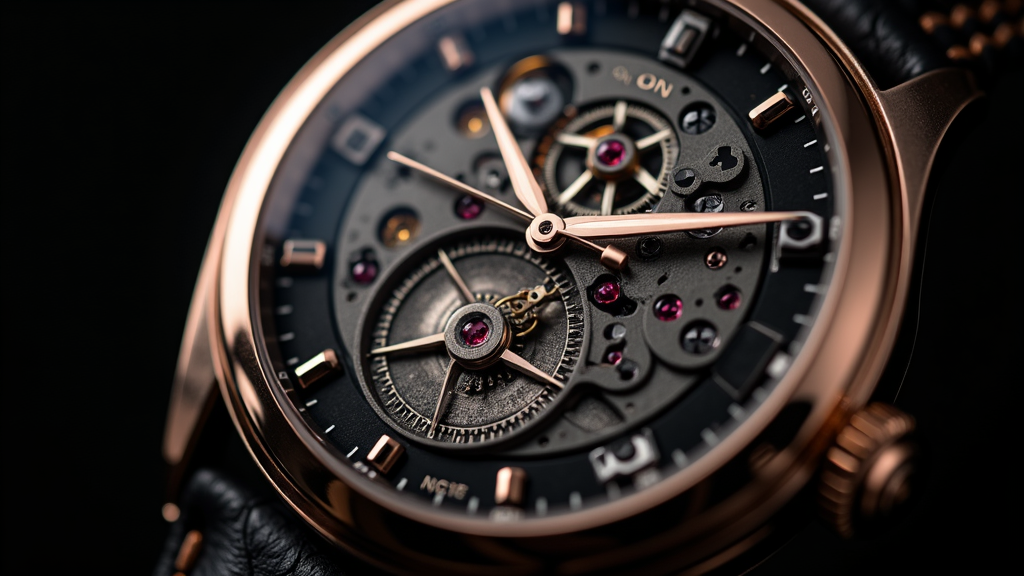

Leave a comment
This site is protected by hCaptcha and the hCaptcha Privacy Policy and Terms of Service apply.