
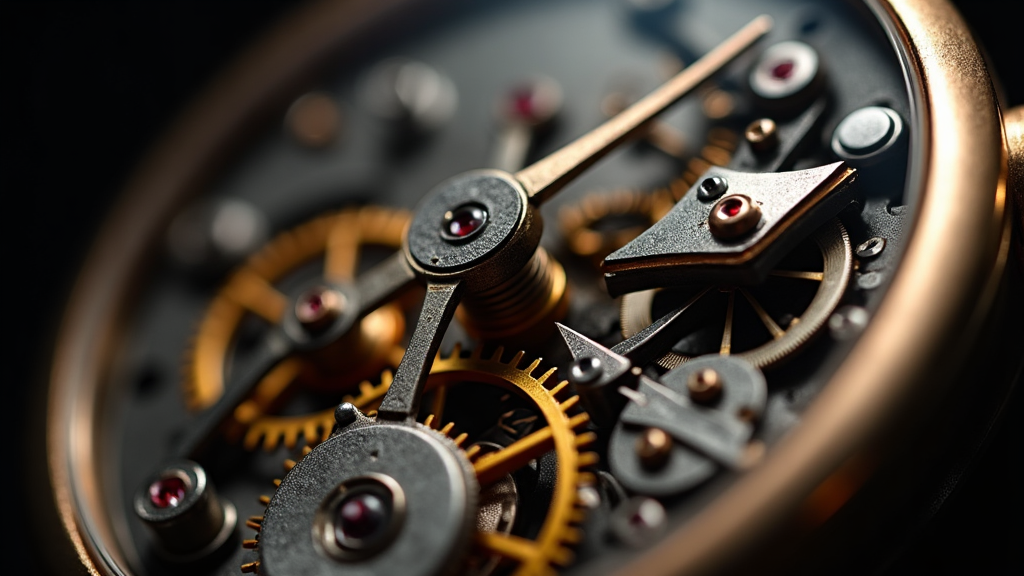
Inside the most revered mechanical watches ever built sits a mechanism that looks less like clockwork and more like miniature industrial machinery: a tiny brass cone wrapped in a chain no thicker than a strand of angel hair. This is the fusée and chain—one of horology's oldest solutions to one of its oldest problems, and still, five centuries later, one of the surest signs that a watchmaker was willing to chase perfection long past the point of practicality.
The Problem: A Spring That Never Pushes Evenly
Every mechanical watch stores energy in a coiled mainspring. When you wind the crown, you tighten that spring; as it slowly unwinds, it releases the power that keeps the balance wheel swinging and the hands moving. It sounds elegant, and it is—except for one stubborn flaw.
A mainspring does not deliver its energy evenly. When fully wound, it pushes hard. As it unwinds toward the end of its reserve, it pushes softly. This variation in torque is the enemy of accuracy. More force means a wider swing of the balance wheel and a slightly faster rate; less force means a narrower swing and a slower rate. A watch left to its own mainspring will quietly run fast in the morning and slow by nightfall.
For early watchmakers—working long before the balance spring, before precision escapements, before any of the refinements we take for granted—this uneven torque was catastrophic. They needed a way to even it out. Their answer, arrived at in the fifteenth century, was mechanical, beautiful, and completely uncompromising.
The Solution: A Cone That Fights the Spring
The fusée is a cone-shaped, grooved pulley. The mainspring lives in a separate barrel beside it. Connecting the two is a fine chain—historically resembling a tiny bicycle chain, with hundreds of individually riveted links.
Here is the genius. When the watch is fully wound, the chain pulls from the narrow top of the cone. A narrow radius means less leverage, which counteracts the mainspring's powerful full-wind push. As the watch runs down and the spring weakens, the chain gradually shifts to the wide base of the cone. The larger radius provides more leverage, compensating for the weaker spring.
The result is a near-constant torque delivered to the movement across the entire power reserve. In effect, the cone's changing geometry is a mechanical equation, silently solving the mainspring's inconsistency turn by turn. It is one of the earliest examples of a machine engineered to correct its own physics.
Borrowed From Bigger Machines
The fusée did not originate in watches. Similar cone-and-cord arrangements appear in early spring-driven clocks, and the underlying principle echoes through crossbows and other tension devices. Watchmakers shrank the concept down to a scale that still astonishes modern engineers: chains with links measured in fractions of a millimeter, assembled and riveted by hand.
Why It Nearly Disappeared
For all its brilliance, the fusée and chain has a fatal commercial flaw: it is absurdly difficult and expensive to make. A single chain can contain several hundred links, each with plates and rivets, and the whole assembly must be flawless—one weak link and the watch stops dead. The fusée cone itself must be cut with a precisely calculated spiral groove to match the specific mainspring it serves.
As watchmaking advanced through the nineteenth century, cheaper solutions arrived. The going barrel, improved mainspring alloys, and better escapements delivered "good enough" consistency without the mechanical theater of a chain-driven cone. By the twentieth century, the fusée had all but vanished from serial production, surviving mainly in marine chronometers where accuracy justified the cost.
And that, for most of horology, was that. The fusée became a museum curiosity—an ingenious ancestor politely retired.
The Revival: When Difficulty Became the Point
Then something interesting happened. In the modern era of high horology, the very impracticality that killed the fusée became its selling point. A handful of independent and haute horlogerie makers revived the fusée and chain not because they needed it, but because building one is a declaration of skill.
These modern interpretations are staggering. Some pair the fusée with a tourbillon, stacking two of watchmaking's most demanding constructions in a single caliber. The chains in these watches can contain hundreds of components in a length shorter than a fingernail, each link hand-finished. Watching one operate through a sapphire caseback—the chain visibly climbing and descending the cone as the watch winds and unwinds—is one of the great spectacles in mechanical art.
It is exactly the kind of over-engineered devotion that defines independent watchmaking at its most ambitious: complexity pursued not for marketing, but because the pursuit itself is the achievement.
A Maltese Detail
Many fusée movements include a small "stopwork" device—often a Maltese-cross-shaped component—that prevents over-winding and stops the watch from running on the mainspring's most extreme (and least linear) turns. It is a reminder that the fusée was never a single trick but part of an entire philosophy of taming the mainspring.
What the Fusée Teaches Collectors
You will likely never own a fusée-and-chain wristwatch—very few exist, and they command extraordinary prices. But understanding the mechanism sharpens how you read every watch you do encounter.
The fusée reframes the central challenge of mechanical timekeeping: it was never just about making things move: it was about making them move consistently. Modern watchmakers chase the same goal through constant-force remontoires, refined mainspring geometries, and precision regulating systems. Each is a descendant of the same five-hundred-year-old ambition the fusée first answered.
When you appreciate a well-finished movement today—stable rate, generous power reserve, torque managed intelligently—you are admiring the end of a long conversation the fusée began. The cone and chain may be retired from daily duty, but the problem it solved is written into the DNA of every fine caliber on the market.
A Cathedral in Miniature
There is a reason collectors describe the fusée and chain in reverent, almost architectural terms. Like a cathedral, it is defined by effort disproportionate to necessity—labor poured in far beyond what function demands, in service of something closer to art. In an age of automated manufacturing, the fusée endures as proof that watchmaking's soul lives in the willingness to do the hard thing beautifully.
It is horology's constant-force cathedral: impractical, magnificent, and utterly unforgettable.
Featured Watch
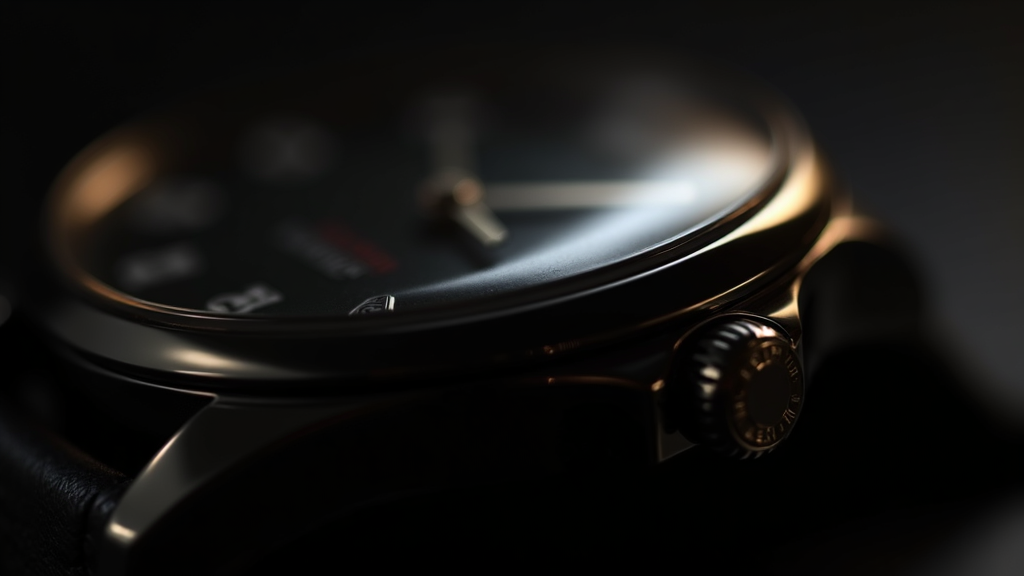
Grandeur Center Tourbillon
The fusée and tourbillon share a philosophy: complexity in service of accuracy. Experience that same over-engineered devotion in a movement built to be admired from every angle.
Explore Grandeur Center Tourbillon →

Leave a comment
This site is protected by hCaptcha and the hCaptcha Privacy Policy and Terms of Service apply.