
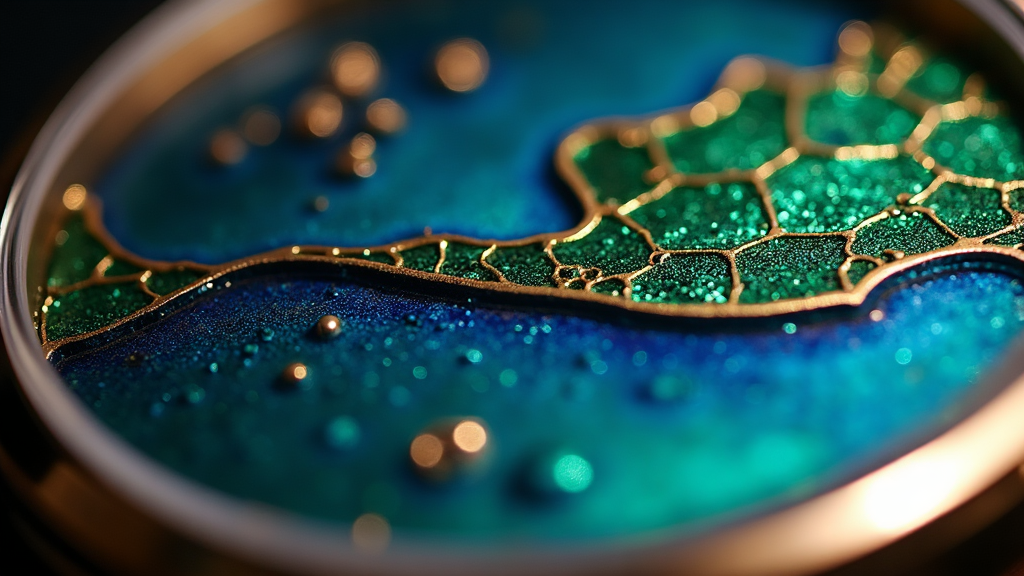
Some watch dials tell time. A handful tell stories. Among the rarest of those storytellers is the cloisonné enamel dial—a craft so demanding that a single mistake at the final stage can destroy weeks of work in seconds. It is part painting, part goldsmithing, part chemistry, and entirely unforgiving. And yet the watches that wear these dials are among the most coveted objects in all of horology.
This is the story of how watchmakers learned to paint with fire, fuse glass to gold, and trap a miniature world beneath a sapphire crystal.
What Cloisonné Actually Means
The word comes from the French cloison, meaning "partition" or "cell." That single word explains the entire technique. Unlike painted enamel, where colors are simply brushed onto a surface, cloisonné enamel uses thin walls of gold wire to build a network of tiny compartments. Each cell is then filled with a different colored enamel, fired, and ground flush—leaving a finished image where every color is physically separated by a hair-thin line of gold.
Look closely at a true cloisonné dial and you will see those gold outlines tracing every shape: the curve of a sail, the wing of a bird, the border of a continent. They are not decorative flourishes. They are the architecture that holds the picture together.
An Ancient Art on a Tiny Canvas
Cloisonné is far older than watchmaking. Egyptian goldsmiths used the technique more than 3,000 years ago, setting gemstones and colored glass into gold cells. Byzantine artisans elevated it to sacred art. But applying it to a dial barely 30 millimeters across—and doing it with the precision a luxury timepiece demands—is a distinctly modern feat that reached its peak in mid-20th-century Geneva.
How a Cloisonné Dial Is Made
The process unfolds in stages, each one a potential point of failure. There is no shortcut, no machine that can do the delicate work, and no way to fully repair a dial that cracks in the kiln.
Step One: Bending the Wire
The artisan begins with a flattened gold wire, often thinner than a human hair is wide. Using fine tweezers and a steady hand, they bend this wire into the outlines of the design—every petal, every wave, every rooftop—and fix each piece to the dial blank. A single complex scene can require dozens of separate wire segments, each shaped entirely by eye.
Step Two: Filling the Cells
Enamel is, at its heart, powdered glass. The artisan grinds colored enamel into a fine paste and, using a tiny spatula or brush, deposits it into each gold cell one at a time. Color theory matters enormously here, because the powder rarely looks like its fired result. A muddy gray paste may emerge from the kiln as a brilliant translucent blue.
Step Three: Firing—Again and Again
The dial goes into a kiln heated to roughly 800°C, where the glass powder melts and fuses to the metal. But enamel shrinks as it fuses, so a single firing is never enough. The artisan refills the cells and fires again—and again—sometimes a dozen times or more, building up the colors in thin layers until each cell is perfectly level and luminous.
Every trip into the kiln is a gamble. Too hot, and colors burn or blister. Too cool, and the enamel never properly fuses. Different colors mature at different temperatures, so the artisan must sequence the firings with the patience of a chemist and the nerve of a gambler.
Step Four: Grinding and Polishing
Once the cells are filled, the surface is uneven—a landscape of tiny enamel hills. The artisan grinds the entire dial flat with abrasive stones, revealing the gold wires as crisp lines flush with the glass. A final high-temperature firing gives the surface its signature glassy shine, and a careful polish brings it to a mirror finish.
This is the moment that separates the masters from everyone else. The grinding can expose a hidden air bubble or a hairline crack, ruining a dial that took weeks to build. There is no undo. The artisan simply begins again.
Why Cloisonné Dials Are So Rare
The math is brutal. A skilled enameller may complete only a few cloisonné dials in a year, and a meaningful percentage are lost to the kiln. The skill itself is endangered—there are perhaps a few dozen master enamellers in the world capable of this work at the highest level, and the knowledge passes mostly through apprenticeship rather than any textbook.
This scarcity is exactly why collectors prize these pieces. A vintage cloisonné "world map" dial from the 1950s can command hundreds of thousands of dollars at auction—not because of the gold or the movement, but because of the irreplaceable hours of human skill fused into that glass.
For collectors who value the artistry of the dial as much as the engineering beneath it, this same philosophy drives the decorative dial work in pieces like the Grandeur Strange V3 with stone dials—where the face of the watch becomes the centerpiece, not an afterthought.
Cloisonné vs. Its Enamel Cousins
Cloisonné is one branch of a larger family, and the distinctions matter when you are evaluating a dial.
Champlevé
In champlevé enamel, the artisan carves recesses directly into the metal dial and fills those hollows with enamel, rather than building cells from wire. The effect is similar, but the gold borders tend to be broader and the look more sculptural.
Plique-à-Jour
This dazzling variant has no backing metal at all behind the enamel—light passes straight through the colored glass like a tiny stained-glass window. It is breathtaking and almost impossibly fragile, which is why it appears far more often in jewelry than on watch dials.
Grand Feu and Miniature Painting
Grand feu refers broadly to "great fire" enamel fired at high temperatures, prized for dials of a single flawless color. Miniature painting, by contrast, uses no cells or wires—the artisan paints a scene freehand with enamel pigments. Cloisonné sits between them, combining the depth of fired enamel with the structure of metalwork.
The Enduring Magic
In an age of CNC machines and laser engraving, the cloisonné dial remains stubbornly, gloriously human. Every wire is bent by hand. Every color is judged by eye. Every firing is a small act of faith. The result is an object that will outlast its maker by centuries—glass and gold do not fade—carrying a tiny painted world on the wrist of whoever is lucky enough to wear it.
That is the quiet promise of great dial-making: that the most fleeting thing we measure—time—can be marked by something made to endure forever.
Featured Watch
Grandeur Strange V3 — Stone Dials
Like a cloisonné masterpiece, the Strange V3 treats the dial as the main event—each natural stone face a one-of-a-kind canvas no two collectors will ever share.
Explore Grandeur Strange V3 →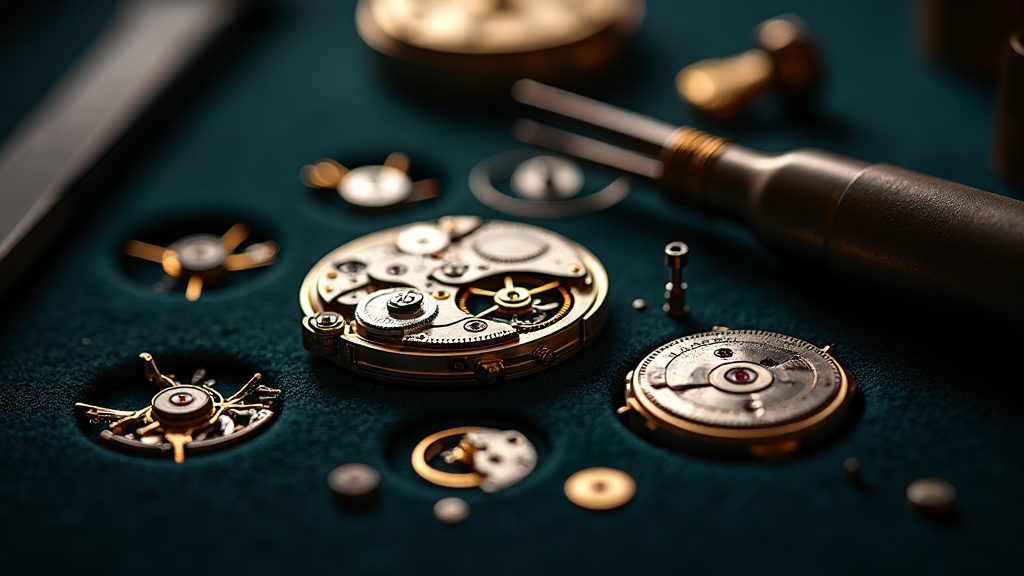

Leave a comment
This site is protected by hCaptcha and the hCaptcha Privacy Policy and Terms of Service apply.