
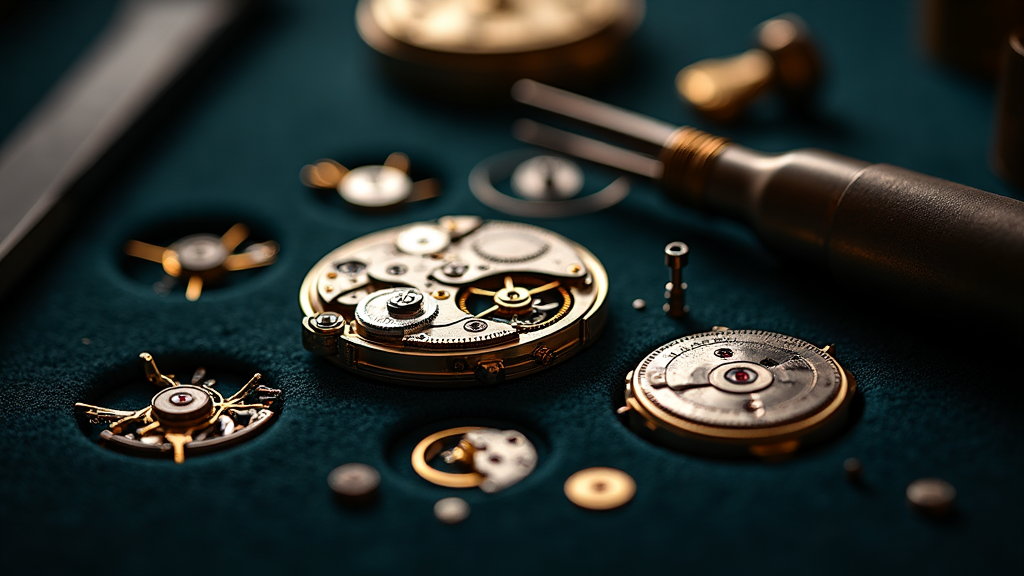
A mechanical watch is one of the few objects you own that is alive. Inside the case, a mainspring uncoils, a balance wheel swings several times every second, and a train of gears meshes against itself thousands of times a day. That motion is the romance of horology — and it is also the reason a fine watch, unlike a quartz module or a phone, needs to be opened, cleaned, and re-lubricated on a schedule. Servicing is not a sign that something has gone wrong. It is the maintenance ritual that keeps a watch accurate for generations.
If you are new to mechanical watches, the idea of paying to maintain something that already works can feel strange. Here is why it matters, what actually happens on the watchmaker's bench, and what you should expect to spend.
Why Mechanical Watches Need Servicing
The short answer is friction and oil. A mechanical movement relies on minuscule quantities of specialized lubricant placed precisely where metal meets metal — at the pivots, the escapement, the barrel, and the keyless works. These oils are engineered to stay put and resist evaporation, but no lubricant lasts forever.
Lubricants Break Down
Over several years, watch oils thicken, migrate, or dry out entirely. As they degrade, friction increases. The balance wheel loses amplitude, the watch begins to run fast or slow, and — critically — metal components start to wear against one another without a protective oil film. A watch that is run dry for too long does not just lose accuracy; it begins to grind itself down.
Dust, Moisture, and Magnetism
Even a well-sealed case is not hermetic forever. Gaskets age and compress, allowing humidity and microscopic dust to creep in. Moisture promotes corrosion on steel components; dust acts like grinding paste in the gear train. A service replaces those gaskets and restores water resistance, while a thorough cleaning flushes away contaminants the eye will never see.
What Actually Happens During a Service
A proper service — sometimes called a complete overhaul — is far more involved than a battery swap. A skilled watchmaker performs a sequence that has barely changed in a century, even as the tools have grown more precise.
Full Disassembly
The movement is removed from the case and taken apart down to individual components: bridges, wheels, the balance, the pallet fork, the mainspring barrel, screws so small they are measured in fractions of a millimeter. Each part is inspected under magnification for wear.
Ultrasonic Cleaning
Components are cleaned in specialized machines that use ultrasonic agitation and a series of solvent baths. This strips away every trace of old oil, dried grease, and grime, leaving each part chemically clean — a prerequisite for fresh lubrication to behave correctly.
Inspection and Replacement
Worn pivots, fatigued mainsprings, and damaged jewels are replaced. This is where a watchmaker's experience matters most: knowing which components are within tolerance and which are quietly about to fail. The mainspring is frequently swapped as a matter of course, since a tired spring robs the watch of power reserve and amplitude.
Reassembly and Lubrication
The movement is rebuilt and lubricated point by point, with different oils and greases chosen for different jobs — a thin oil for fast-moving balance pivots, a thicker grease for the barrel and high-load contacts. The artistry here is in the dosing: too much oil spreads and contaminates, too little leaves metal exposed.
Regulation and Testing
Finally, the watch is regulated on a timing machine and tested in multiple positions to confirm it meets accuracy specifications. Water resistance is verified, the case is cleaned, and the watch is left to run for days to confirm stable performance before it goes back on the wrist.
This same philosophy of meticulous assembly is what separates a serious mechanical piece from a disposable one. A movement built to be serviced — like the hand-finished caliber inside the Grandeur Center Tourbillon — is engineered for a lifetime of overhauls, not a single decade of use.
How Often Should You Service a Watch?
The old industry rule of thumb was every three to five years. Modern lubricants and tighter manufacturing tolerances have stretched that interval, and many contemporary watches comfortably run five to seven years — sometimes longer — between services. A few practical guidelines:
- Watch how it runs. A sudden change in accuracy, a shrinking power reserve, or a second hand that stutters are signs the oils are tired.
- Respect water resistance. If you swim or dive with your watch, have the gaskets and seals checked more frequently — every couple of years — even if the movement is fine.
- Don't over-service. Opening a watch unnecessarily introduces risk and cost. A healthy, accurate watch that is keeping time well does not need to be cracked open on a rigid calendar.
What Does a Service Cost?
Pricing varies enormously with complexity and brand. As a general framework:
- Time-only and basic automatic watches: a complete service typically runs a few hundred dollars from an independent watchmaker.
- Chronographs and date complications: more parts and more labor push costs higher, often into the high hundreds.
- Grand complications — tourbillons, perpetual calendars, minute repeaters: servicing can reach into the thousands, and is usually best entrusted to the manufacturer or a specialist.
It is worth viewing service cost as part of the true cost of ownership. A mechanical watch is not a sealed appliance; it is a serviceable instrument, and budgeting for periodic maintenance is part of owning one responsibly.
Independent Watchmaker or Manufacturer?
Both have merits. The manufacturer guarantees genuine parts and brand-trained technicians, but often at premium prices and with longer turnaround. A reputable independent watchmaker can offer more personal service, faster turnaround, and lower cost — provided they have the skill and access to parts for your specific caliber. For vintage or complicated pieces, seek out a specialist with a proven track record, and always ask whether original parts will be preserved.
The Payoff: A Watch That Outlives You
Here is the quiet magic of mechanical watchmaking. A quartz watch is engineered to be replaced; a fine mechanical watch is engineered to be maintained. With regular servicing, a well-made movement will keep accurate time for fifty, eighty, a hundred years — passing from one wrist to the next. The service interval is the price of that permanence, and it is a remarkably small one for an object designed to outlast its first owner.
Service your watch, and you are not paying to fix it. You are paying to keep a small, living machine alive — and to hand it forward, still ticking, to whoever comes next.
Featured Watch
Grandeur Center Tourbillon
A movement built to be serviced for generations — hand-finished, fully overhaulable, and engineered to keep precise time long after its first owner.
Explore Grandeur Center Tourbillon →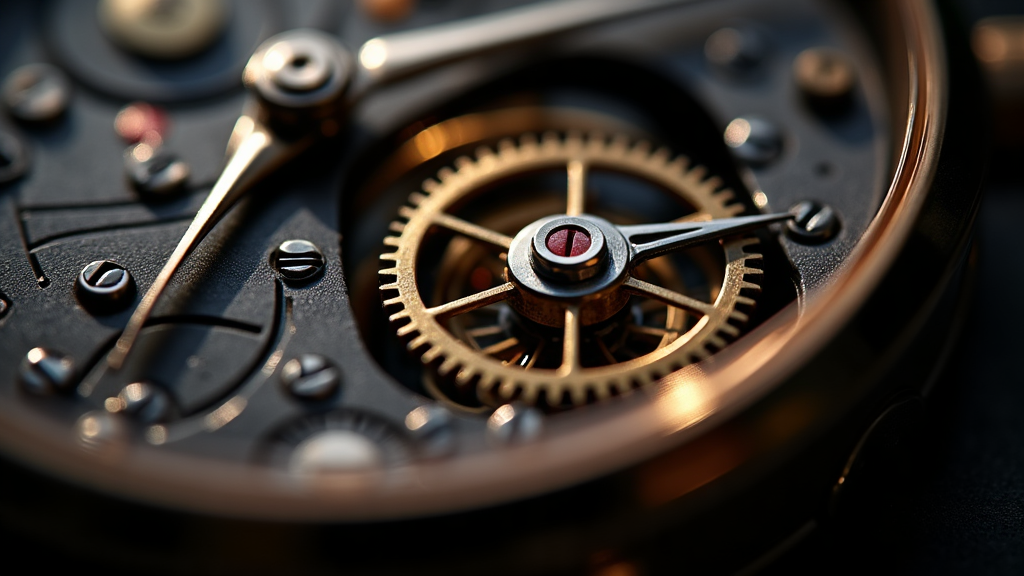


Leave a comment
This site is protected by hCaptcha and the hCaptcha Privacy Policy and Terms of Service apply.