
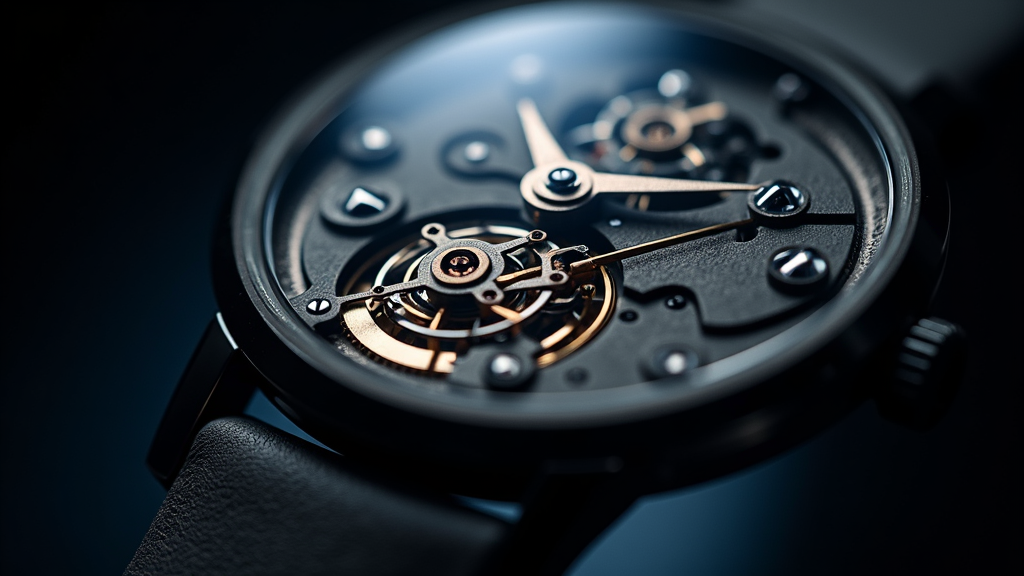
In 1795, a young watchmaker named Abraham-Louis Breguet was obsessed with a problem that had plagued pocket watch owners for centuries: gravity. When a pocket watch sat vertically in a waistcoat pocket all day, the balance wheel and escapement developed positional errors that threw off timekeeping by minutes per week. His solution was so elegant that two centuries later, it remains the most coveted, the most beautiful, and arguably the most misunderstood complication in all of watchmaking.
He called it the tourbillon — French for "whirlwind."
The Problem Breguet Solved
To understand the tourbillon, you first have to understand what's happening inside a mechanical watch. The regulating organ — the balance wheel, hairspring, and escapement — is what determines accuracy. It oscillates back and forth at a fixed frequency, and every tick releases a precise amount of energy from the mainspring.
The catch? Gravity doesn't pull evenly. When a watch is dial-up, dial-down, crown-up, or crown-down, the hairspring sags ever so slightly in different directions. The balance wheel's center of mass shifts against its pivot. Each position introduces a tiny error, and over 24 hours those errors accumulate.
Breguet's insight was disarmingly simple: if you can't eliminate positional errors, average them out. He mounted the entire escapement and balance wheel inside a rotating cage. As the cage slowly turns — typically once per minute — it cycles through every vertical position. The errors from one orientation cancel out the errors from the opposite orientation. Mathematically, the watch runs closer to its mean rate.
Why It Worked — In Pockets
For pocket watches, this was revolutionary. A well-made tourbillon could improve daily rate variance dramatically, and Breguet's original patents (granted in 1801) became the gold standard for precision. Every serious watchmaker of the 19th century eventually tried to build one.
Here's the irony nobody likes to admit: the tourbillon makes almost no practical difference in a wristwatch. A wristwatch is constantly moving, rotating naturally as your arm swings through dozens of positions every hour. The positional errors Breguet was fighting largely cancel themselves out without any help from a spinning cage.
So Why Do Tourbillons Still Exist?
Because they're magnificent. And because making one is one of the most difficult things a watchmaker can attempt.
A tourbillon cage typically weighs less than 0.3 grams — lighter than a housefly — yet it must carry the balance wheel, hairspring, escape wheel, and pallet fork, and rotate smoothly once per minute without introducing friction or energy loss. Every component inside must be miniaturized, polished to a mirror finish, and balanced to tolerances measured in microns.
A single tourbillon cage can contain 40 to 70 individual parts, and assembling one requires hundreds of hours of skilled handwork. The cage itself is often hand-chamfered and polished — a process called anglage — where each edge is filed at a 45-degree angle and polished until it catches light like a knife blade. A master finisher can spend two full days on a single cage.
Types of Tourbillons
Over the past two centuries, watchmakers have pushed the concept in wild directions:
- Classic tourbillon — single axis, rotating once per minute. The original format, still the benchmark.
- Flying tourbillon — invented by Alfred Helwig in 1920, the cage is supported only from below, leaving it visually floating. Harder to engineer, dramatically more beautiful.
- Double and triple-axis tourbillons — the cage rotates on multiple axes simultaneously, theoretically averaging errors in three dimensions. Almost purely aesthetic, but mesmerizing to watch.
- Gyrotourbillon — Jaeger-LeCoultre's interpretation, where the entire escapement tumbles through space like a tiny planet.
- Central tourbillon — the cage is mounted in the center of the dial instead of at 6 o'clock, creating a radial architecture that's devilishly difficult to engineer.
The Modern Tourbillon Renaissance
For most of the 20th century, tourbillons were vanishingly rare. Only a handful existed in the world, and they commanded prices equivalent to small houses. Then the quartz crisis of the 1970s nearly killed mechanical watchmaking altogether — and paradoxically, saved the tourbillon.
When Swiss brands rebuilt themselves in the 1980s and '90s, they did it by leaning hard into mechanical artistry. The tourbillon became a flagship — proof that a brand could still do what Breguet did. Audemars Piguet, Patek Philippe, and Breguet itself released tourbillons at stratospheric prices. Independent watchmakers like Franck Muller, Philippe Dufour, and later F.P. Journe pushed the format into new territory.
By the 2000s, tourbillons had become the ultimate flex — a way for any serious watch house to announce it was playing in the upper leagues of horology.
Democratization (Sort Of)
Something unexpected happened in the last fifteen years: tourbillons got cheaper. A lot cheaper. Chinese manufacturers like Sea-Gull began producing reliable tourbillon movements for a fraction of Swiss prices, and a wave of microbrands and independents started offering them at prices that — while still serious — were no longer the exclusive domain of billionaires.
This is a mixed blessing. Purists argue that a tourbillon without hand-finishing is missing the point entirely. Others counter that Breguet's invention always belonged to anyone bold enough to build one, and democratizing access to beautiful mechanics is a good thing.
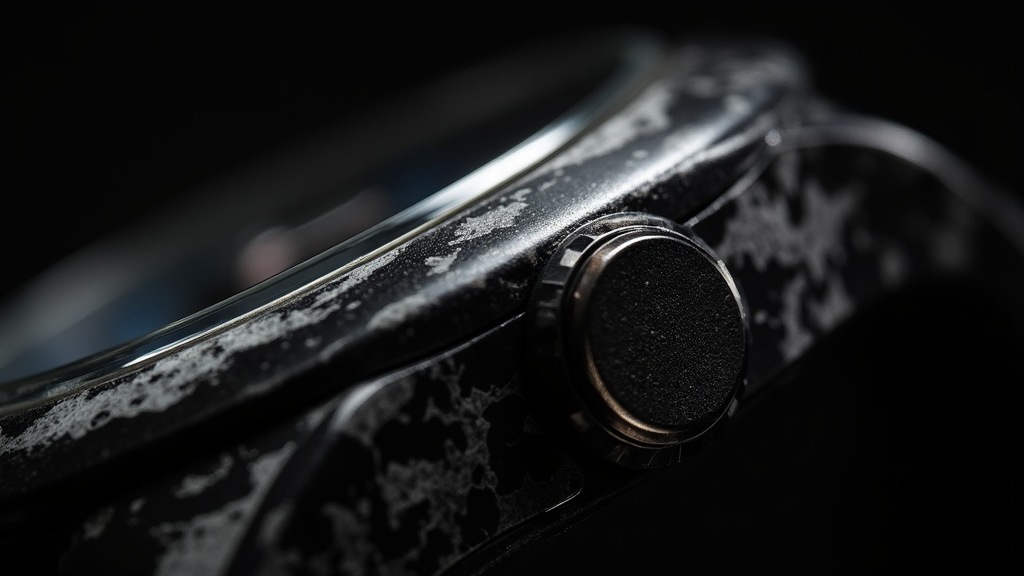
Both can be true. A well-executed modern tourbillon — even one that leverages contemporary manufacturing — can still be an extraordinary object when the finishing, architecture, and design vision are there. The LUMILLION is Grandeur's take on this idea: the world's first lume tourbillon, with a 12-hour continuously glowing cage housed in a TC4 titanium case with a Damascus aluminum dial. It takes the 225-year-old Breguet concept and adds something no 18th-century watchmaker could have imagined — a cage that glows in the dark.
What to Look For
If you're evaluating a tourbillon, forget the marketing copy and look at these:
- Cage finishing — Are the edges hand-chamfered? Do they catch light evenly? Cheap cages have rough, machined edges.
- Screw polishing — On a serious tourbillon, the screws are heat-blued or black-polished to a mirror finish.
- Cage symmetry — Look at the bridges. Are they architecturally considered, or just functional?
- Rate stability — A tourbillon should run within +/- 5 seconds per day. Ask for the timing report.
- Amplitude — A healthy balance wheel inside a tourbillon cage should swing at 270+ degrees in the dial-up position.
A tourbillon is not a practical complication. It never really was. It's a meditation on time, gravity, and the limits of human hands — a small whirlwind on your wrist, spinning once a minute, doing what Breguet imagined in 1795. Two centuries later, it's still one of the most extraordinary things a watchmaker can make.
And honestly? That's enough.
Featured Watch
LUMILLION — World's First Lume Tourbillon
Two centuries after Breguet, the LUMILLION adds something he never imagined: a center-mounted tourbillon cage that glows for 12 continuous hours. TC4 titanium, Damascus aluminum dial, Swiss BGW9 luminescence. The whirlwind, illuminated.
Explore LUMILLION — World's First Lume Tourbillon →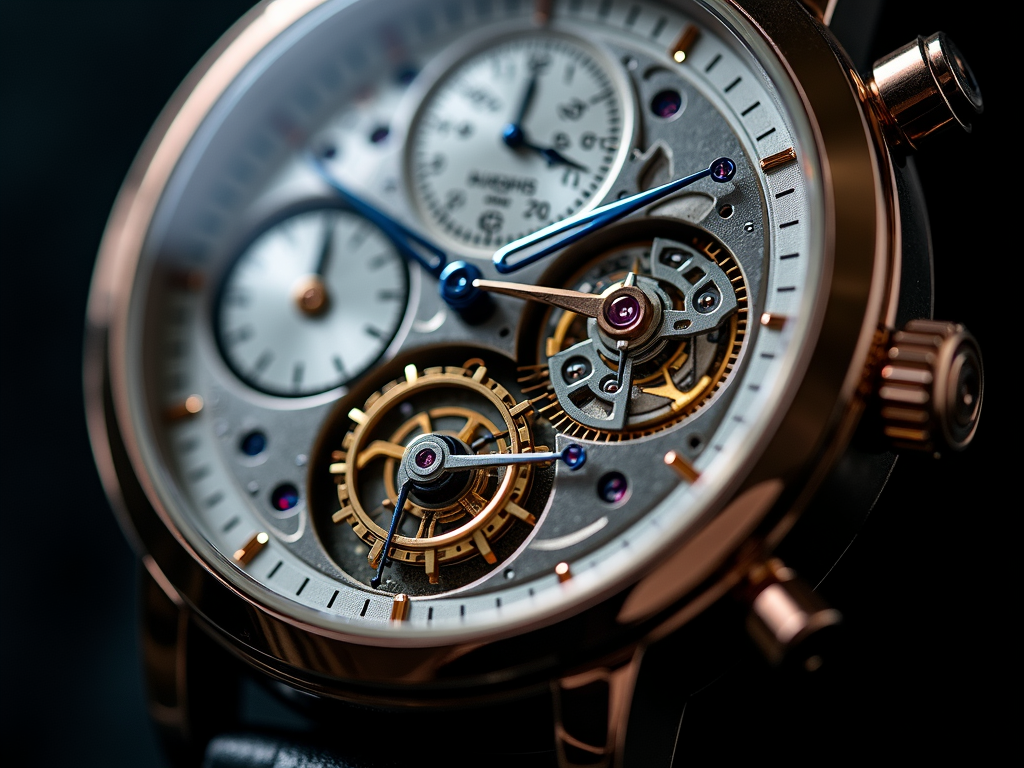

Leave a comment
This site is protected by hCaptcha and the hCaptcha Privacy Policy and Terms of Service apply.