
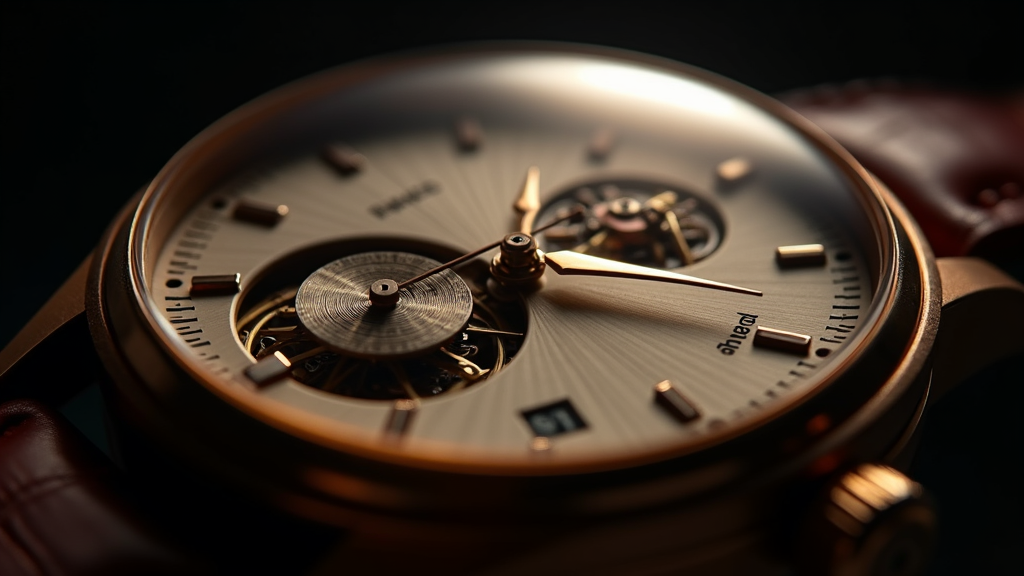

The Complication That Refused to Whisper
Most mechanical complications are quiet triumphs. A tourbillon spins in silence. A perpetual calendar keeps its counsel until the last day of February. But one complication was built to do the opposite of discretion — to shatter the peace on command. The mechanical alarm watch, known in French as the réveil, is horology's original wake-up call: a fully mechanical timepiece that rings a bell against your wrist at a moment you choose.
In an era when every phone screams reminders at us, it's easy to forget that waking on time was once a genuine mechanical problem. The alarm watch was the elegant solution — and building one into a case barely 12 millimeters thick remains one of watchmaking's underappreciated feats.
How a Watch Learns to Ring
An alarm watch is, in essence, two watches sharing a body. The first is the ordinary timekeeping movement you'd find in any mechanical watch: a mainspring, a gear train, an escapement, and hands. The second is an entirely separate mechanism — its own mainspring barrel, its own release, and a striking element — dedicated to one job: making noise at a preset time.
The Alarm Train
Setting the alarm means rotating a dedicated disc or hand, usually via a second crown, until it points to your chosen hour. Inside, this positions a cam or a notched wheel. As the hour hand of the main movement creeps around the dial, a finger rides along that cam. When the two align — when real time meets set time — the finger drops into a notch and releases the alarm train's energy in a single burst.
That released energy drives a small hammer at astonishing speed. In classic designs the hammer oscillates back and forth, striking a component to produce sound. Where the sound comes from is where the artistry lives.
Pin, Gong, or Case Back?
Early and simpler alarm watches used a hammer striking a pin mounted on the inside of the case back, turning the entire back into a resonating membrane — producing a loud, buzzing "brrring" more than a musical note. More sophisticated movements route the hammer against a circular gong, similar to the wire gongs used in minute repeaters, yielding a clearer, more melodic tone. The finest examples treat the case itself as a resonance chamber, tuning the metal so the alarm carries a distinct pitch rather than a generic rattle.
Why It's Harder Than It Looks
Cramming a second going barrel and striking mechanism into a wristwatch introduces problems a pocket alarm clock never faced. Space is the obvious enemy: every additional wheel competes for room in a case that also has to be comfortable on a wrist. Power is another. The alarm train needs enough stored energy to run the hammer vigorously for several seconds, which means winding it separately — most alarm watches ask you to wind the alarm barrel independently of the timekeeping barrel.
Then there's the matter of sound itself. A wristwatch pressed against soft flesh and fabric muffles vibration badly; a clock on a nightstand can rattle freely. Watchmakers compensate with harder hammer strikes, resonant case backs, and sometimes a small foot or dome designed to lift the resonating surface slightly off the wrist. Getting an audible, pleasant tone out of a sealed steel puck strapped to skin is genuinely difficult engineering.
A Short History of the Wrist Alarm
The idea is old. Alarm mechanisms existed in pocket watches by the 18th century, and monastic alarm devices predate that by centuries. But the wristwatch alarm as a practical, mass-produced object arrived in the mid-20th century, when a handful of manufacturers cracked the miniaturization problem.
The most famous name in the field built a self-winding alarm caliber in the 1950s that became the benchmark — a movement whose rotor wound the timekeeping side while a separate crown handled the alarm barrel. Another Swiss maker produced a hand-wound alarm that traveled the world in the pockets and on the wrists of mid-century businessmen and pilots. These watches earned a reputation as tools for people whose punctuality mattered: the executive who couldn't miss a meeting, the traveler in an unfamiliar hotel, the doctor on call.
For a deeper look at how chiming mechanisms differ from ringing ones, our feature on the minute repeater traces the same acoustic challenges taken to their most refined extreme.
Alarm vs. Repeater: A Common Confusion
Because both complications make sound, they're often lumped together — but they solve opposite problems. A minute repeater chimes the current time on demand, when you activate a slide, and does so with tuned gongs playing distinct sequences for hours, quarters, and minutes. It answers the question "what time is it?" without light.
An alarm, by contrast, fires automatically at a preset moment, with a single sustained note or buzz. It doesn't tell you the time; it tells you that a specific time has arrived. One is a musical instrument you play; the other is a mechanical servant that interrupts you. The engineering overlaps — both store energy separately and strike a resonant element — but their purposes could not be more different.
The Alarm Watch Today
In the smartphone age, the mechanical alarm is a beautiful anachronism, and that's precisely why collectors love it. It offers something a phone alarm never can: a discreet, private, mechanical nudge — a soft buzz felt through the wrist rather than a screen lighting up the room. Independent and heritage brands still produce alarm watches as statements of mechanical ambition, because building one proves a maker can master a striking complication in miniature.
There's also a tactile romance to it. Winding a second barrel, setting a small alarm hand against the hour, and feeling the watch buzz to life at the appointed second is a ritual no digital notification can match. It turns the simple act of remembering into something you can hold.
What to Look For in an Alarm Watch
If the complication intrigues you, a few things separate the merely functional from the genuinely accomplished. Listen to the tone — a clear, resonant note signals a tuned gong and a well-engineered case, while a flat buzz betrays a simpler pin-strike design. Check whether the alarm is hand-wound or automatic, and how long it rings; a good alarm sustains its note for several seconds. And note the setting mechanism: the most satisfying designs let you set the alarm precisely against the main dial rather than guessing.
Above all, an alarm watch rewards the collector who values mechanism over minimalism — someone who wants their timepiece to do something audacious, not merely display the hour with quiet grace.
Featured Watch
Amethyst Whisper Minute Repeater
If the alarm watch is horology's wake-up call, the minute repeater is its symphony — the ultimate expression of turning stored energy into sound, viewable through a dedicated 360° sapphire showcase.
Explore Amethyst Whisper →

Leave a comment
This site is protected by hCaptcha and the hCaptcha Privacy Policy and Terms of Service apply.