
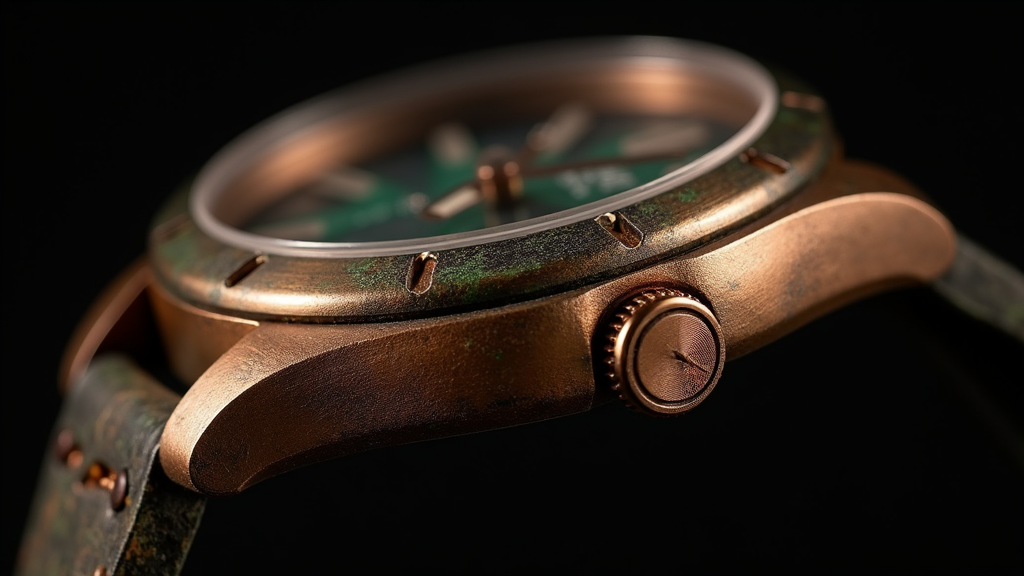
Most watch materials are chosen to resist change. Stainless steel shrugs off corrosion. Ceramic laughs at scratches. Titanium ignores the years. Bronze does something almost heretical by comparison: it changes on purpose. Slip a bronze watch onto your wrist and, within weeks, the bright golden case begins to darken, dapple, and dull. Give it a year and no two bronze watches on earth will look quite the same. In an industry obsessed with permanence, bronze is the material that celebrates the passage of time in the most literal way possible.

What Bronze Actually Is
Bronze is not a single metal but a family of copper alloys, and the recipe matters enormously to how a watch looks, wears, and ages. Copper is the backbone, usually making up 85 to 95 percent of the mix, blended with a secondary element that defines the alloy's character.
Aluminum Bronze
The most common choice in modern watchmaking, aluminum bronze typically contains 8 to 12 percent aluminum. It is harder, more corrosion-resistant, and slower to patina than older recipes. Its color leans toward a paler, more golden hue, and it holds a polish well. Because it develops its patina gradually, it appeals to buyers who want the aging effect without the drama.
Tin Bronze (and the Marine Legacy)
The classic bronze of ships' fittings and diving equipment, tin bronze patinates faster and richer, moving through warm browns toward deep chocolate and, eventually, hints of green. This is the alloy that gives bronze watches their reputation for character. It is softer and more reactive, which is precisely the point for collectors who want visible aging within months.
Why Watchmakers Chose a Metal That Corrodes
Bronze arrived in watchmaking through the back door of maritime history. For centuries, bronze was the metal of the sea, used for ship propellers, portholes, diving helmets, and submarine instruments because it resists saltwater corrosion far better than plain steel. When watch brands began building tool-diver homages in the 2010s, bronze offered instant authenticity: a material with genuine nautical pedigree rather than a marketing story bolted on afterward.
The first modern bronze diver is widely credited to a 2011 release, and the response caught the industry off guard. Within a few years, bronze had spread from niche microbrands to major houses, and the appeal was clear. Here was a case metal that was warm to the touch, hypoallergenic in most formulations, resistant to the marine environment, and, crucially, alive. Each watch became a collaboration between the wearer and time itself.
The Chemistry of Patina
The color-changing magic of bronze is oxidation, the same chemical family of reactions that turns the Statue of Liberty green or darkens an old penny. When copper alloys meet oxygen, moisture, salt, and the natural acids in human skin, the surface forms a thin layer of copper oxides and carbonates. This layer is the patina.
Early patina appears as a warm browning, deepening over weeks. With exposure to humidity and salt, copper carbonates can introduce the famous green and blue-green tones known as verdigris, most often visible in the recessed corners of lugs and bezels where moisture lingers. Critically, this patina is protective. Once formed, it actually shields the metal beneath from further corrosion, which is exactly why bronze has survived on shipwrecks for centuries.
Because patina responds to environment, no two develop identically. A bronze watch worn daily by a chef in a humid kitchen will age differently from one worn by an office worker in a dry climate. This is the material's signature promise: your watch becomes a record of your life, not a mass-produced object identical to ten thousand others.
Living With Bronze
Owning a bronze watch is a philosophical choice as much as an aesthetic one. Some collectors embrace the patina entirely, letting it darken and mottle without intervention. Others prefer to guide it, or reverse it.
The Case-Back Question
Nearly every bronze watch uses a case back and often a bezel insert made of steel or titanium rather than bronze. The reason is skin contact and precision. A solid bronze case back would leave a green mark on the wrist and could react with sweat unpleasantly, so brands isolate the wearer from the reactive metal while letting the visible case age freely.
Cleaning and Reversing Patina
Patina is not permanent damage. A paste of lemon juice and salt, or a dedicated metal polish, will strip a bronze case back to its bright golden shine within minutes, resetting the aging process to zero. This reversibility is part of the appeal. Unlike a scratch in steel, bronze patina is a choice you can revisit whenever you like.
For collectors who love the character of an aged case but not the risk of a green wrist, the mid-tier of independent watchmaking has become fertile ground. Small ateliers experiment with alloy blends and finishing techniques that big houses avoid, and you can explore that independent spirit across the full Grandeur collection where material and mechanics get equal attention.
Bronze in the Collector Market
From an investment standpoint, bronze occupies an interesting position. Because patina is unique to each watch, the secondary market values condition in an unusual way. A beautifully, evenly patinated bronze watch can command a premium over a freshly polished one, inverting the usual collector preference for pristine, untouched examples. Buyers are effectively purchasing someone else's years of wear as a feature rather than a flaw.
That said, bronze remains a specialist taste. It is not the material to buy if you want a watch that looks identical in a decade, or if the idea of a green-tinged case makes you uneasy. Bronze rewards a specific kind of owner: one who sees a watch not as a static object but as a companion that ages alongside them.
Why Bronze Endures
In a world where nearly every luxury good is engineered to resist time, bronze does the opposite and finds beauty in surrender. It is honest about the fact that everything changes, and it turns that inevitability into something you can wear. For the collector who wants a timepiece with a genuine story, told not by a brochure but by the metal itself, bronze remains one of watchmaking's most quietly poetic choices.
Featured Watch
Torq Mechanical Forged Carbon
If bronze is about a material that visibly evolves, forged carbon is its modern counterpart: every case is a one-of-a-kind marbled pattern, no two ever alike. Character built into the metal from day one.
Explore Torq Mechanical Forged Carbon →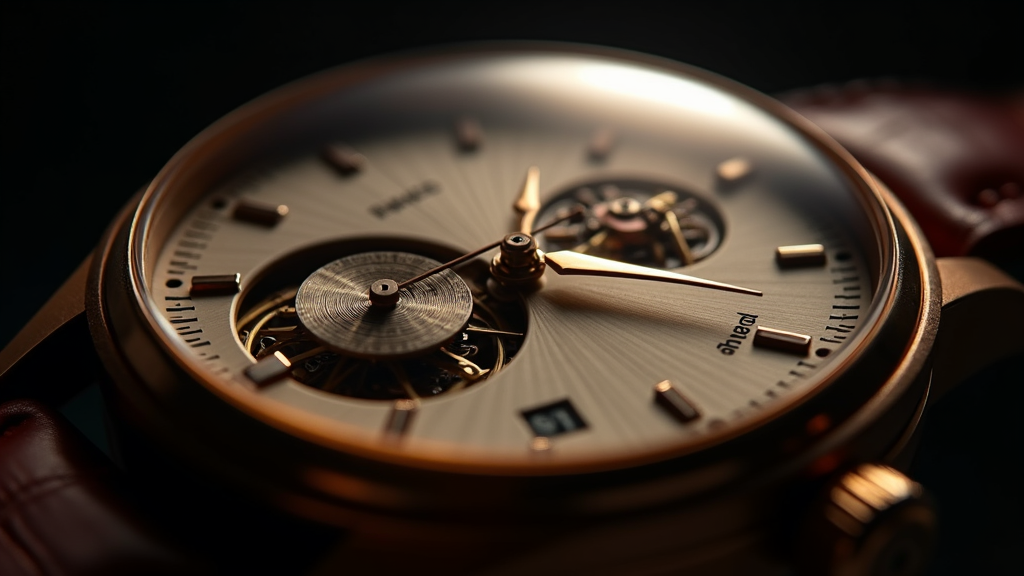

Leave a comment
This site is protected by hCaptcha and the hCaptcha Privacy Policy and Terms of Service apply.