
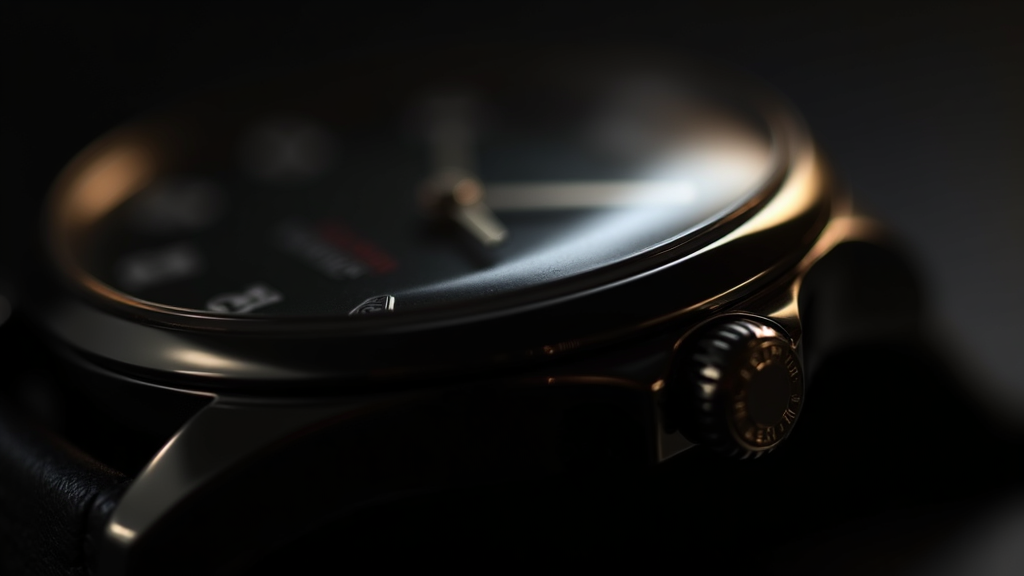
Hold a truly well-finished watch case up to a window and something uncanny happens. The polished surfaces do not just shine — they vanish. The steel becomes a black mirror so flat, so free of distortion, that it reflects the world back at you like still water. In the West we credit this kind of finishing to Geneva and its centuries of savoir-faire. But some of the most breathtaking mirror finishes in modern watchmaking come from a Japanese technique with an unlikely name: Zaratsu.
It is a craft that turns an industrial surface into a kind of optical illusion, and it demands a level of hand skill that machines still cannot replace. Here is how it works, where it came from, and why collectors quietly obsess over it.
What Zaratsu Polishing Actually Is
Zaratsu (also spelled sallaz) refers to a specific method of polishing metal against the flat, spinning face of a rotating tin or resin-bonded disc. Instead of buffing a surface with a soft wheel — which tends to round off edges and create a slightly wavy, “orange-peel” shine — the craftsman presses the workpiece flat against the disc’s side. The result is a surface polished on a single, perfectly planar reference.
That single detail is everything. A conventional buffing wheel is soft and curved, so it dips into recesses and softens sharp corners. A Zaratsu disc is hard and flat, so it preserves the crisp boundary between a mirror-polished surface and a brushed one. This is why a Zaratsu-finished case can hold a knife-sharp line where a bevel meets a flank — the kind of edge that catches light like the blade of a katana.
The “Distortion-Free” Test
The signature of great Zaratsu work is a reflection with no ripple. Look at a lesser polished surface under a straight-line light source — a fluorescent tube, a window frame — and the reflected line will wobble as your eye moves across it. On a properly Zaratsu-polished bezel or lug, that line stays perfectly straight. The surface is optically flat. Watchmakers sometimes call this a “black polish” because, viewed from certain angles, the metal reflects so cleanly that it appears jet black.
The Strange History Behind the Name
Here is the twist that watch nerds love. “Zaratsu” is not an ancient Japanese word for a sacred craft. It is a corruption of a company name. In the mid-20th century, a German firm called Sallaz manufactured the polishing machines that Japanese watchmakers imported to finish their cases. Japanese pronunciation transformed “Sallaz” into “Zaratsu,” and the name stuck to the technique itself.
So a method now considered quintessentially Japanese owes its name to a German machine tool. It is a perfect illustration of how horology absorbs influences across borders and turns them into something new. The Japanese did not invent flat-disc polishing, but they refined it into an art form — pairing it with brushed hairline finishes and sharp anti-distortion geometry in a way that became a national signature.
Why Machines Can’t Just Do It
You would think that in an age of five-axis CNC machining, mirror-polishing a flat surface would be trivial. It is not. The problem is pressure and feel. A Zaratsu polisher holds the case by hand and reads the surface through fingertips and reflected light, adjusting angle and force in real time. Press too hard and you generate heat that discolors the steel; press unevenly and you round the edge you were trying to keep sharp.
The craftsman must also blend polished zones against brushed ones without bleeding one into the other. That transition — a razor line dividing a mirror surface from a matte one on the same lug — is the hallmark of elite case finishing worldwide, whether it comes out of Geneva, Glashütte, or a workshop in Japan. It takes years to train a polisher to the point where every case leaves the bench identical.
This is the same philosophy that drives independent makers who refuse to let a component leave the atelier until it is right. If you appreciate the obsessive hand-finishing behind a mirror-black bezel, you will recognize the same spirit in the Grandeur Center Tourbillon, where every visible angle is treated as a surface worth perfecting.
Zaratsu vs. Geneva Finishing: A Friendly Rivalry
Geneva-style finishing — anglage (beveled edges), Côtes de Genève stripes, black polish on steel — is the reference point most collectors know. Zaratsu is often described as its Japanese counterpart, and the comparison is fair but not identical.
- Geneva anglage emphasizes hand-beveled internal and external angles on movement bridges, often polished with tin and diamond paste.
- Zaratsu is applied primarily to case exteriors — bezels, lugs, and flanks — and prioritizes large, flat, distortion-free planes.
- Both share the same north star: a mirror finish with zero waviness and edges that stay crisp.
In practice, the finest watches borrow from both traditions. A case might carry Zaratsu-style black-polished surfaces on the outside while the movement inside wears Geneva-style anglage and striping. The two philosophies are cousins, not competitors.
How to Spot Great Polishing on Your Own Watch
You do not need a loupe to appreciate this craft. Try these quick tests with any watch you own:
1. The Straight-Line Reflection
Find a straight edge — a door frame, a window mullion — and reflect it off the polished part of your case. Slowly rotate the watch. On excellent finishing, the reflected line stays dead straight. Waviness means the surface is not truly flat.
2. The Edge Test
Run a fingernail lightly along the boundary between a polished and a brushed surface. On top-tier work, you will feel a clean, defined ridge, not a soft, rounded slope. Sharp transitions are hard to achieve and expensive to produce.
3. The Black-Mirror Angle
Tilt the polished surface until it reflects a dark part of the room. If it goes nearly jet black with a clean reflection, you are looking at genuine high-grade polishing — the “black polish” effect that Zaratsu is famous for.
Why It Matters for Collectors
Polishing is one of the most under-appreciated value drivers in a watch. Two cases can share the same steel, the same dimensions, even the same movement — and yet one feels dramatically more expensive on the wrist because of how it plays with light. That difference is almost entirely down to finishing.
Because Zaratsu-grade work is slow and hand-intensive, it is difficult to fake at scale. It is one of the quiet signals that separates a thoughtfully built timepiece from a mass-produced one. When you learn to see it, you cannot un-see it — and cheaper watches start to look, quite literally, blurry by comparison.
The next time a watch stops you in your tracks under a shop light, look closely at the reflections. Odds are, what caught your eye was not the dial or the hands. It was the geometry of light bouncing off a surface someone spent years learning to perfect.
Featured Watch
Grandeur Center Tourbillon
A halo piece where mirror-polished surfaces and hand-finished angles frame a flying tourbillon at the heart of the dial — craftsmanship you can see from every angle.
Explore the Center Tourbillon →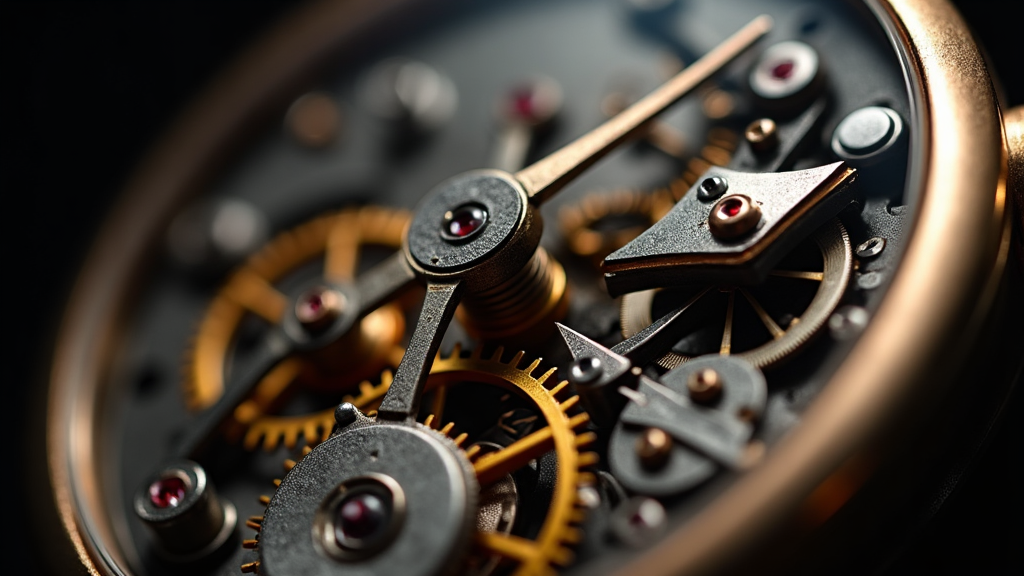

Leave a comment
This site is protected by hCaptcha and the hCaptcha Privacy Policy and Terms of Service apply.