
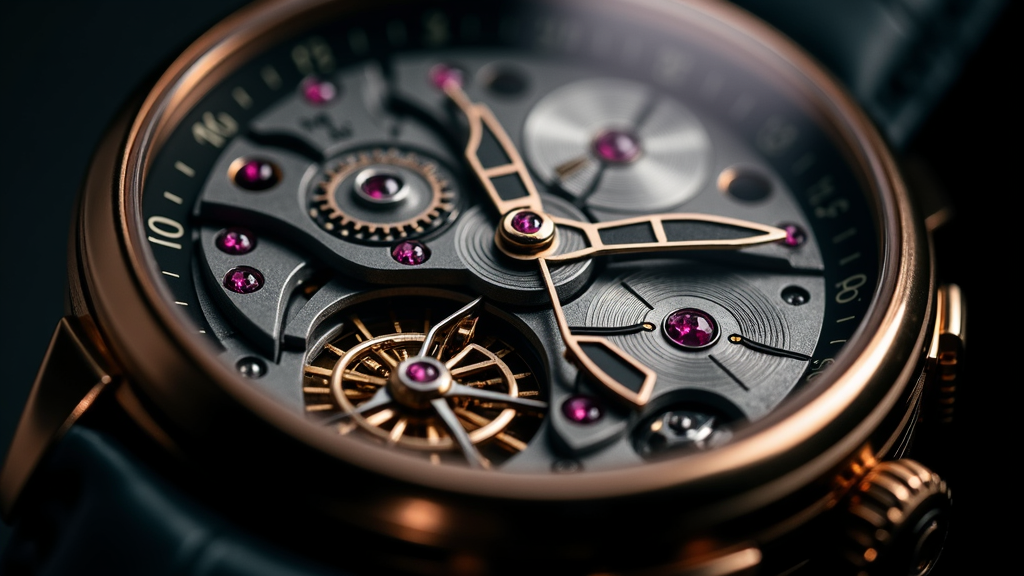
Pop the back off a fine mechanical watch and you are looking at a self-contained universe. A few hundred parts, some no thicker than a human hair, all conspiring to track the passage of time within a few seconds a day. To the uninitiated it looks like beautiful chaos. To a watchmaker, every component has a name, a job, and a long history. This is your map.
Why the Movement Matters More Than the Case
A watch case is jewelry. The dial is artwork. But the movement — the caliber, in horology speak — is the engine. It is the only part of a watch that actually does anything. When collectors talk about a watch having "soul," they almost always mean the movement: how it is finished, how it sounds, how it transfers energy from a wound spring into a rotating second hand thirty-six hundred times an hour.
Two watches can share an identical case and dial and feel like completely different objects on the wrist because of what is hidden underneath. A movement reveals the maker's priorities — efficiency, beauty, durability, audacity — in a way no exterior ever can.
The Mainspring: Where Energy Begins
Every mechanical watch is, at its core, a tiny battery made of metal. That battery is the mainspring: a long, flat ribbon of hardened steel coiled tightly inside a drum called the barrel. When you wind the crown — or when an automatic rotor swings on your wrist — you are forcing that ribbon to coil tighter. As it slowly unwinds, it releases energy in a controlled, steady stream.
A typical mainspring is about 30 to 40 centimeters long, two millimeters wide, and just a tenth of a millimeter thick. It stores enough energy to run a watch for 40 to 80 hours. High-end calibers stack multiple barrels in series for power reserves of a week or more.
Why Power Reserve Is Not Just a Number
A long power reserve is impressive on a spec sheet, but watchmakers care about something subtler: even torque delivery. A spring at full wind pushes harder than one nearly unwound. Mechanisms like the fusée and chain exist purely to flatten that curve so accuracy stays consistent from hour 1 to hour 80.
The Gear Train: Translating Energy Into Time
Energy from the barrel travels through a series of toothed wheels collectively called the going train. Each wheel is geared to spin at a specific ratio relative to its neighbor. The math is breathtakingly elegant: by the time energy reaches the escape wheel at the far end, the rotation has been stepped up to roughly 21,600 to 36,000 vibrations per hour.
This is also where the hands get their motion. One wheel turns once per hour and drives the minute hand. Another, geared down twelve-to-one, turns once every twelve hours and drives the hour hand. The seemingly simple sweep of three hands is the visible tip of a deeply choreographed cascade.
The Escapement: The Heartbeat
If the gear train is the circulatory system, the escapement is the heart. It is the single most important — and most difficult to manufacture — part of any mechanical watch.
The Swiss lever escapement, used in the overwhelming majority of mechanical watches today, has three main pieces:
- The escape wheel — a delicate, pointed-tooth wheel at the end of the gear train.
- The pallet fork — a tiny T-shaped lever with two ruby pallets that alternately catch and release the escape wheel's teeth.
- The balance wheel and hairspring — the oscillator, which swings back and forth at a precise frequency.
Every "tick" you hear is the escape wheel being released for an instant, advancing one tooth, then being caught again. That sound — typically eight ticks per second on a modern caliber — is the audible signature of accuracy.
The Balance Wheel: Watchmaking's Pendulum
The balance wheel is essentially a tiny flywheel attached to a coiled hairspring. It oscillates back and forth, and because the hairspring's restoring force is constant, those oscillations happen at a steady rate. Whether your watch keeps time within five seconds a day or fifty depends almost entirely on the quality of this single assembly.
Jewels: Why Your Watch Sparkles Inside
Look closely at any movement and you will see small red dots embedded around the bridges. These are synthetic rubies — usually 17 to 31 of them in a typical mechanical caliber. They are not decoration. They are bearings.
Wherever a pivot rotates at high speed, friction is the enemy. Synthetic ruby is harder than steel, polishes glass-smooth, and barely wears over a lifetime. A ruby jewel reduces friction at critical pivot points, dramatically extending service intervals and improving timekeeping consistency. Watchmakers have used ruby bearings since the early 1700s, and despite a thousand technological revolutions in between, nothing has surpassed it.
Bridges, Plates, and Finishing
The structural skeleton of a movement is its main plate on the bottom and its bridges on top. Bridges hold the wheels and pivots in place. On a budget movement, they are stamped, plated, and forgotten. On a high-end caliber, they are where the romance lives.
Hand-finishing transforms a functional plate of brass into a miniature sculpture. Watchmakers use techniques with names borrowed from another century:
- Côtes de Genève — parallel waves brushed across bridges with a wooden lap.
- Anglage — beveled and mirror-polished edges on every bridge, sometimes done by hand with a wooden peg coated in diamond paste.
- Perlage — overlapping circular grain applied to hidden surfaces because the maker knows it is there.
- Black polishing — a flat polish so perfect it appears black when held at any angle except dead-on.
None of this finishing improves accuracy. Every bit of it tells you how seriously the maker takes their craft. This is one of the clearest dividing lines between mass-market and serious horology — and it is exactly the territory independent watchmakers like our own atelier are determined to defend.
The Rotor: How Automatic Watches Wind Themselves
If your watch is automatic, there is one extra component bolted to the back of the movement: a half-moon-shaped weight called the rotor. As your wrist moves, gravity swings the rotor in a circle, and a clutch system converts that motion into mainspring winding force.
Modern rotors are surprisingly sophisticated. Many use ball bearings or ceramic bearings for smoothness. High-end versions are skeletonized and finished as carefully as the bridges below them, because in a sapphire-back watch, the rotor is the first thing the eye lands on.
How to Read a Movement Like a Watchmaker
Once you know what you are looking at, you can evaluate any movement in about thirty seconds. Here is the mental checklist:
- Architecture — Is the design original, or a stock ébauche dressed up?
- Finishing — Are the bevels sharp and mirror-bright, or rolled and dull?
- Screws — Are they heat-blued, polished, and seated cleanly in countersunk holes?
- Jewel sinks — Are jewels set in polished gold chatons, pressed in, or simply glued?
- Engravings — Are caliber numbers and signatures hand-engraved or laser-etched?
- The balance — Does it spin freely with a wide arc and a clean, even amplitude?
None of these are deal-breakers on their own. Together, they tell you whether you are holding a tool or a piece of small-scale architecture.
The Bigger Picture
A movement is the place where mathematics, metallurgy, optics, and craft converge into something that genuinely works. Two hundred years ago, the people who built these things were rock stars of the Enlightenment. Today, in tiny ateliers scattered across Switzerland, Germany, Japan, and increasingly the rest of the world, a small but growing community is keeping the discipline alive — and pushing it forward.
The next time you glance at your wrist, remember: under that crystal, somewhere between three and seven hundred parts are dancing in synchronized motion, and they have not stopped since the day you set them. That is not a feature. That is a small, ongoing miracle.
Featured Watch
Center Tourbillon
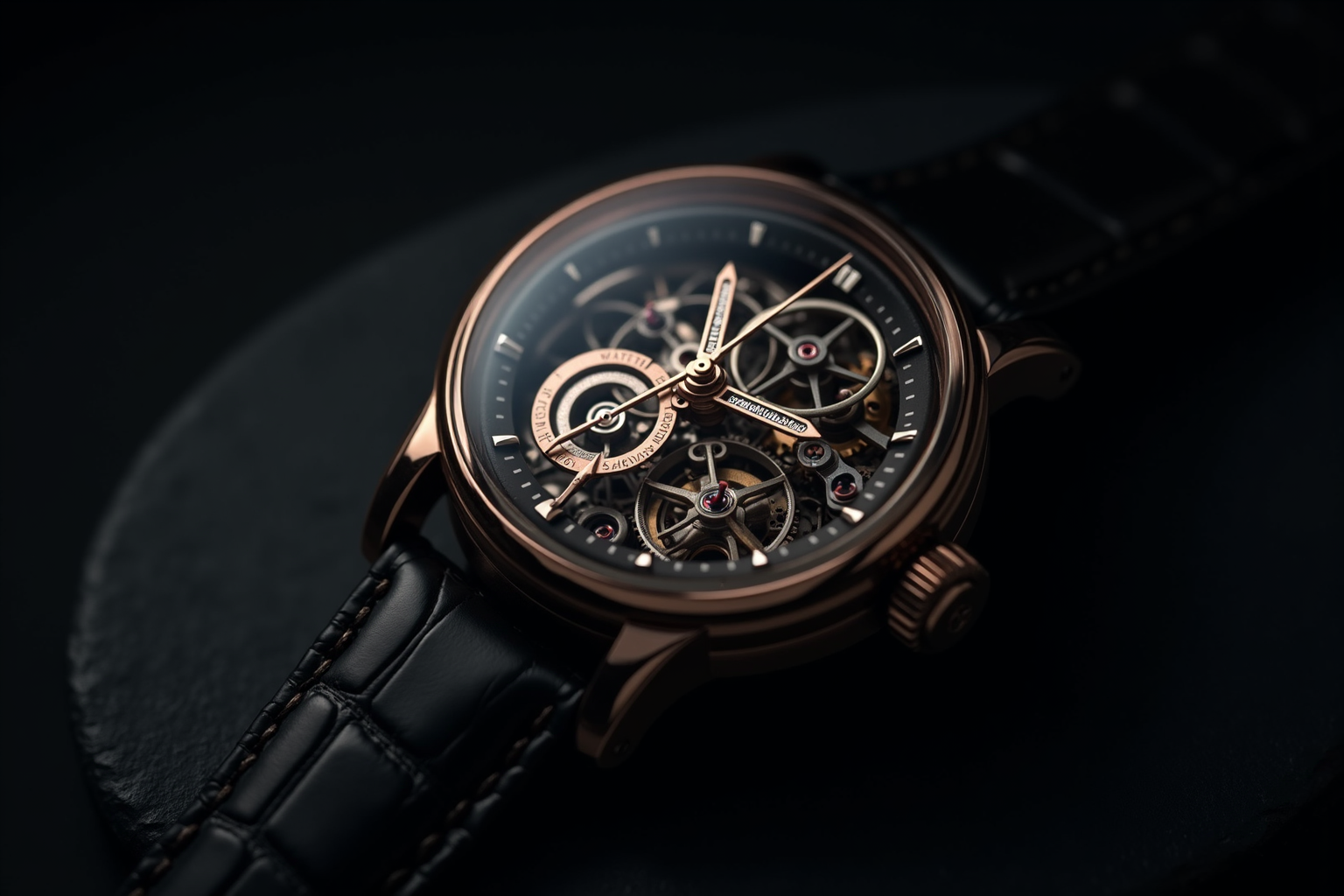
Our Center Tourbillon takes every principle in this article — bridges, jewels, escapement, finishing — and puts it on display where it belongs: dead center on the dial, spinning in plain view.
Explore Center Tourbillon →








Leave a comment
This site is protected by hCaptcha and the hCaptcha Privacy Policy and Terms of Service apply.