
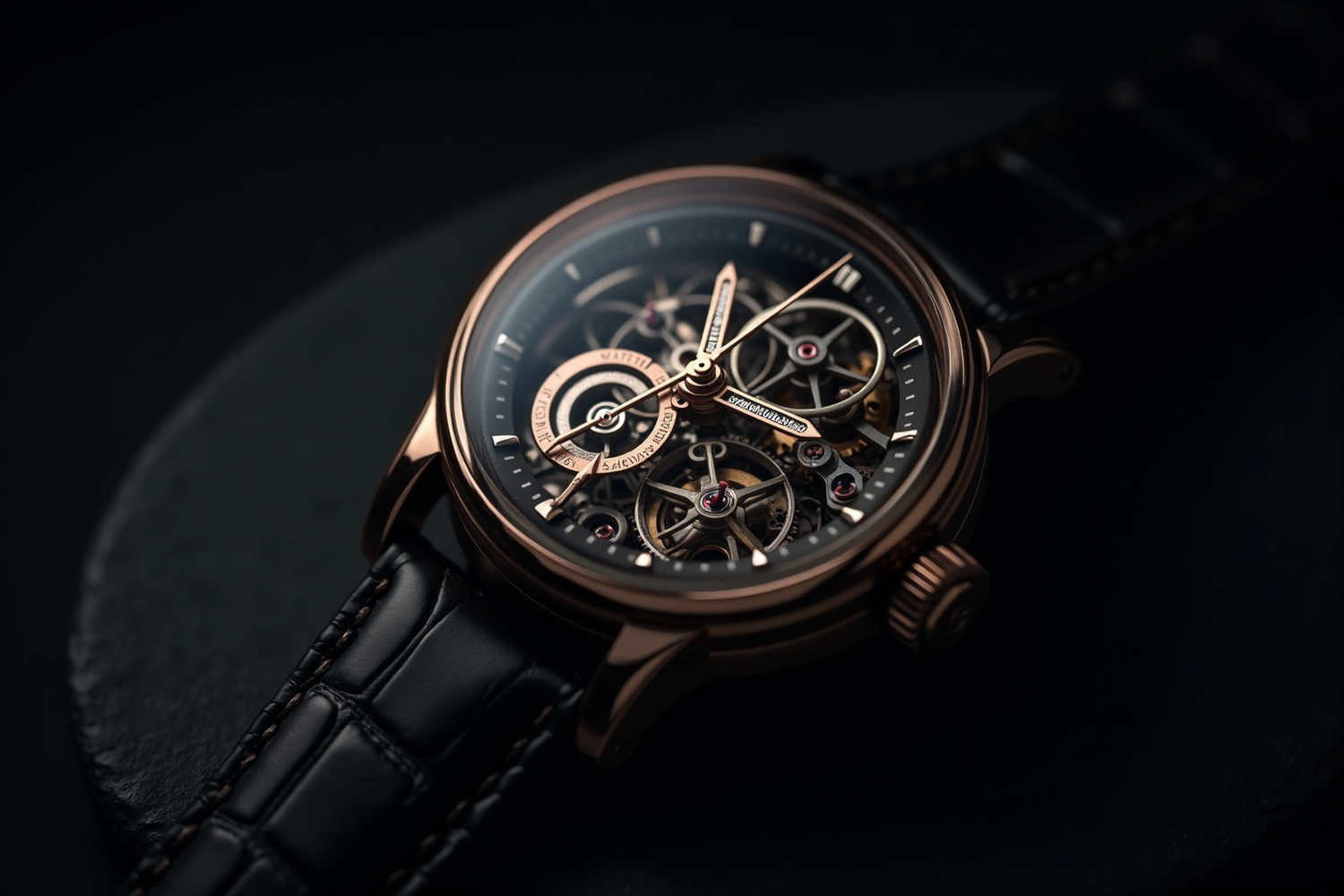
Most watches keep their secrets. A dial covers the dance of wheels and springs beneath it, and we learn to love the watch by what it shows us on top: hour markers, hands, perhaps a small date window. The skeleton watch refuses that contract. It strips away the dial entirely, opens the bridges, and dares you to look at the mechanism itself. It is the most honest thing a watchmaker can put on your wrist.

A Brief History: Cutting Away to Reveal
The skeleton watch dates back to the late 18th century, when pocket-watch makers — chief among them André-Charles Caron in Paris — began removing material from movement plates to show the gear train at work. It was equal parts engineering, jewelry, and theater. A pocket watch was already a luxury; a squelette was an argument. It said: my movement is so beautifully made, it deserves to be seen.
For nearly two centuries the skeleton watch lived mostly in dress watches and high complication pieces. It demanded a level of finishing — beveled edges, polished countersinks, hand-engraved bridges — that mass production simply could not deliver. Then, in the 2000s and 2010s, independent watchmakers began rethinking the genre entirely: not as decoration applied after the movement was built, but as the starting point of the design itself.
Skeleton vs. Open-Worked vs. Open-Heart: A Glossary
The terms get tossed around interchangeably, but to a watchmaker they mean different things.
Open-Heart
A small aperture cut into an otherwise normal dial — usually positioned at 6, 9, or 12 o'clock — revealing the balance wheel beneath. It is the gateway drug. You see one moving part: the heart of the watch oscillating four to ten times a second. It is enough to convert a curious person into a horology obsessive.
Open-Worked
A more aggressive cutaway. Large sections of the dial or movement plates are removed to expose multiple components — the going train, the mainspring barrel, sometimes the keyless works. There is still a partial dial; structure remains. Many modern sports watches use this approach because it keeps legibility intact while showing off the architecture.
Fully Skeletonized
The endgame. The dial is eliminated entirely. The mainplate and bridges themselves are cut, drilled, and milled until only the structurally necessary metal remains, then everything visible is hand-finished. You read the time through the watch, not on it. Done well, it is one of the most beautiful objects humans make. Done poorly, it is a confused mess of overlapping wheels you cannot read in any light.
Why Skeletonization Is Genuinely Difficult
Removing metal from a watch movement sounds simple. It is not. Every gram of brass you cut away changes how the movement behaves.
1. Structural Rigidity
A movement plate exists for a reason: it holds the wheels and pinions in perfect alignment, parallel to each other, while transmitting torque from the mainspring through the gear train to the escapement. Cut too much away and the bridges flex. Flexing bridges mean wheels that wobble out of mesh. Wobbling wheels mean lost amplitude, lost amplitude means lost accuracy. A skeletonized watch must be engineered from the start to remove material without sacrificing geometric stability.
2. Finishing Surface Area
Every interior edge that gets exposed by cutting must then be finished — beveled (anglé) at roughly 45 degrees, polished by hand, and the inside angles brought to a sharp point that machines cannot replicate. A skeletonized movement can have ten times the finishing surface of a closed one. This is where the hours go. A high-grade skeleton can take a finisher 60 to 200 hours of work on a single piece.
3. Legibility
Watches exist to tell time. A skeleton with poor contrast — hands lost against a busy backdrop of gears — fails at its primary job. Good skeleton design solves this with applied indices, lume-filled hands, peripheral chapter rings, or carefully chosen finishing contrasts (matte versus polished, rhodium versus rose gold) to create depth so the eye can find the hands instantly.
The Modern Renaissance
Two things changed skeleton watches in the last twenty years. First, CNC machining and wire-EDM cutting let watchmakers design openwork shapes that would have been impossible to produce by hand — organic curves, asymmetric bridges, structural lattices borrowed from architecture. Second, the rise of independent watchmaking meant that small ateliers could obsess over a single skeletonized caliber for years without needing to amortize it across millions of units.
Independent brands have arguably pushed the genre further than the historic houses. Where a traditional skeleton watch tries to keep the dial language and "subtract" from it, modern independents start with a blank canvas and design the entire visible architecture as art. The bridges become a composition. The escapement becomes the focal point. The case becomes a frame.
This is the philosophy behind pieces like the Grandeur Center Tourbillon — where a flying tourbillon sits squarely at the center of the dial, suspended in an open architecture so the wearer watches the regulating organ rotate, second by second, with nothing in the way. It is skeleton-watch thinking applied to a complication: take the most beautiful part of the watch and make it impossible to ignore.
What to Look For: Buying a Skeleton Watch
If you are considering one, the difference between a $300 fashion skeleton and a real horological piece comes down to a few specific things. Train your eye on these:
Beveled Edges (Anglage)
Run a loupe along the inner edges of the bridges. Are they polished? Are they at a consistent angle? Crucially, do the inside corners come to a sharp point? Machine-polished bevels round off at the corners — only hand finishing produces a true sharp angle. This is the single fastest way to gauge movement quality.
Finishing Variety
Look at the surfaces between the bevels. A serious skeleton uses multiple finishes: perlage (small overlapping circles) on flat planes, Côtes de Genève (parallel stripes) on bridges, mirror polish on screws and steel parts, sandblasting or frosting on contrasting surfaces. Variety creates depth and shows that someone made hundreds of small decisions.
Screw Heads
Polished blue screws are a tradition; black-polished steel is a step above. In either case, look at the slot. It should be perfectly centered, with no burr around the edge, and the head should sit flush in its countersink. Sloppy screws are a tell.
Legibility Test
Glance at the watch and immediately read the time. If you cannot find the hour hand within a second, the design failed regardless of how pretty the movement is.
The Philosophical Pitch
A skeleton watch is a strange object. Most luxury products hide their work — a Birkin bag is opaque leather, a tailored jacket is smooth wool. The skeleton watch does the opposite. It says: the labor is the luxury. What you are paying for is not a logo or a sapphire crystal. You are paying for the 140 hours someone spent with a file and a buffing wheel, turning a functional movement into a piece of wearable sculpture.
That is the older, deeper meaning of horology, and the skeleton watch is its most honest expression. There is nowhere for a watchmaker to hide. Every cut, every angle, every polish is on display. You can see exactly what you bought.
It is also, frankly, more fun. A regular watch tells you the time. A skeleton watch tells you the time and shows you a small, perfect machine quietly turning on your wrist, all day, for the rest of your life. The trick is to find one where the design is as good as the time it took to make it.
Featured Watch
Grandeur Center Tourbillon
A flying tourbillon mounted dead-center, framed by an open architecture that turns the regulating organ into the focal point of the dial — skeleton-watch thinking taken to its logical conclusion.
Explore the Center Tourbillon →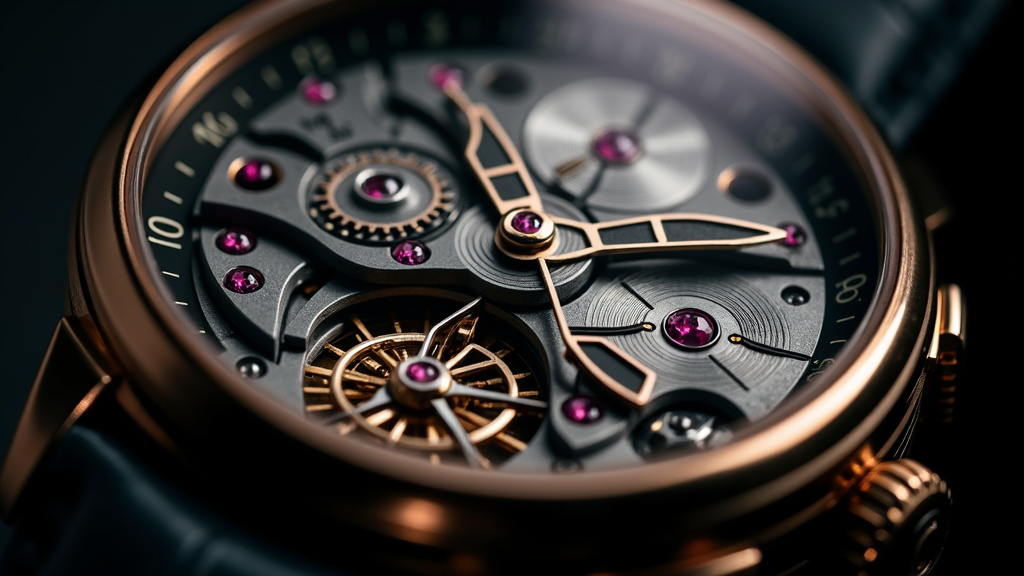


Leave a comment
This site is protected by hCaptcha and the hCaptcha Privacy Policy and Terms of Service apply.