
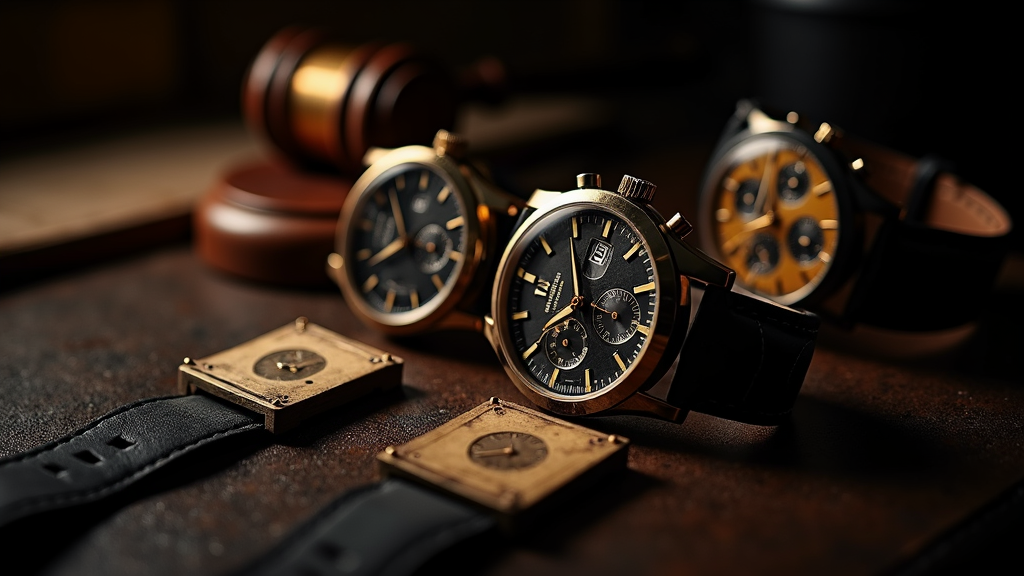
A decade ago, buying a used watch felt like an apology. Today it's a flex. The pre-owned market has gone from grey-market afterthought to the most dynamic — and arguably the most honest — corner of horology. Here's how the secondhand watch became luxury's first-class citizen.
From Awkward Workaround to Main Event
Walk into any watch boutique in 2026 and ask how long the wait is for the model in the window. The answer, more often than not, is "we don't know." Allocation lists, brand loyalty schemes, and gatekeeping have made the new-watch market feel like applying to a private club where the dress code keeps changing.
Meanwhile, a quiet revolution has been brewing on the secondary side. According to multiple industry trackers — Boston Consulting Group, Deloitte, and the WatchCharts/Bob's Watches indexes — the global pre-owned watch market has grown from roughly $18 billion in 2018 to an estimated $35–40 billion in 2026. That puts it within striking distance of the new luxury watch market itself, which sits in the $55–60 billion range.
For the first time in the modern era, secondhand isn't a discount channel. It's a parallel economy.
What's Actually Driving the Boom
1. Scarcity Engineered, Then Weaponized
The big Swiss brands spent the last fifteen years tightening production while watching demand explode. The result was predictable: waitlists for steel sports watches stretching past five years, authorized dealers playing kingmaker, and a generation of would-be buyers locked out of the new market entirely. The pre-owned market absorbed that demand. If the front door is closed, customers walk around to the side.
2. Authentication Got Real
Pre-owned used to mean "trust me." Now it means digital provenance, multi-point physical inspection, movement teardown documentation, and in some cases blockchain-backed ownership records. Platforms like WatchBox, Chrono24's CHRONEXT acquisition, Bezel, and Hodinkee's pre-owned program have institutionalized authentication. The fear of paying $40,000 for a Frankenwatch — once a real and constant threat — has largely been engineered out of the high end of the market.
3. The Information Asymmetry Collapsed
Twenty years ago, a watch dealer knew what your Submariner was worth and you didn't. Today, every collector has the same data the dealer has: real-time auction comps, market indexes updated weekly, sold-listing history on every reference number. WatchCharts, Everest, Subdial, and Morgan Stanley's quarterly reports turned what used to be insider knowledge into a Bloomberg terminal for wrists. When buyers and sellers see the same numbers, markets get more efficient — and more interesting.
4. Younger Buyers Don't Care About "New"
The collectors driving today's market — millennials in their late thirties and early forties, plus a fast-growing Gen Z contingent — were raised on resale. They buy vintage denim, refurbished iPhones, and second-cycle sneakers. The idea that a watch loses status because someone else wore it first is, to them, a Boomer-era hangup. If anything, patina is a feature.
The Categories That Are Winning
Vintage Sports Watches
The blue chips of the secondary market. Paul Newman Daytonas, gilt-dial Submariners, Speedmaster pre-Moons, Heuer Autavias. These are the equivalent of mid-century modern furniture — finite supply, increasing cultural cachet, and a paper trail of comparable sales going back decades.
Discontinued Modern References
This is where the action has been hottest. The moment a manufacturer announces a discontinuation, the market repositions overnight. The 5711 Nautilus story is the cliché example, but the same dynamic plays out at smaller scales every quarter. Discontinuation is the new release date.
Independent Watchmaking
The fastest-growing category by percentage, even if it's smaller in absolute volume. Pieces from F.P. Journe, Akrivia, Voutilainen, De Bethune, and a wave of newer independent ateliers now trade at multiples of retail within months of leaving the workshop. Buyers who got shut out of allocation systems at the big brands are routing their budgets toward small-batch makers who actually answer their emails.
Editor's pick: If you want to understand why independent watchmaking is eating the secondary market alive, start by handling something like the Grandeur Center Tourbillon. It's the kind of piece that explains, faster than any market report, why collectors are voting with their wallets for the small ateliers.
Neo-Vintage (1990s–2000s)
The sleeper category. Watches that were considered uncool ten years ago — early Royal Oak Offshores, fat-case IWCs, early Lange 1 variants — are now being rediscovered by collectors who weren't around the first time. Neo-vintage is where today's smart money is positioning.
The Risks Nobody's Talking About
For all the optimism, the pre-owned market has real fragilities. Three to watch:
- Price compression at the top. The 2021–2022 hype-driven peaks for hyped steel sports watches haven't fully recovered. Anyone who bought a Nautilus at $240,000 expecting a one-way escalator got a brutal education.
- Brand interventions. Several major manufacturers have started buying back their own watches at auction or launching certified pre-owned programs designed to compete with — and quietly suppress — the open secondary market.
- Authentication arms race. Fakes are getting better. The very technology that empowers buyers (3D scanning, AI image comparison) is also empowering counterfeiters with deeper benches and bigger budgets.
What This Means If You're Buying Now
The honest answer: the pre-owned market in 2026 is the most transparent it has ever been, and probably the most transparent it will ever be. Buy from established dealers with public sales histories. Demand full service records and movement photos. Cross-check the asking price against at least two independent indexes. And — this is the part most buyers skip — actually wear the watch before committing. A piece that lives in a safe is a financial instrument, not a watch.
The brands that figure out how to coexist with this new reality will thrive. The ones that keep trying to control the resale market by stiff-arming it will lose, slowly and then all at once. Either way, the customer wins, which is something horology hasn't been able to say with a straight face for a long time.
The Bigger Story
The pre-owned boom isn't really about watches. It's about a generation of buyers who decided that "official channels" weren't worth the wait, the games, or the gatekeeping — and who built their own market in the open. That market is now bigger than most national economies. It's not going back in the box.
For independents, for collectors, for anyone who's ever loved a mechanical watch and been told it wasn't their turn yet, that's good news. The secondary market didn't just rival the primary one. It rewrote the rules of who gets to participate.
Featured Watch
Grandeur Center Tourbillon
Independent watchmaking is the fastest-growing segment of the pre-owned market because pieces like the Center Tourbillon hold their value the old-fashioned way — by being genuinely difficult to make.
Explore Center Tourbillon →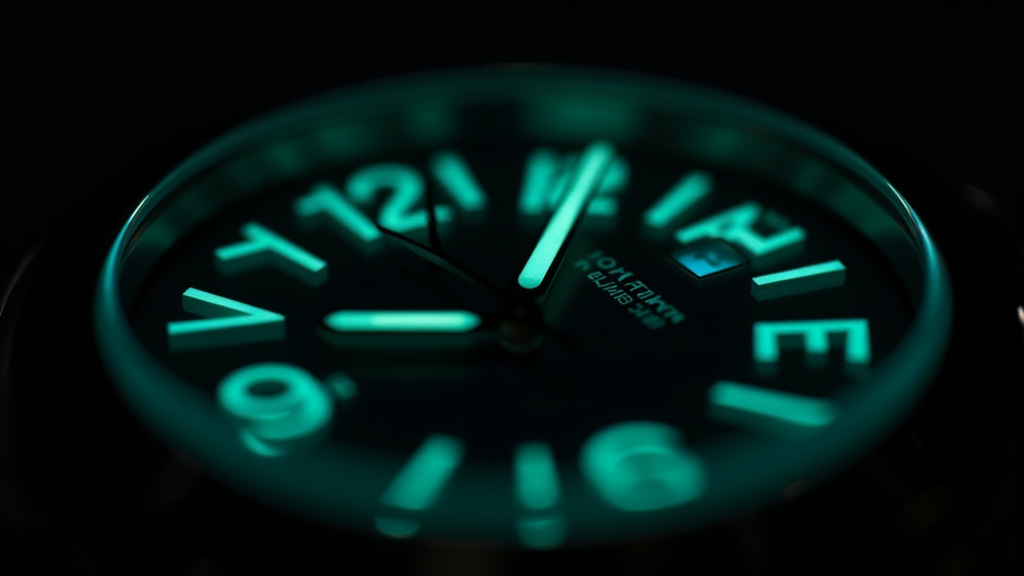

Leave a comment
This site is protected by hCaptcha and the hCaptcha Privacy Policy and Terms of Service apply.