
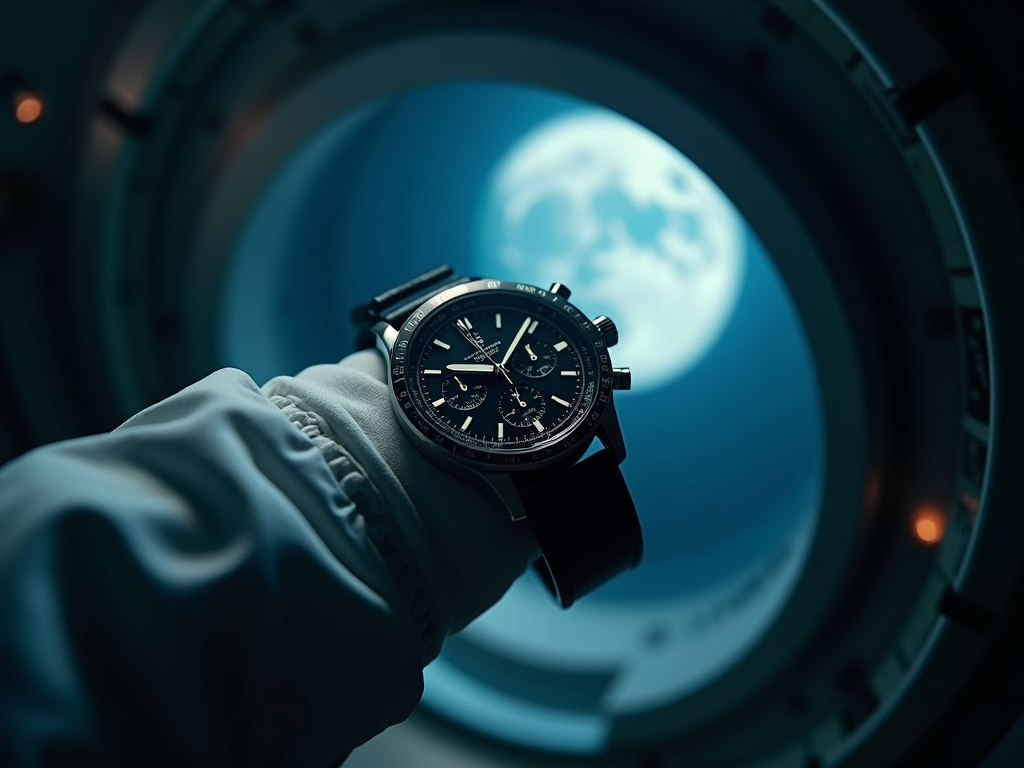
When mission control loses contact and the electronics die, what's left on your wrist might be the only thing keeping you alive. That's not hypothetical — it actually happened, and a mechanical watch is part of the reason three astronauts came home.
The Moon Watch That Almost Wasn't
In 1964, NASA had a problem. The agency needed a wristwatch for its astronauts, and it didn't particularly care which Swiss maison supplied it — only that the watch survive conditions no human-made object had ever faced: the vacuum of space, 250°F temperature swings, violent G-forces, and radiation. So NASA did what NASA does. It bought a handful of chronographs from a local Houston jeweler, took them back to the lab, and proceeded to torture them.
Of the watches submitted, only one survived: the Omega Speedmaster. It was baked, frozen, vibrated, shocked, pressurized, decompressed, and submerged. When the dust settled, the Speedmaster was still ticking. On March 1, 1965, it was certified "Flight-Qualified for All Manned Space Missions." Three months later, it rode Gemini IV into orbit on the wrist of Ed White during America's first spacewalk.
Four years after that, Buzz Aldrin stepped onto the lunar surface wearing his Speedmaster Professional on a long Velcro strap wrapped around the arm of his spacesuit. (Neil Armstrong left his aboard the Eagle — the lunar module's onboard clock had failed, and Armstrong's watch became the backup timer.) The nickname "Moonwatch" was earned the hard way.
Apollo 13: When a Watch Saved Lives
The Speedmaster's most famous moment, however, isn't the landing. It's the rescue.
After the oxygen tank explosion crippled Apollo 13 in April 1970, the crew had to shut down the command module to conserve power. The digital mission clock went dark. To return safely, the astronauts needed to perform a precise 14-second engine burn to correct their trajectory around the Moon — any deviation and they'd either skip off Earth's atmosphere or burn up on reentry.
Commander Jack Swigert timed that burn using his Speedmaster Professional. A mechanical watch, oblivious to the spacecraft's electrical chaos, kept counting seconds. The crew survived. Omega later received NASA's Silver Snoopy Award — the highest honor the astronaut corps gives to a civilian contractor — specifically for the Speedmaster's role in the rescue.
The Soviet Side of the Story
While the West was fixating on Omega, the Soviets had their own space chronograph: the Strela, manufactured by the First Moscow Watch Factory. Cosmonaut Alexei Leonov wore one during the first-ever spacewalk in March 1965 — beating Ed White's Gemini EVA by almost three months. The Strela's movement, the 3017, was a column-wheel chronograph based on a Venus 150 design, and it remained cosmonaut-issue gear through the 1970s.
Later, as Soyuz missions expanded, the Soviets turned to Poljot and eventually to the Sturmanskie — the same brand Yuri Gagarin reportedly wore on his 1961 orbital flight, making it arguably the first watch in space, period. (The Speedmaster crowd would counter that Gagarin's flight predates NASA's certification process, so the Omega remains the first officially qualified space watch. Collectors have been arguing about this for sixty years.)
Why Mechanical?
Here's a question worth asking in 2026: why did every space agency, for decades, insist on mechanical watches when quartz was cheaper, more accurate, and lighter?
A few reasons:
- Radiation resistance. Cosmic rays and solar flares can scramble electronic components. A mechanical escapement doesn't care.
- Temperature range. Early quartz modules struggled in the extreme cold of a spacewalk or the heat of direct sunlight in vacuum. Mechanical movements, lubricated with space-rated oils, handled it.
- Failure modes. A mechanical watch that fails usually slows down gradually. A dead battery or fried circuit is binary — fine one second, useless the next. In space, gradual failure is survivable.
- No recharging. A manual-wind movement works as long as the astronaut's wrist does.
NASA has since qualified other watches — the Bulova Lunar Pilot (worn by Dave Scott on Apollo 15 after his Speedmaster's crystal popped off), the Fortis Cosmonauts Chronograph for Russian missions, and most recently the Omega X-33 Marstimer, a titanium quartz piece designed for Mars expeditions. But the mechanical Speedmaster is still flight-certified for the ISS today. Astronauts wear them by choice.
The Film That Made a Watch Famous
Pop culture did the rest. Apollo 13 (1995) put the Speedmaster on millions of wrists — not literally, but in collective imagination. Before that, 2001: A Space Odyssey had dressed Dr. Floyd in a Hamilton Ventura (a watch that, fittingly, was itself a piece of mid-century futurism). For All Mankind, Apple TV's alternate-history space drama, obsesses over period-correct watches with a level of detail that borders on fetish.
These films turned tool watches into symbols. A chronograph on the wrist became shorthand for competence under pressure, for the kind of person who does hard things precisely.
What the Space Watches Taught Watchmaking
The technical legacy runs deeper than marketing. Qualifying for spaceflight forced watchmakers to rethink materials and construction — improvements that eventually trickled into everyday pieces:
- Anti-magnetic movements. Space isn't just magnetic; it's chaotically magnetic. Soft-iron inner cases and silicon escapements got their first real-world stress tests in orbit.
- Lume that survives UV. Early tritium phosphors were reformulated after observing how quickly unshielded radiation degraded them.
- Titanium cases. NASA's obsession with weight led to broader adoption of lightweight alloys in luxury watchmaking — something you can feel today in any well-made titanium piece, including our own TorQ Mechanical Titanium, which weighs nearly half what a comparable steel watch would.
- Sealed crowns and gasket design. Vacuum testing forced entire rethinks of how cases are sealed. Your modern dive watch owes a quiet debt to the astronaut corps.
Why It Still Matters
A mechanical watch on a modern wrist is, in the most literal sense, obsolete technology. Your phone is more accurate. So is the cheapest Casio. But there's something about a machine that runs on nothing but tension and geometry — no batteries, no signals, no dependencies — that keeps its grip on us.
The Moonwatch embodies that stubborn appeal. It reminds us that when everything else fails — power, comms, computers, the laws of probability — there's still a small, beautifully engineered object on your wrist counting seconds. That's not nostalgia. That's a kind of trust most modern technology hasn't earned.
Which is maybe why, even now, when astronauts board the ISS, they're still wearing mechanical watches. Old habits die hard when they've kept you alive.
Featured Watch
TorQ Mechanical — Titanium Edition
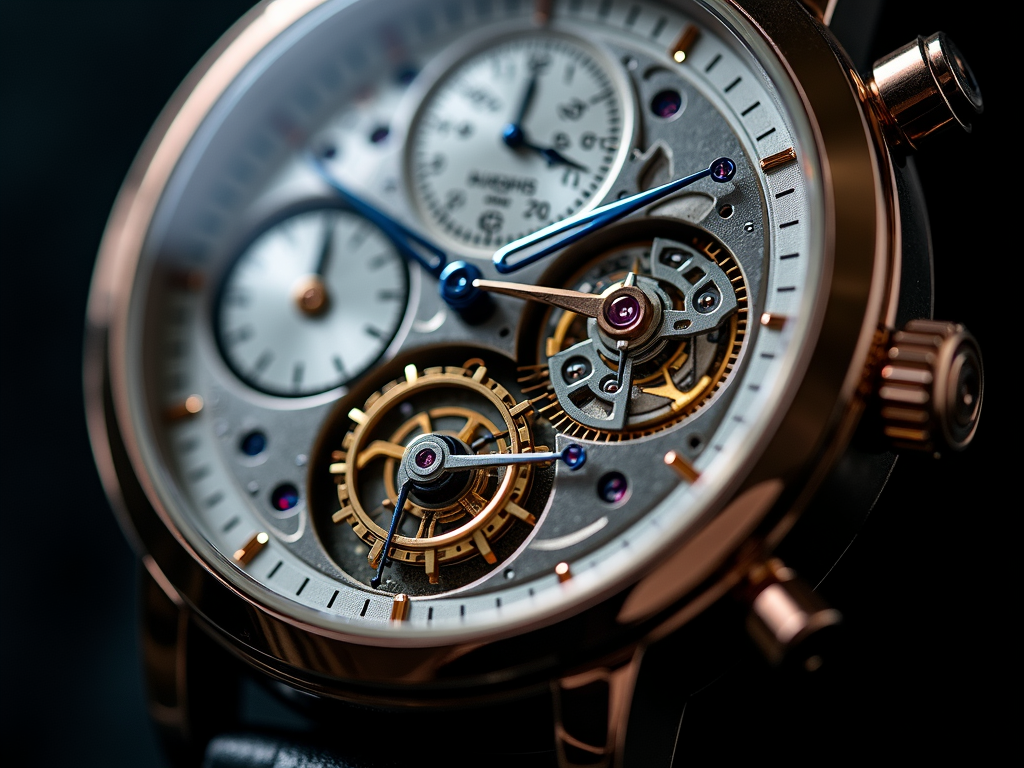
The TorQ Mechanical Titanium uses Grade 5 TC4 titanium — the same aerospace alloy trusted in spacecraft and fighter jets. Paramagnetic, featherlight at 32g, and packed with an in-house mechanical movement.
Explore TorQ Mechanical — Titanium Edition →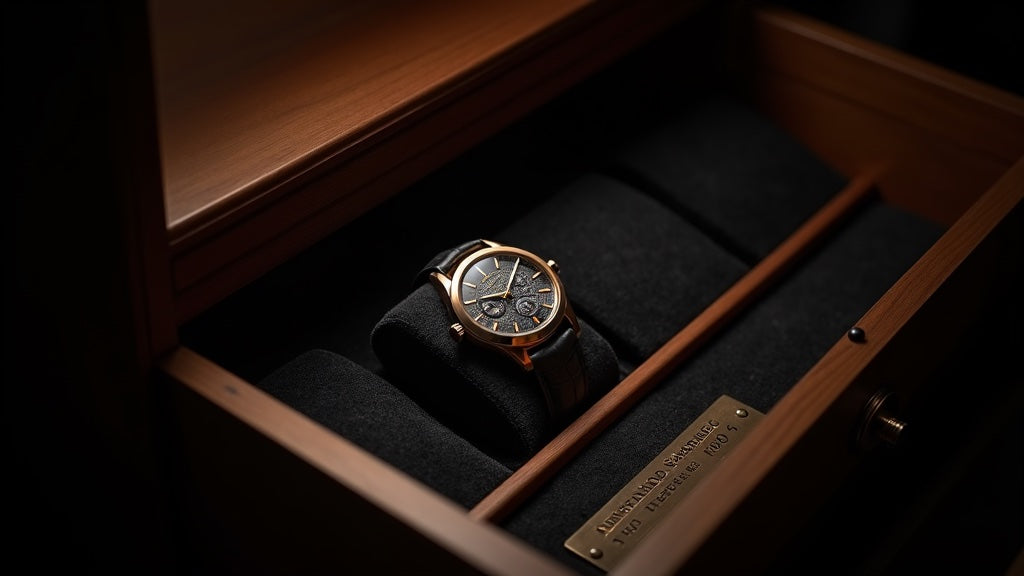








Leave a comment
This site is protected by hCaptcha and the hCaptcha Privacy Policy and Terms of Service apply.