
The good news: most fake watches are still bad. The bad news: a small percentage are now astonishingly good — good enough to fool casual eyes, jewelers without specialty training, and even some auction houses if no one looks too closely. If you buy watches at any level above novelty, you need a working sense of how authentication actually works.
This isn't a guide to detecting cheap mall-stand fakes — those announce themselves. This is about "superfakes" and the gray-market mid-tier replicas that fool people every day. Here's what experienced collectors actually look at, in roughly the order they look.
1. Provenance Beats Everything
Before a single magnifier comes out, the first authentication signal is paperwork and history. A real watch has a paper trail: original receipt, warranty card with serial matching the case, service records, and ideally a chain of custody you can verify.
The classic red flags:
- "Box and papers" but no original receipt. Boxes and warranty cards can be bought separately on the gray market — sometimes legitimately, sometimes not.
- Serial number on the card doesn't match the case. This is a hard fail. Always check.
- A story that's a little too good. "Inherited from my grandfather, never worn, full set." Maybe. Or a counterfeit dressed in fresh paperwork.
- Seller refuses to let you authenticate it through the brand. Almost every modern luxury brand will authenticate their watches at a service center for a fee. A legitimate seller will agree to an escrow arrangement contingent on this.
The "factory authorized" myth
"Authorized dealer" papers can be forged, and stolen blank cards from real dealers do circulate. Provenance is the first filter, not the last word.
2. The Dial Is Where Most Fakes Lose
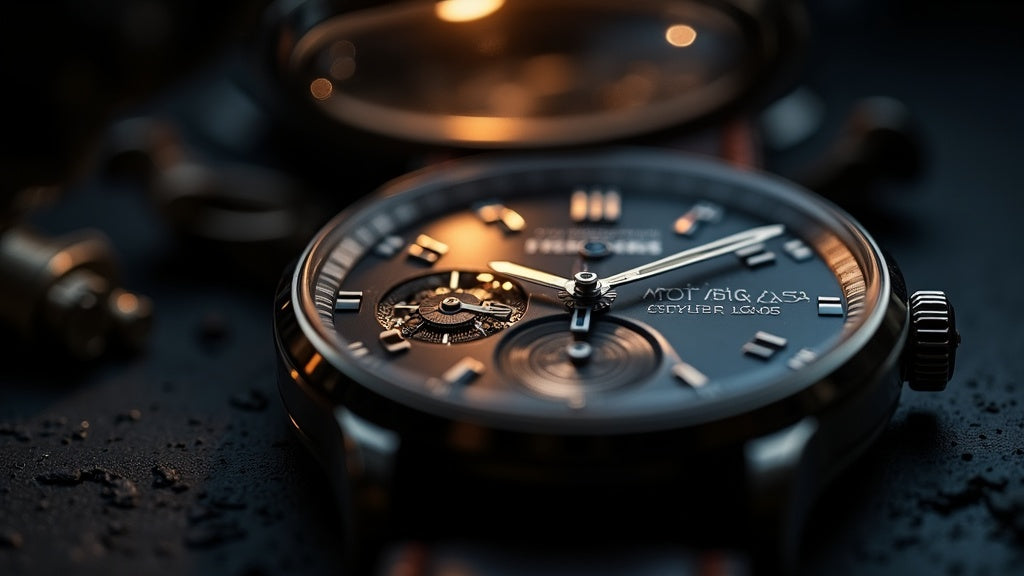
Counterfeiters can copy a case shape with reasonable accuracy. Dials are harder, and printed text is the hardest of all. Reach for a 10x loupe and look at:
- Print sharpness. Genuine dial text is typically pad-printed or applied with extreme precision. Edges are crisp under magnification. Fakes show fuzzy or feathered edges, especially on small text like "Swiss Made," depth ratings, or model designations.
- Applied indices. On real luxury watches, hour markers are often individually applied — small metal pieces with feet that pass through the dial. Look at the base where the marker meets the dial. On fakes, indices are often glued sloppily, slightly tilted, or unevenly spaced.
- Lume application. Genuine luminous compound is applied in even, smooth, slightly domed fills. Fake lume is often flat, has visible bubbles, or shows uneven thickness across markers.
- Date wheel font and alignment. Brands obsess over these details. The font weight, kerning, and exact centering of the date in the window are signature-level identifiers. Many fakes get the font close but not exact.
Crystal magnification is another classic tell. Rolex's cyclops over the date magnifies 2.5x; many fakes only manage 1.5x or so. The date will look small under a fake cyclops.
3. The Hands and Indices, Up Close
Hands are stamped, polished, and finished by hand on serious watches. Look at:
- Polishing quality. Real hands have mirror-grade polish on flat surfaces with no swirl marks. Fakes often show a hazier, machine-buffed finish.
- Beveled edges. Many luxury hands have hand-beveled (chamfered) edges that catch light. Fakes typically have rough or rounded edges instead of crisp facets.
- Center alignment. The hands should rotate concentrically with no wobble. Mount the watch and watch the seconds hand sweep — wobble suggests poor pinion fitment.
4. The Caseback Tells Stories
Whether screwed-down solid or display-back, the caseback is a goldmine of authentication detail.
For solid casebacks: Engravings should be deep, sharp, and consistent in depth. Logos should match brand specifications exactly — counterfeit logos often have slightly wrong proportions or font weight. Serial numbers should be evenly spaced and properly aligned.
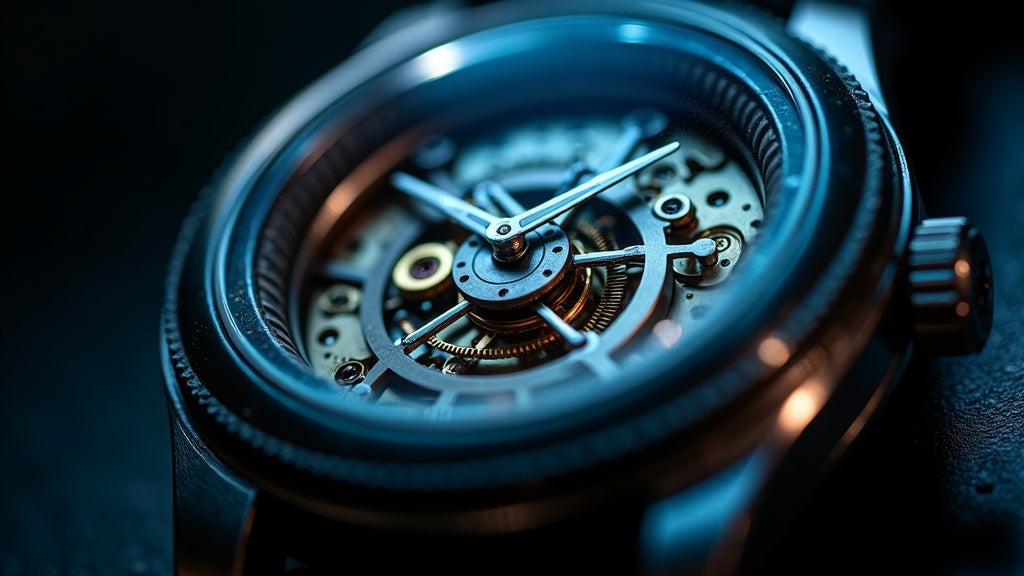
For display backs: Now you're looking at the movement, which is the hardest thing for a counterfeiter to fake convincingly. Genuine high-end movements show:
- Côtes de Genève (Geneva stripes) that are even, parallel, and uniformly deep
- Perlage (circular graining) that's regular and densely overlapping on hidden surfaces
- Hand-beveled (anglage) edges on bridges with mirror-polish facets
- Heat-blued screws (real blue is achieved by heating; fake blue is often coating)
- Properly engraved (not laser-etched) text on bridges and rotors
If the rotor wobbles audibly, if the decoration looks printed rather than cut, or if the movement looks suspiciously simple for the price tier — be suspicious.
5. The Sound and Feel
This one takes experience, but it's surprisingly reliable.
- Crown action. Pulling out the crown to set the time should feel precise — clear stops, no grit, smooth turning. Cheap fake movements feel mushy or notchy.
- Bezel rotation (where applicable). Dive bezels should click decisively in 120 or 60 positions with no slop. Fakes often rotate too freely or stick.
- Weight. Stainless steel, gold, titanium, and ceramic each have a distinct heft. Counterfeiters frequently use lower-density alloys. A "gold" watch that feels light is almost certainly plated brass.
- The seconds hand. Most fine mechanical movements run at 28,800 vph (8 ticks per second), giving a near-smooth sweep. Watch a fake's seconds hand and you'll often see fewer ticks per second, or hesitation between beats.
6. When in Doubt, Open It Up
For high-value purchases, the gold standard is opening the case and inspecting the movement directly. A trusted independent watchmaker can pull a caseback in minutes and tell you immediately whether the movement matches what should be inside.
Many of the best superfakes today use real ETA or Sellita base movements with finishing applied to mimic in-house calibers. They run accurately. They feel decent. But the moment a watchmaker sees the actual movement architecture, the deception collapses.
The Independent Watchmaker Defense
One of the most effective protections against counterfeits, ironically, is buying from independent watchmakers in the first place. Their production volumes are too small for organized counterfeit operations to bother with, and their proprietary movements and complications are extraordinarily difficult to replicate at any cost.
That's part of the appeal of brands like Grandeur's LUMILLION lume tourbillon — a watch built around a genuinely novel complication (the world's first 12-hour luminous tourbillon) using TC4 titanium and a Damascus aluminum dial. There's no profitable counterfeit market for a piece like that, because the engineering itself is the moat.
The Bottom Line
Authentication is a layered process, not a single test. Provenance, dial details, hands, caseback, movement, and feel — each one filters out a percentage of fakes, and serious collectors run all of them, every time, before any meaningful purchase.
If you're buying anything beyond entry-level, develop a relationship with an independent watchmaker who can authenticate for you. Pay for the service. It's the cheapest insurance in the watch world — and the difference between a treasured collection and an expensive education.
Featured Watch
LUMILLION — World's First Lume Tourbillon
The LUMILLION is exactly what this guide describes: a watch with a complication so novel — the world's first luminous tourbillon — that no counterfeit operation would bother replicating it. The engineering IS the authentication.
Explore LUMILLION — World's First Lume Tourbillon →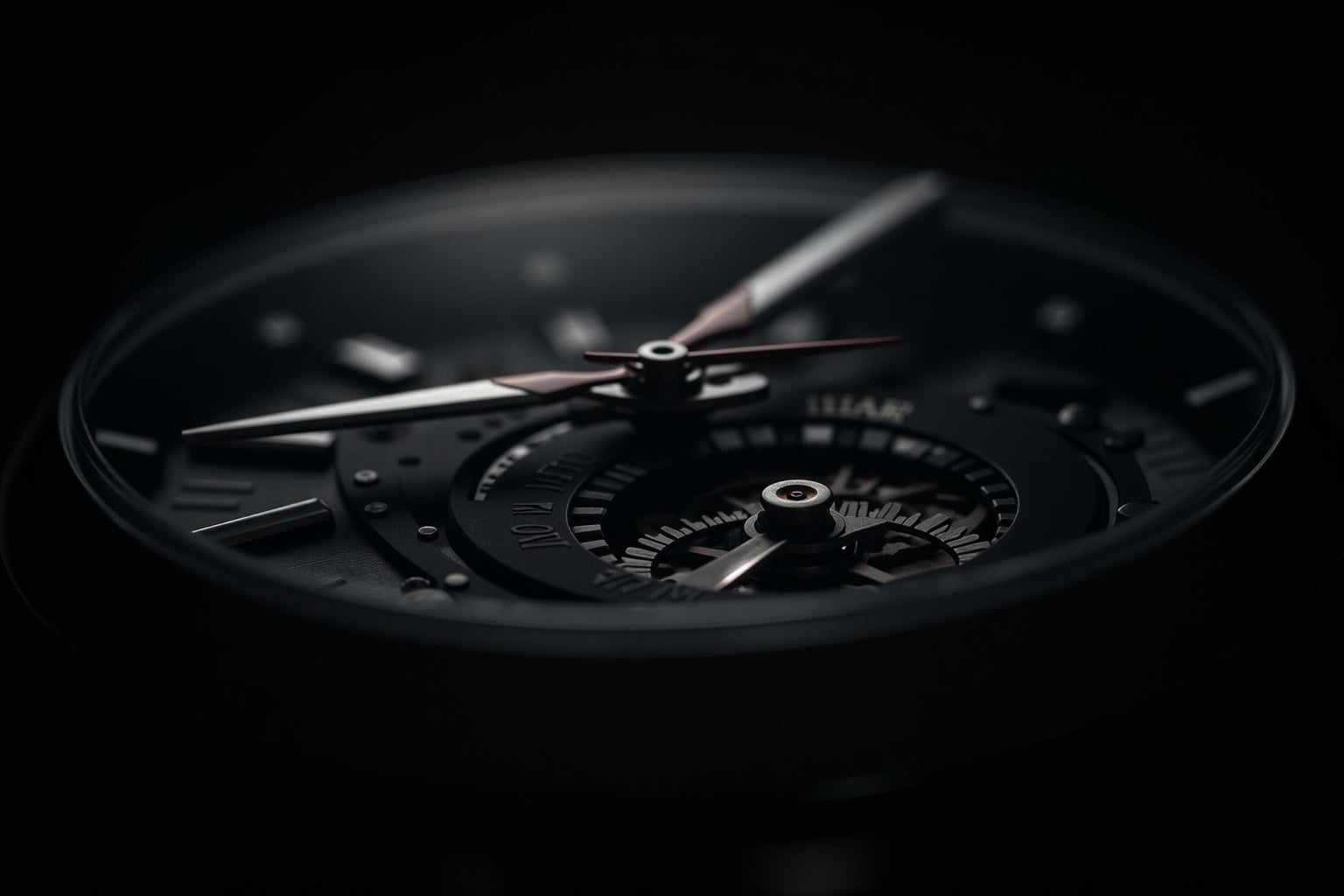








Leave a comment
This site is protected by hCaptcha and the hCaptcha Privacy Policy and Terms of Service apply.